

Spotlight Interviews with Co-operators
Interview with Víctor Meseguer Sánchez, Deputy Director General of Abacus Cooperative
“Spotlight Interviews with Co-operators” is a series of interviews with co-operators from around the world with whom ILO officials have crossed paths during the course of their work on cooperatives and the wider social and solidarity economy (SSE). On this occasion, the ILO interviewed Víctor Meseguer Sánchez, Deputy Director General of Abacus Cooperative.
28 March 2025
Could you tell us about yourself and how you got involved in the work around cooperatives and the broader social and solidarity economy (SSE)?
I began working on cooperatives and the broader social and solidarity economy in 2014, fresh from completing my studies—a BA in Political Science and two master’s degrees in Corporate Social Responsibility and EU Affairs.
I joined Social Economy Europe (SEE), the EU’s leading voice for 4.3 million social economy entities, as a trainee. There, my first mission was to help relaunch the European Parliament’s Social Economy Intergroup, a cross-party coalition advocating for the SSE and a level playing field for SSE entities. In December 2014, the Intergroup was successfully relaunched, and I was appointed director by SEE’s Board of Directors. For me, this is more than work—it’s a passion and a commitment to building a democratic, people-centred economy rooted in shared ownership and sustainability.
My experience at SEE led me to serve as Spain’s Special Commissioner for the SSE between February 2023 and July 2024, coordinating more than €1 billion in SSE and care investments across more than ten Ministries. In the latter part of 2024, I worked as an SSE Consultant with UNCTAD on supporting the work of the financing the SSE technical working group of the UN Inter-Agency Task Force on Social and Solidarity Economy. In 2025, I joined Abacus Cooperative, in working to scale up its impact as a global cooperative reference in education and culture.
What does Abacus cooperative do and what are its focuses?
Founded in 1968, Abacus Cooperative leverages the strengths of the cooperative model—collaboration, shared ownership, and a commitment to social impact—in shaping a more inclusive, innovative, and sustainable educational landscape. It supports the cooperative movement in education and culture. It empowers communities, and boosts cultural production reflecting its diversity, including a diversity of voices. With its over one million consumer members and 586 worker members, Abacus works through three main pillars:
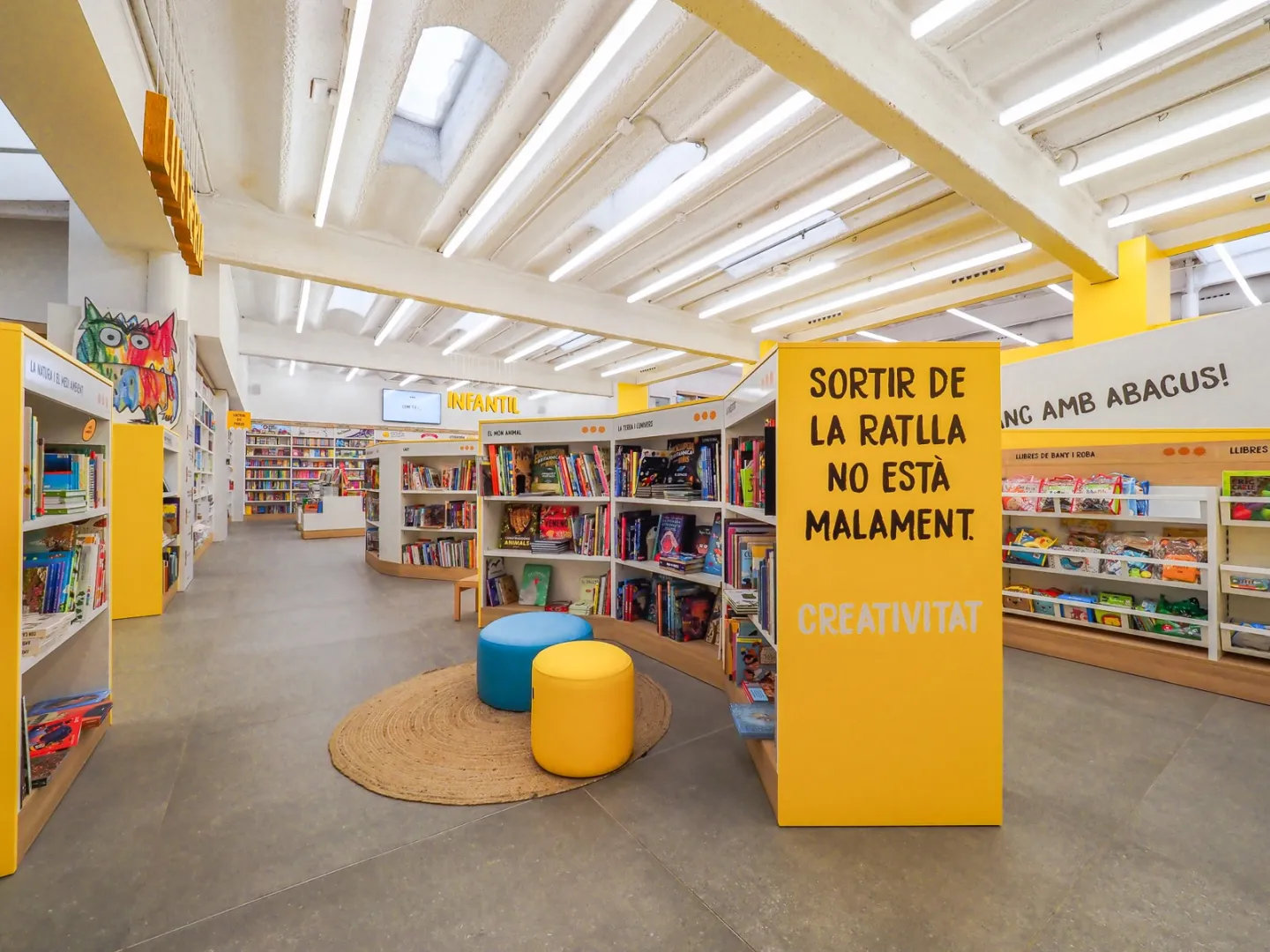
- Abacus Bookshops: This is the largest bookstore chain in the Catalonia Region, with 47 stores and an online marketplace. Beyond selling books, Abacus bookshops host cultural events, provide office supplies, and foster reading and creativity.
- Abacus Education: Founded over 50 years ago by teachers, Abacus continues to support education and boost educational equality by providing training for teachers and students, managing school libraries, and offering high-quality educational materials.
Abacus Future: works on content creation with eleven editorials. It publishes and distributes books, creates films, series, TV shows, virtual reality content, and podcasts. It coordinates exhibitions, organizes events, and publishes leading magazines and local media. It focuses on creating cultural content that envisions a democratic, diverse, just, and peaceful future.
 © Abacus Cooperative© Abacus Cooperative
An Abacus bookshop
As a cooperative with a large number of members, how does Abacus ensure that both workers and users remain engaged and benefit from the cooperative’s success?
Abacus is, first and foremost, a cooperative serving a diverse membership base, including families, teachers, workers, schools, and cultural organizations. Its success is driven by the active involvement of both our consumers and workers. It focuses on creativity and knowledge exchange, both locally and internationally, with a management approach based on shared ownership, emphasizing people over profit, and striving for social transformation.
The Abacus Board of Directors is split evenly between consumer representatives (teachers, researchers, experts etc.) and worker experts in management, education, media, and content creation, etc. Both groups participate in key institutional bodies like the social council, consumers' council, and economic commission. Abacus President, Maravillas Rojo, represents consumers and has a strong cooperative and policymaking background at the local and national levels.
Abacus invests in democratic governance, member training and knowledge exchange. The cooperative organizes an annual welcome day for new members on the cooperative model, principles and values. There is also the Abacus Day, an annual gathering featuring talks, activities, and performances, that reinforce the cooperative identity and encourage knowledge exchange. This event includes the General Assembly, where members actively participate in decision-making, and the Juli Vela School to share good practices in education and culture.
Abacus exemplifies how cooperatives can balance economic efficiency with social impact and ensure that workers and consumers are both co-creators and beneficiaries for success. In this International Year of Cooperatives 2025, I can say that we are proud to be part of this movement that empowers individuals and serves as catalyst to transform lives and society through collective and democratic entrepreneurship.
What are some of the key challenges Abacus faces in education and content creation, and how do you overcome them through the cooperative model?
Abacus recognizes that education is undergoing profound transformations that require continuous adaptation from both educators and institutions. Key challenges include the growing diversity of classrooms along with new cultural, social, and linguistic dynamics, the increasing importance of education for social progress, the impact of digitalization on teaching and learning, and the evolving role of teachers as facilitators rather than sole knowledge providers.
The cooperative model addresses these challenges by placing educators at the heart of its efforts, ensuring they have the necessary resources, tools, and support while fostering a student-centred approach to learning. The Abacus Education division focuses on developing high-quality educational tools, supporting their integration into classrooms, and creating innovative content that complement and enrich traditional learning methods. Priority areas include: reading comprehension; robotics and technology; music and arts; and emerging educational needs; offering training opportunities to teachers to make sure that they can keep up with transformation and disruptions, acquiring new skills and a deep understanding of the main challenges and opportunities faced by our educative systems.
What role do you see cooperatives playing in shaping the future of the education and cultural sectors, in Spain and Europe, and internationally?
In an era of rapid digitalization, economic uncertainty, and shifting social needs, cooperatives play a crucial role in educational and cultural transformation in Spain, across Europe, and internationally, by prioritizing social impact, collective ownership, and sustainability.
In education, they foster collaborative learning, accessibility and adaptability to emerging challenges and ensure that teachers, students, and families actively participate in decision-making, creating more inclusive and responsive systems. Abacus, for example, supports educators with innovative tools, digital resources, and training, reinvesting in educational projects for the collective benefit of its members and society.
In the cultural sector, cooperatives protect and promote diversity, foster independent creation, and ensure fair conditions for creators. Initiatives like Abacus Future contribute to independent publishing and audiovisual production, ensuring creators have control over their work while enhancing cultural accessibility and engagement.
At a broader level, cooperatives foster resilience and innovation by connecting with other organizations in the SSE. Across Europe, initiatives in cooperative education and culture are proving that public-private partnerships can be reimagined to include cooperative-led projects that align economic viability with social and cultural objectives. As traditional models struggle to tackle inequalities, cooperatives offer a future-focused approach rooted in equity, participation, and sustainability. They advance lifelong learning, create resilient cultural industries, and develop cooperative digital infrastructures to counteract monopolistic content control. Through transnational networks, cooperatives promote knowledge exchange and global cooperative growth. By prioritizing people and communities, cooperatives are not just adapting to the future—they’re shaping it to ensure collective benefit, creative freedom, and democratic participation.