

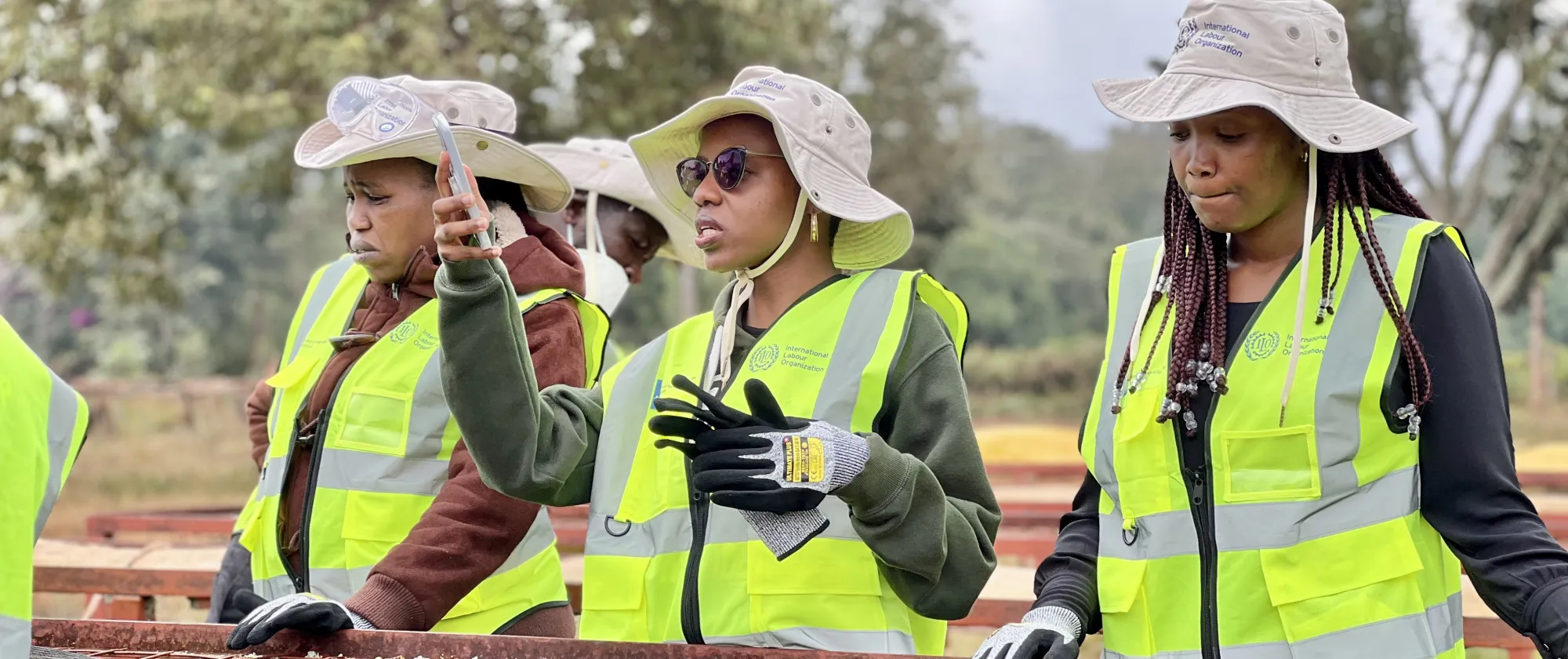
ILO training promotes safer coffee farming in Kenya
Coffee farmers and local stakeholders in Meru and Nyeri counties are strengthening occupational safety and health in coffee production through practical, low-cost solutions using the ILO’s participatory WIND methodology.
21 August 2026
MERU AND NYERI, Kenya (ILO News) – Coffee farmers and local stakeholders in Meru and Nyeri counties are strengthening their ability to make farming safer through practical, locally adapted solutions to occupational safety and health risks.
From 17 to 21 August 2026, the International Labour Organization, through the ACCEL Africa project, trained local facilitators in the Work Improvement in Neighbourhood Development (WIND) methodology. The training equipped participants to identify workplace hazards and support farmers in improving safety and working conditions across coffee-growing communities.
Agricultural workers can face a range of occupational safety and health risks, including injuries from manual handling, unsafe use of agrochemicals, heavy workloads and exposure to extreme weather conditions. Improving safety and health on coffee farms can help protect workers and support more productive and sustainable livelihoods.
WIND offers a practical, participatory approach to workplace improvement. Farmers assess their own workplaces, identify hazards and develop affordable solutions suited to local conditions and available resources. By placing farmers at the centre of the process, the methodology encourages them to take ownership of improvements to their working conditions.
The training brought together participants from labour and occupational safety and health departments, agricultural extension services, employers’ and workers’ organizations, cooperative unions and lead farmers in the coffee value chain.
Using the ILO's Participatory Action-Oriented Training (PAOT) methodology, the programme combined technical knowledge with hands-on learning. Participants used workplace illustrations and examples of local good practices to explore how changes using locally available resources can reduce workplace risks.
For coffee farmer Annlucy Gichoga, the training offered a new perspective on familiar working practices.
The training helped me look at my farm differently. Some of the risks had become part of our normal way of working, so we did not always recognize them as hazards. I learned that we could make simple changes using what we already have to protect ourselves and make our work safer.
Annlucy Gichoga, coffee farmer, Meru County
Participants also examined occupational risk assessment methods and common hazards associated with agricultural work. The sessions explored the link between occupational safety and health and child labour prevention, emphasizing the importance of ensuring that children are not exposed to hazardous tasks in farming environments.
Field-based learning gave participants an opportunity to put these lessons into practice. During a visit to a coffee factory, they observed work processes, equipment and working conditions to identify hazards and assess existing safety measures. Discussions with management and workers provided insights into workplace challenges and opportunities for improvement.
Participants also practised delivering occupational safety and health training through microteaching exercises and received feedback from their peers. The exercises strengthened their ability to facilitate participatory discussions that encourage farmers to identify risks and develop solutions themselves.
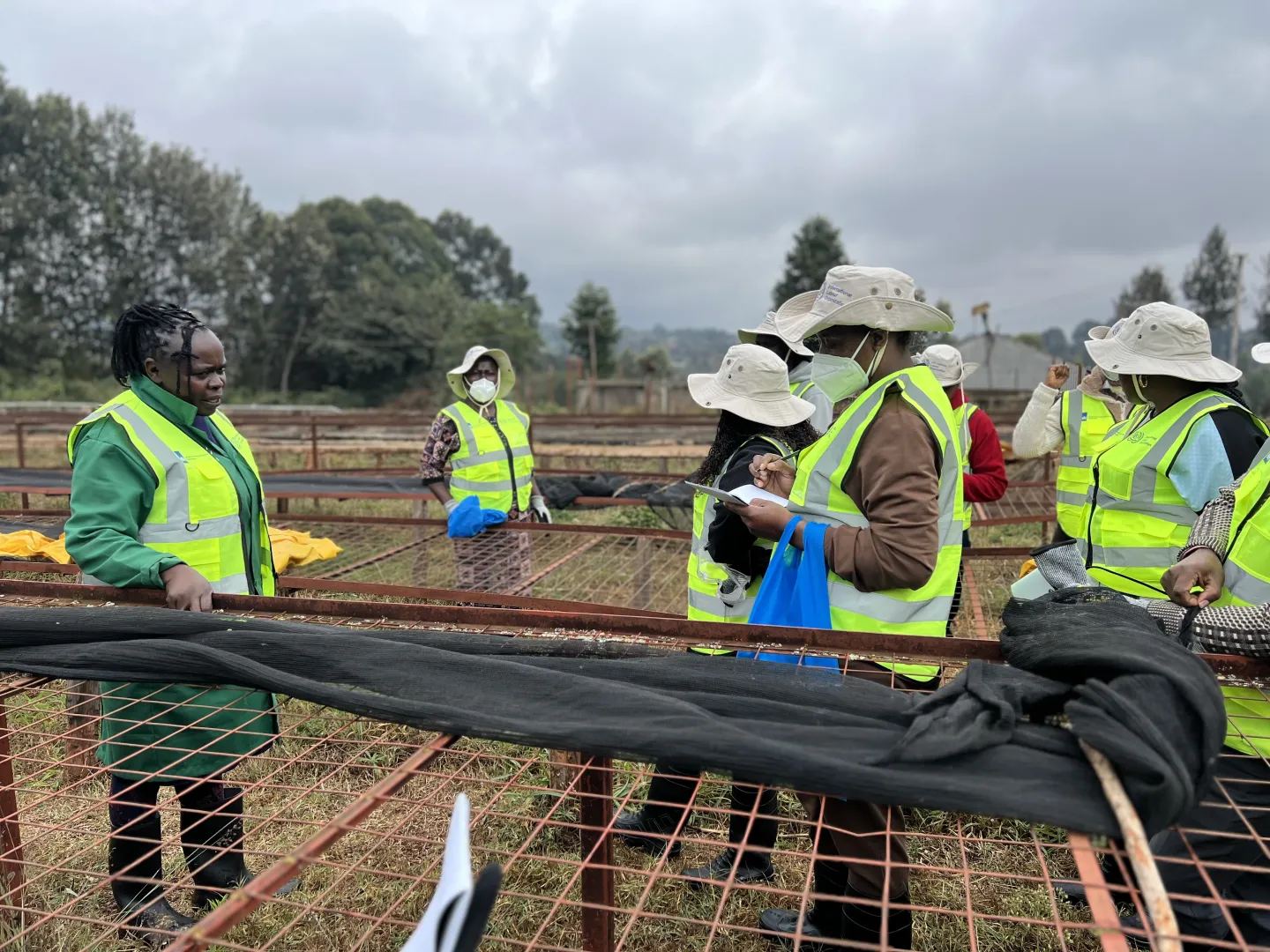
On a coffee farm, participants applied WIND tools directly with farmers. Through participatory discussions, they identified workplace risks and explored measures to improve safety, health and productivity using locally available resources. The exercise demonstrated how farmers can take the lead in improving their working conditions with support from trained facilitators.
The participatory approach also resonated with cooperative leaders and extension officers. Francis Wanjii, a cooperative officer from Nyeri County, highlighted the value of starting with farmers’ existing knowledge and practices.
What stood out for me was that WIND does not begin by telling farmers what they are doing wrong. It starts by listening to them and looking at what is already working. As cooperative officers, we can use this approach to help our farmers identify risks and find practical solutions that they can realistically implement.
Francis Wanjii, cooperative officer, Nyeri County
By strengthening the skills of local facilitators and bringing together farmers, cooperatives, agricultural extension services and labour stakeholders, the training is helping build a locally rooted approach to improving occupational safety and health in Kenya’s coffee value chain. Equipped with the WIND methodology, the trained facilitators can now support farmers in their communities to identify workplace risks, share good practices and develop practical improvements suited to local conditions.
The initiative was implemented through the ACCEL Africa project, financed by the Ministry of Foreign Affairs of the Netherlands.
Relevant projects

Accelerating action for the elimination of child labour in supply chains in Africa (ACCEL Africa)