

Productivity Ecosystems for Decent Work in Egypt
ILO supports workplace safety and productivity in Egypt’s marble and leather tanning clusters
Workers and managers in Egypt's Shaq Al-Tho’ban marble cluster and Robbiki Leather City are identifying workplace risks, improving organization and strengthening cooperation to support safer and more productive enterprises.
15 June 2026
Cairo, Egypt (ILO News) – Promoting safer workplaces and strengthening prevention systems are critical to reducing workplace hazards, protecting workers, and supporting sustainable productivity gains. Across Egypt’s marble and leather tanning clusters - in Shaq Al-Tho’ban and Robbiki Leather City respectively - enterprises are demonstrating how improvements in occupational safety and health (OSH), together with stronger workplace cooperation and organization, can contribute to safer working environments and stronger business performance.
This connection is particularly evident in the two clusters, where occupational hazards, workplace organization, production efficiency, and overall enterprise performance are closely intertwined. By addressing these dimensions together, enterprises can strengthen workplace safety and worker participation while improving productivity and competitiveness.
The International Labour Organization (ILO), through the Productivity Ecosystems for Decent Work in Egypt project, supports efforts at both enterprise and sector levels to promote OSH standards, workplace cooperation and decent work. By addressing enterprise-level challenges alongside broader ecosystem constraints, the project contributes to building more competitive, resilient and sustainable industries.
Practical tools for sustainable impact
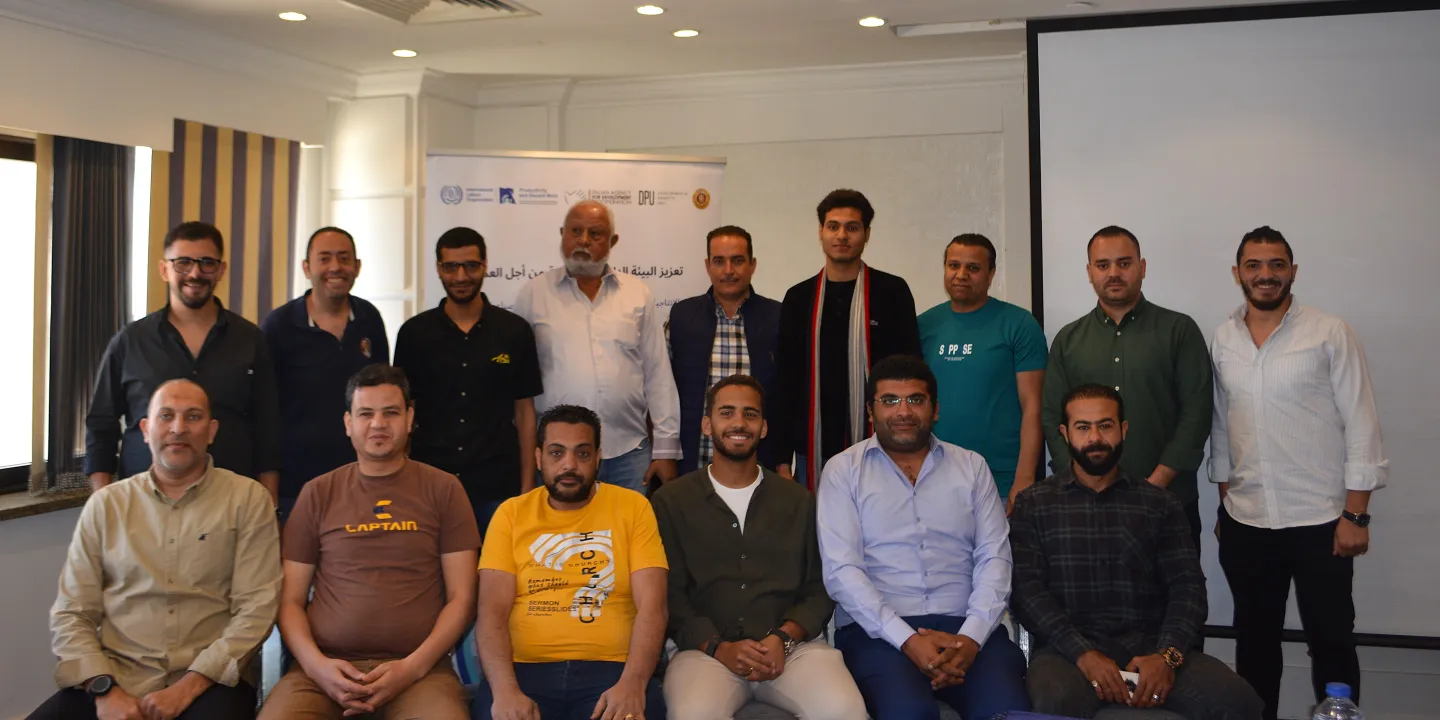
The project continues to implement the ILO’s Sustaining Competitive and Responsible Enterprises (SCORE) training programme, utilizing a pool of certified trainers, in Egypt’s marble cluster in Shaq Al-Tho’ban and leather tanning cluster in Robbiki Leather City.
Participating enterprises utilize SCORE’s methodology to better conduct workplace inspections, prioritize OSH risks, identify preventive and corrective measures, and monitor follow-up action. At the same time, SCORE encourages strengthening communication between workers and managers, improving teamwork and initiating continuous improvement processes within their businesses.
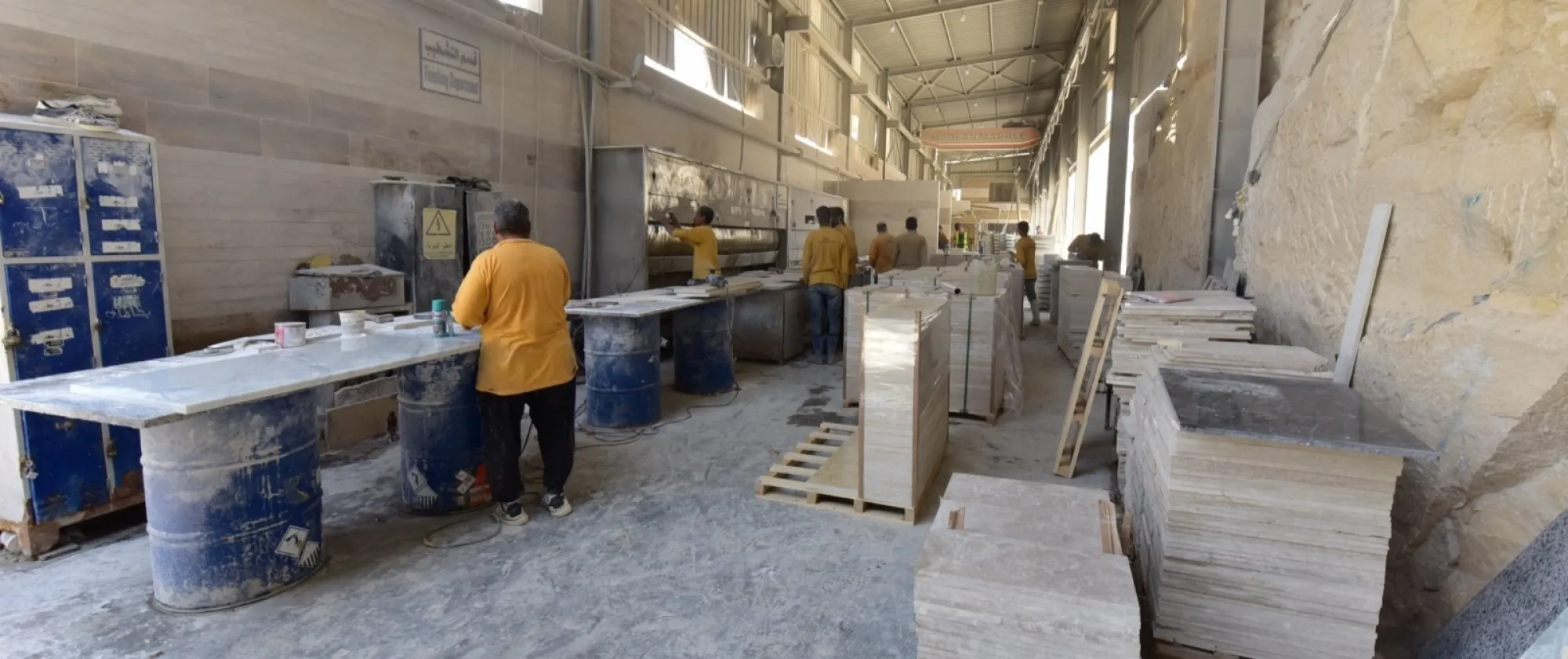
For Hassan Ehab, Quality Manager at a marble factory in Shaq Al-Tho’ban, OSH support helped translate prevention into practical measures. “After the training on OSH, we learned how to better protect the lives and safety of the workers, and how to prevent serious and potentially fatal injuries. For example, cutting and grinding equipment should be technically checked, including screws and other safety components, and workers must be protected from flying particles and surrounding hazards."
The SCORE training helped us understand how practical safety measures can protect not only the worker using the equipment, but also everyone around them.
Hassan Ehab, Quality Manager at a marble factory
By integrating workplace cooperation with OSH, the project reinforces a central principle of SCORE: productivity gains are more sustainable when they are built on safer systems, stronger communication, active worker participation, and improved workplace organization.
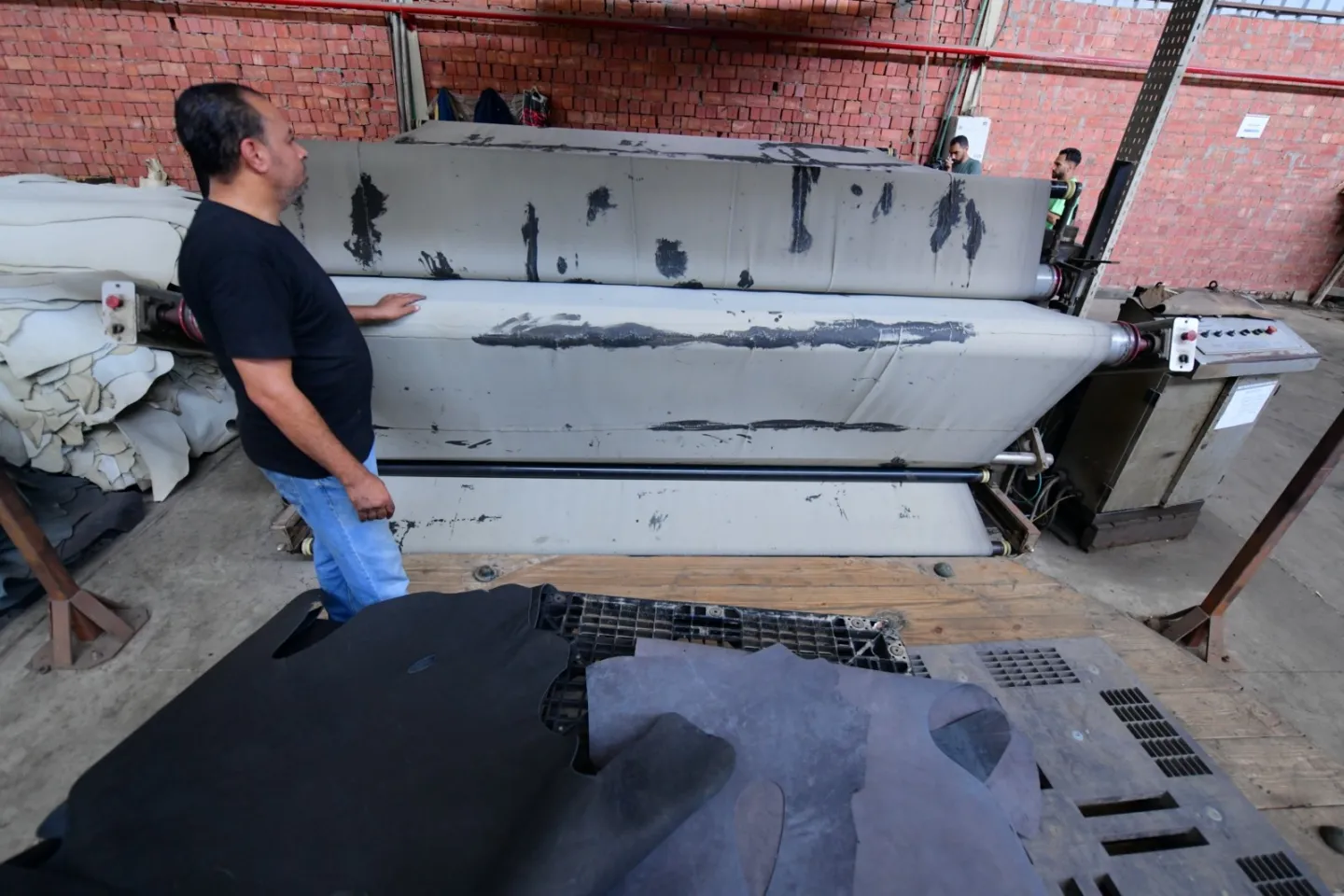
"SCORE has had a significant impact on my daily work," said Mohamed Ahmed, Warehouse Manager at one of the tanneries in Robbiki Leather City. "Before the training, I spent considerable time searching for spare parts and tools. Until I began applying SCORE's 5S methodology in the warehouse, which has greatly improved the organization of tools and equipment, enhanced efficiency, and helped create a more orderly and productive work environment."
Through SCORE, I learned how to organize and categorize inventory more effectively, making it much easier to locate the items I need, thereby saving valuable time.
Mohamed Ahmed, Warehouse Manager at a leather tannery
Sustaining progress in alignment with national efforts
The project also contributes to Egypt’s broader efforts to strengthen prevention systems and promote safer workplaces. By minimizing and controlling workplace risks, it supports efforts to reduce occupational accidents and work-related diseases. It is also aligned with national priorities highlighted by President Abdel Fattah El-Sisi in his 2026 Labour Day speech, including workers’ protection, skills development, training, job creation and social protection, as well as the National Occupational Safety and Health Strategy currently under development.
Building on ongoing results, the Productivity Ecosystems for Decent Work in Egypt project will continue supporting enterprises, sector stakeholders and national institutions to strengthen OSH, workplace cooperation and productivity across the marble and leather tanning clusters. The project will further advance ecosystem-level efforts that address both enterprise and sector-wide challenges, including policy dialogue, institutional capacity building, sector partnerships and enterprise support services. Together, these efforts aim to promote safer and more productive workplaces, enhance the competitiveness of micro, small and medium-sized enterprises (MSME), and facilitate compliance with labour standards.
The project also promotes OSH practices through awareness-raising and advocacy initiatives. As part of the Safe Day 2026 campaign, launched in commemoration of the International Day for Safety and Health at Work, a series of joint awareness materials and messages were developed to highlight the importance of preventing workplace risks and fostering a culture of safety across both industries. Among these were video messages by Minister of Labour Hassan Raddad and Eric Oechslin, Director of the ILO Cairo Office, who shed light on the critical role of OSH in improving working conditions, enhancing productivity, and advancing decent work.
About the project
The Productivity Ecosystems for Decent Work in Egypt project is implemented by the International Labour Organization Cairo Office in collaboration with the Ministry of Industry and funded by the Italian Agency for Development Cooperation (AICS). The project aims to improve productivity and working conditions in Egypt’s marble and leather tanning sectors by addressing enterprise-level and ecosystem-level constraints, strengthening institutional capacity, expanding enterprise engagement, and supporting practical workplace improvements that advance decent work.
Relevant projects

Productivity Ecosystems for Decent Work in Egypt: Improving productivity and strengthening working conditions in key industrial sectors