

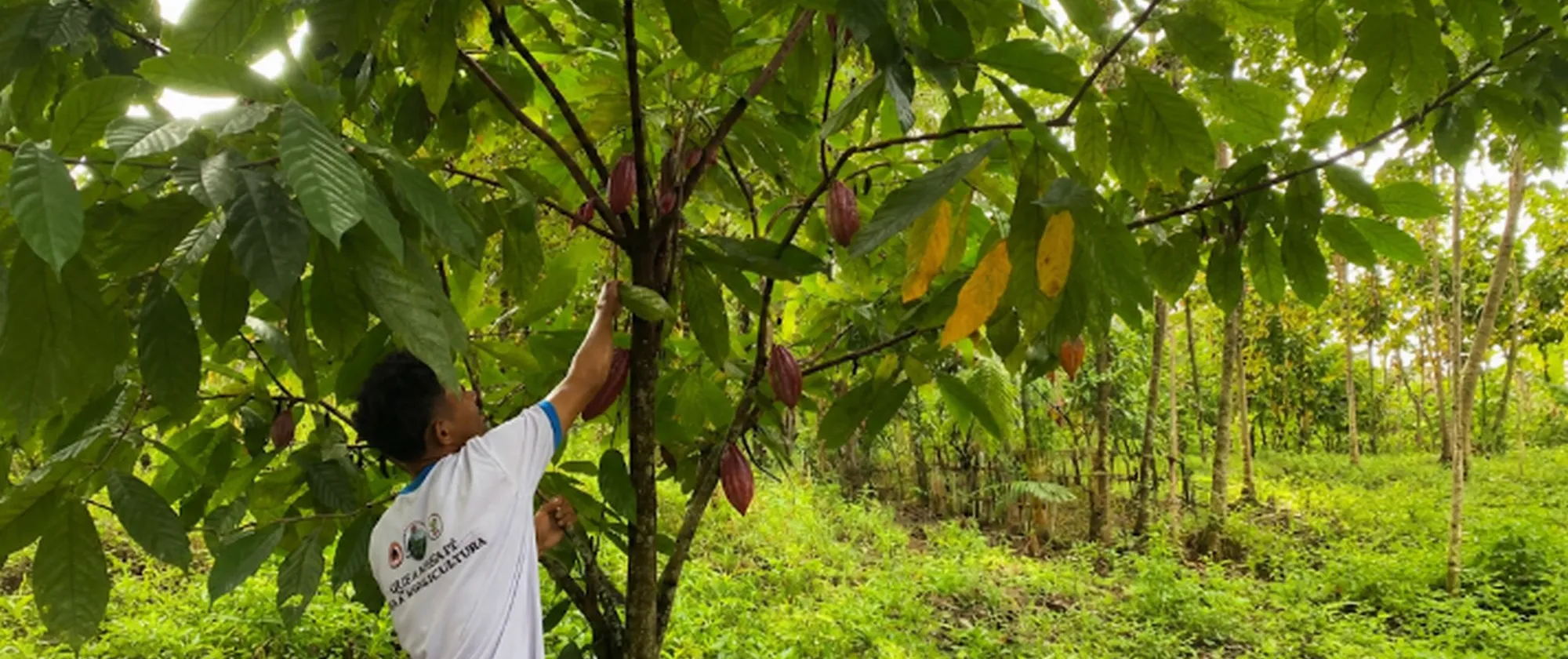
Our impact, their voices
Growing skills, growing opportunities: Two trainers transforming cocoa cultivation in Timor-Leste
The ILO's Agroforestry Skills and Employment Resilience Project, funded by the European Union, is strengthening skills in cocoa cultivation, enabling participants to improve farming practices and create new opportunities for their communities.
21 July 2026
MANUFAHI, Timor-Leste (ILO News) - In May 2026, the International Labour Organization (ILO), with funding from the European Union, conducted a 10-day Training of Trainers on Cocoa Cultivation and Good Agricultural Practices in Same, Manufahi Municipality, Timor-Leste, under the Agroforestry Skills and Employment Resilience Project.
Within just two months, the training has already begun to yield tangible results. Among the 23 participants, two individuals – a government technician and a vocational trainer – are applying their new skills to create opportunities for themselves and their communities. These early results highlight the impact of equipping individuals with practical skills and knowledge that extend beyond technical training.
Leonito da Costa Santos: Turning setbacks into opportunity
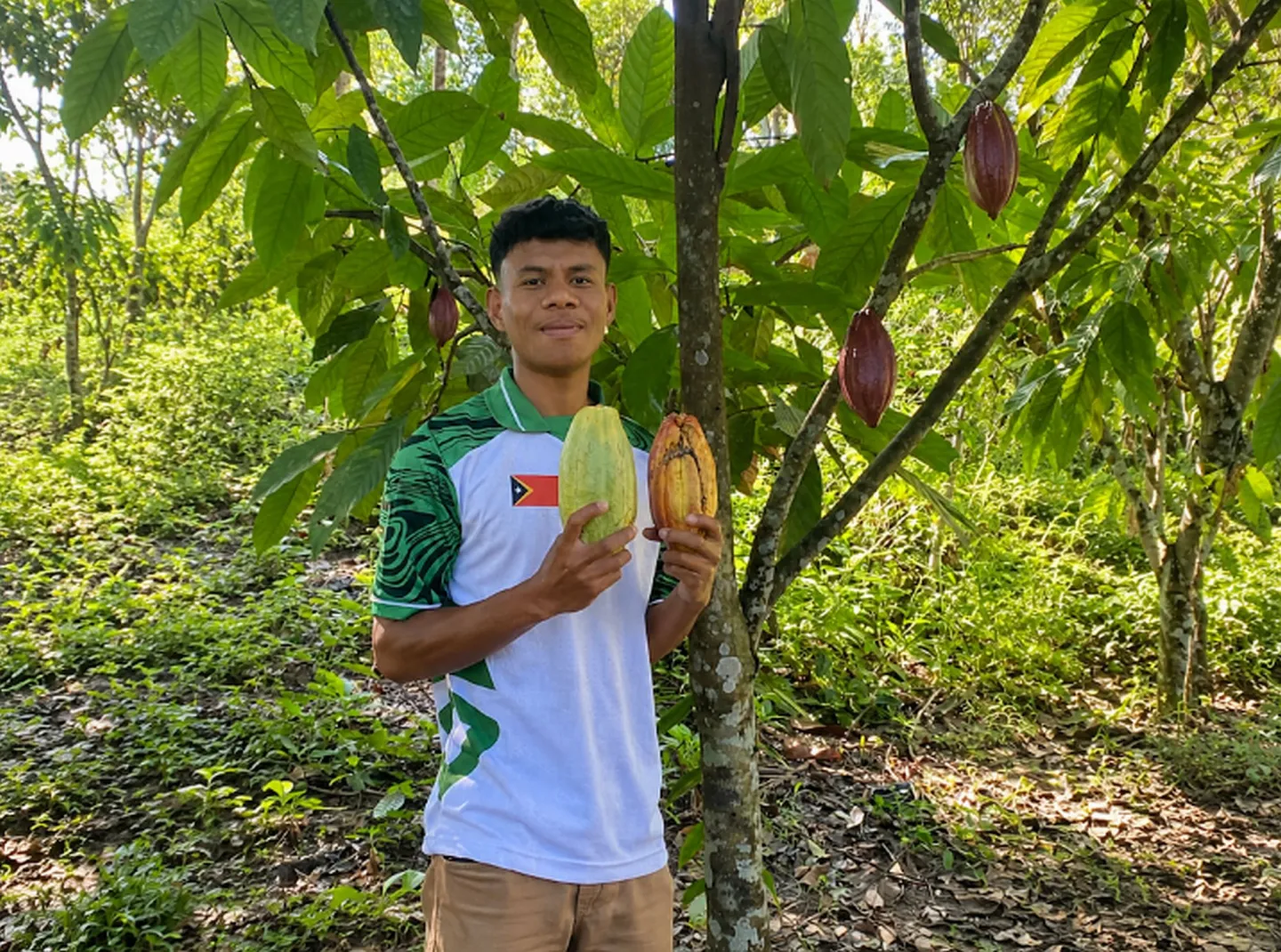
For Leonito da Costa Santos, a 25-year-old Planning Technician at the Ministry of Agriculture, Livestock, Fisheries and Forestry (MALFF) in Manufahi Municipality, the training marked a turning point. His journey with cocoa cultivation began earlier when he joined a training at the National Centre for Employment and Vocational Training in Tibar. Motivated to apply his knowledge, he worked with ten young farmers to plant 700 cocoa seedlings on unused land. However, heavy rainfall destroyed the entire crop.
“Cocoa has great potential in Manufahi, but many farmers still do not have enough knowledge, including me,” Leonito explained. “From that experience, I learned that we need knowledge, skills and support.”
Determined to improve, Leonito joined the ILO’s Training of Trainers. There, he gained a deeper understanding of the entire cocoa value chain – from cultivation to fermentation, processing and market access.
Now I understand that every step is important, not just planting and maintenance, but also processing and selling locally and internationally.
This broader perspective has strengthened his confidence and capabilities. Today, Leonito supports the programme’s Mobile Training Unit, working alongside lead trainers to deliver sessions on vanilla cultivation in partnership with MALFF. Travelling across Manufahi, he helps farmers adopt improved practices and avoid the challenges he once faced.
Looking ahead, Leonito plans to expand cocoa production on his own land and re-engage young people in agriculture. This time with stronger knowledge and preparation. “Young people should take initiative and use available land productively, rather than waiting for support,” he said. “With the skills I have now, I believe I can motivate others to join me.”
Luis de Jesus: Bringing new knowledge into the classroom
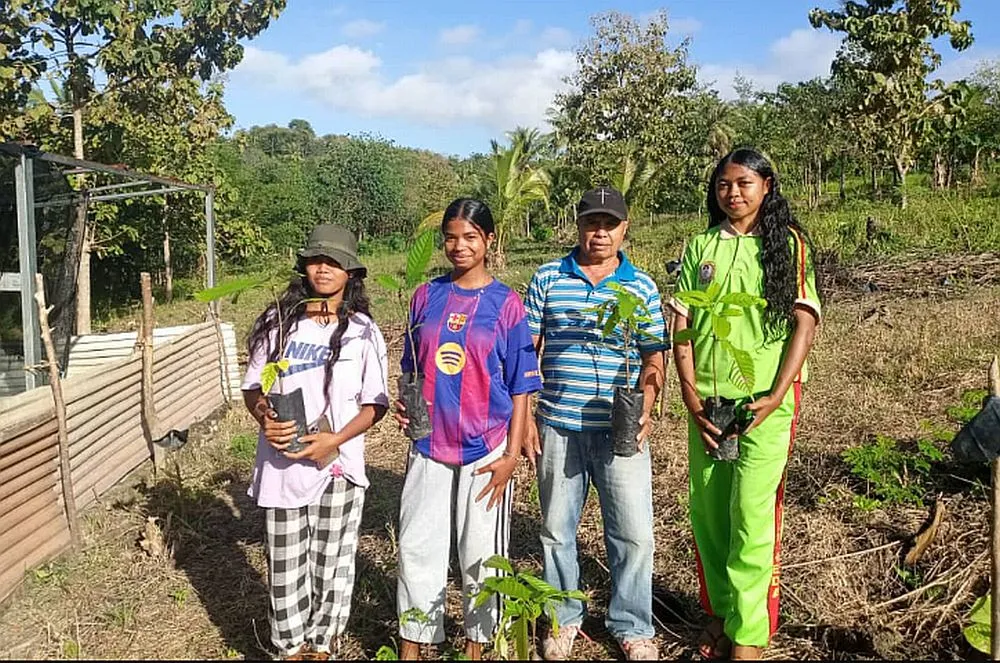
For Luis de Jesus, an agricultural teacher at Kaloheda Technical Vocational High School in Uatolari, Viqueque Municipality, the training offered a fresh perspective after more than 20 years in education. Since the school opened in 2004, he has taught subjects ranging from crop production to farm management.
Yet during the training, he found himself learning in new ways, particularly in areas he had not previously emphasized. One of the most impactful lessons for him was understanding post-harvest processes such as fermentation and quality improvement.
Now I understand that cocoa is not only about growing the plant, but also improving quality and value.
Inspired by this new knowledge, Luis took immediate action. Shortly after returning to Viqueque, he developed and submitted a proposal to the Ministry of Agriculture requesting cocoa seedlings for the school. The proposal was successful, resulting in the allocation of 420 cocoa seedlings.
Together with his students, Luis has already planted 250 seedlings on the school’s two-hectare land. The initiative is now being integrated into both theoretical and practical lessons.
“The knowledge from this training can be integrated into our agricultural lessons,” he explained. “Students can learn modern techniques, gain practical skills and create their own employment opportunities.”
Related content
EU Programme
Agroforestry skills for employment and resilience in Timor-Leste
Relevant projects
EU Programme
Agroforestry skills for employment and resilience in Timor-Leste