


Green skills
Green skills support construction workers in the Philippines
A pilot training on green construction skills in the Philippines is helping participants like Michelle Meñez turn sustainability concepts into practical knowledge that can reach construction workers and support their livelihoods.
16 October 2026
For more than a decade, Michelle Andrea Diyavati Meñez has worked with people who turn old shipping containers into new spaces.
At Container Living, a circular construction company in the Philippines, decommissioned shipping containers become homes and other structures. The company has used these materials since 2014 as an alternative to more extractive construction materials.
As lead for sustainability and partnerships, Michelle has worked closely with the company's construction workers. Over the years, they have learned how to work with alternative materials and adopt more sustainable practices.
But there was something Michelle felt was missing.
“We had already been teaching them green practices, but without a master plan, without a proper backbone or education,” she says.
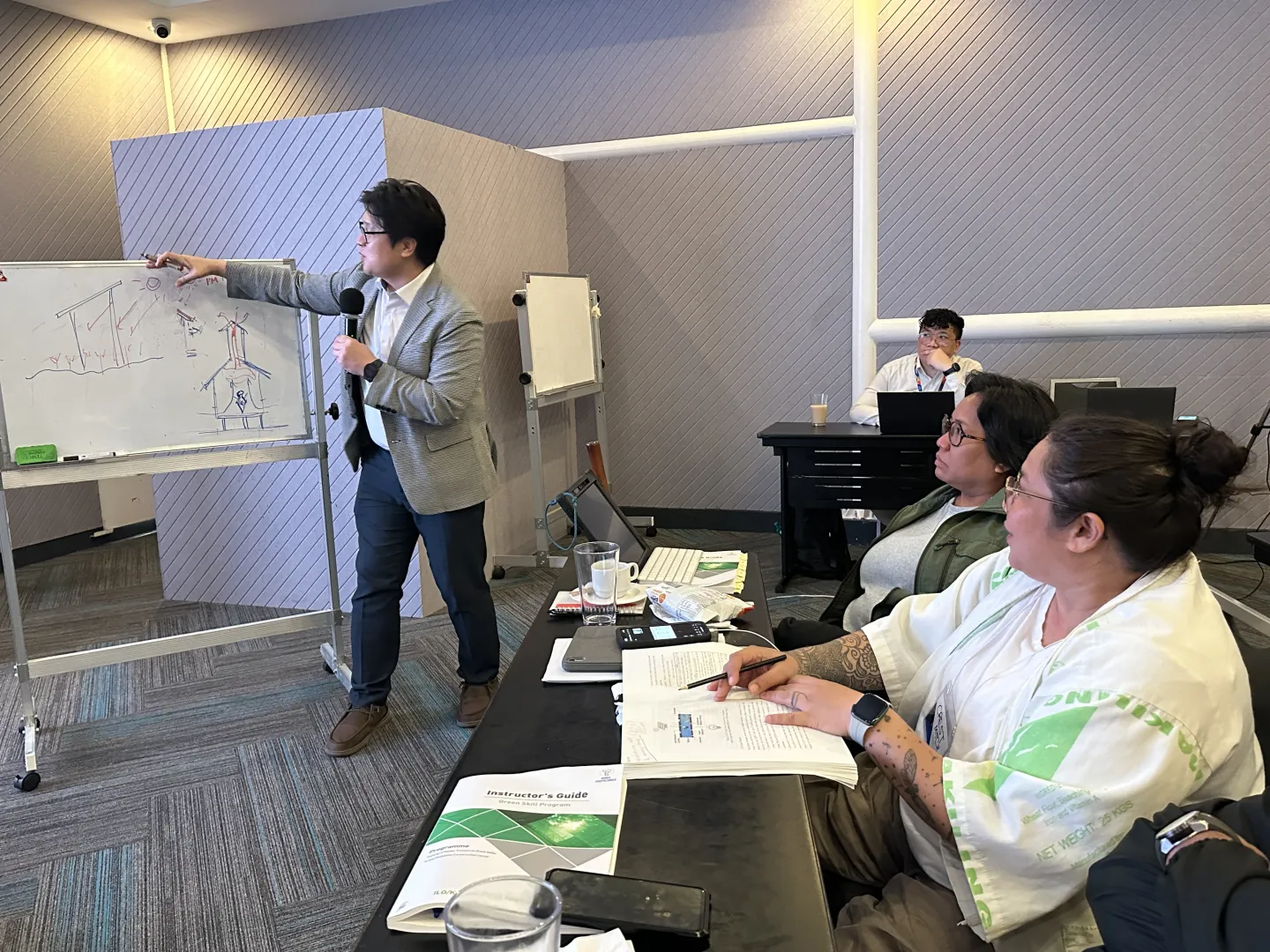
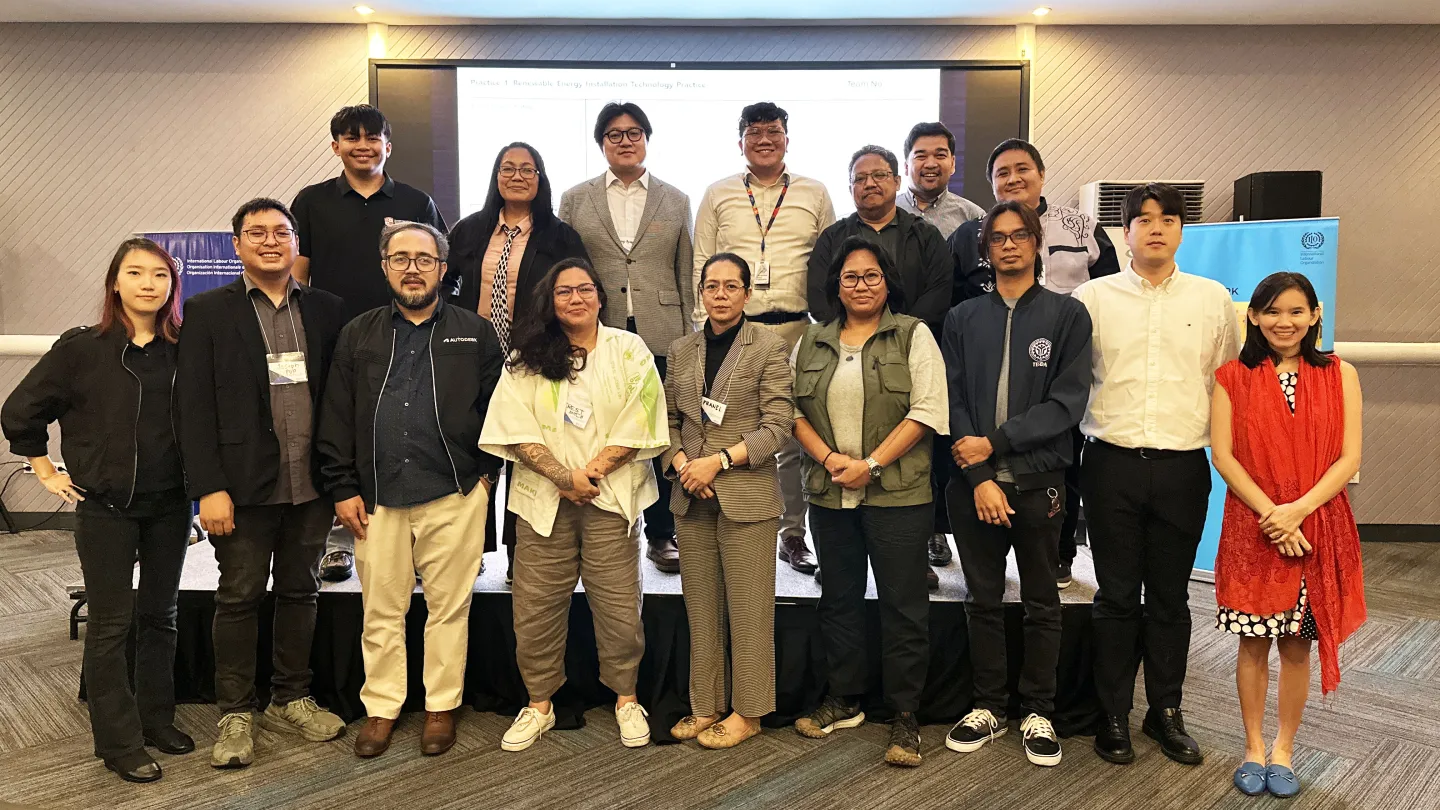
An opportunity to join a pilot training of the International Labour Organization (ILO) on Introduction to Green Construction Skills (IGCS) gave her a chance to connect that experience with a more structured understanding of green skills.
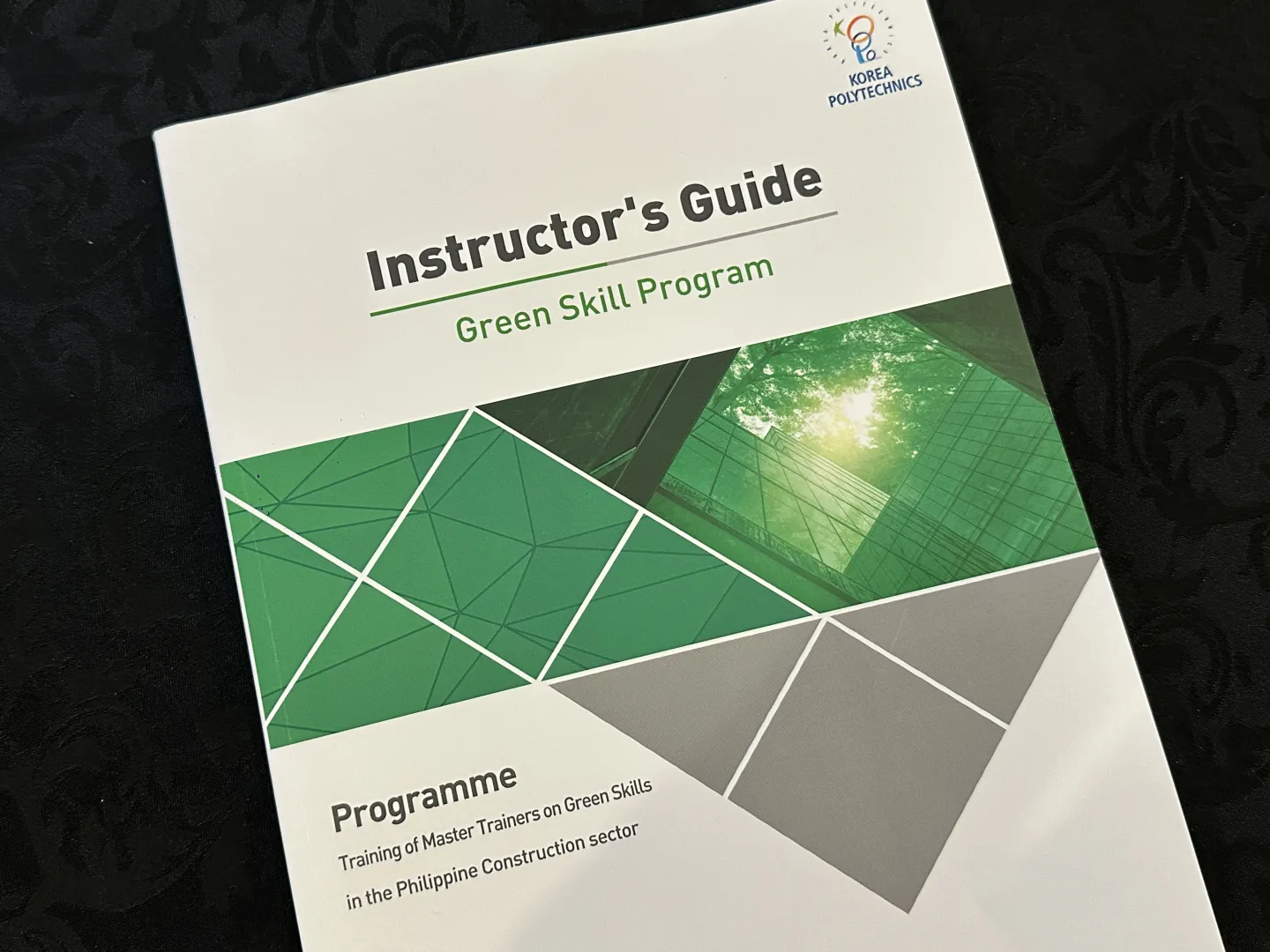
The training is being piloted under the ILO-Korea Partnership Programme on Advancing Digital and Green Skills for Youth in ASEAN.
The project responds to changes taking place across the construction sector. New technologies and greener ways of working are changing the skills that workers need. At the same time, attracting young people to construction remains an important concern for the industry in the Philippines.
The project supports young people to gain digital and green skills that respond to these changes. It combines skills training and apprenticeships with stronger cooperation between industry and training institutions. It also supports efforts in the Philippines to strengthen skills for green buildings and a transition towards greener development.
For Michelle, the IGCS training helped put familiar ideas into a clearer framework.
The course covers four areas that construction workers will increasingly need as the sector moves towards decarbonization, climate resilience and a circular economy. These include understanding green construction and sustainability, using eco-friendly materials and technologies, applying climate-responsive construction practices, and managing building resources.
Michelle joined the training through her organization's partnership with the Center for Renewable Energy and Sustainable Technology, or CREST.
She believes this type of training can help close an important gap between sustainability concepts and what workers experience every day on construction sites.
“What’s happening is we’re leaving labour behind,” Michelle says.
Terms such as carbon emissions, circular economy and passive architecture may be familiar to sustainability professionals. But they can seem far removed from the daily work of someone on a construction site.
For Michelle, green construction will only move forward when that knowledge becomes practical and accessible.
“If we are able to translate this complex language into simple language, it will not only benefit labour or the work, but it will also benefit us,” she says.
The training also made Michelle reflect on how knowledge is passed on.
“The most important thing that I learned from this training is that I have to know what I’m talking about,” she says. “You really have to learn it, to teach it, to impart it.”
She also sees opportunities to recognize knowledge that workers and communities already have. Indigenous and local practices, for example, may already reflect principles of sustainability even when they are not described in technical industry terms.
Training can help connect this existing knowledge with skills recognized by the construction industry.
For workers, Michelle believes that connection must ultimately lead to better opportunities.
“If we keep talking about green skills and climate change, it’s all concepts. Will that feed labour? No,” she says. “But if we teach them that you can apply this to your labour and make it a value that you can apply to yourself, then that translates to something that will feed them.”
Her next step is to bring what she learned closer to the workers she knows.
“My plan is to really share it with labour in the terms that they understand,” Michelle says. “My plan is to go to them, not for them to come to me.”
It is a simple idea that reflects the wider ambition of the pilot: green skills need to reach the people doing the work.
For Michelle, greener construction is not only about the finished building. It begins with the materials, continues through the construction process and depends on the skills of the people behind it.
“A building is only green when the process is green, when the materials are green, and also when the labour pool behind it knows and applies all these green aspects to it,” she says.
“It’s a cohesive effort that we all need to be a part of.”
Relevant projects

Skills
Advancing Digital and Green Skills for Youth in ASEAN