

World Day against Child Labour
Ghana marks World Day against Child Labour with strong calls for collective action in Bibiani
This article covers Ghana’s national commemoration of the World Day Against Child Labour held in Bibiani on 19 June 2025. Supported by the ILO’s ACCEL Africa project and partners, the event highlighted progress, challenges, and renewed commitments to eliminate child labour in cocoa and mining supply chains. It features speeches from government officials, ILO representatives, and powerful messages from children, with a focus on community action and the launch of Child Labour Free Zones.
19 June 2025
Ghana, 19 June 2025 (ILO News) – The International Labour Organization (ILO), through its Accelerating Action for the Elimination of Child Labour in Supply Chains in Africa (ACCEL Africa) project, provided both technical and financial support for a national event commemorating the World Day Against Child Labour in Ghana. This initiative was made possible through the collaborative efforts of the ILO, with support from the Ministry of Foreign Affairs of the Netherlands, and in partnership with the Ministry of Labour, Jobs and Employment.
The event was held on 19 June 2025 in Bibiani, one of the districts, where the ACCEL Africa project operates. Bibiani is located in the Western North Region of Ghana. Under the theme “Progress is clear, but there’s more to do: Let’s speed up efforts!”, the day convened key stakeholders from the government, development partners, civil society, communities, and the media to raise awareness, reflect on the progress achieved, and galvanize further action in the fight against child labour.
In a keynote address delivered on his behalf, Western North Regional Minister, Wilbert Petty Brentum, reaffirmed the region’s commitment to combating child labour, particularly in cocoa-growing and mining communities. He applauded the efforts of development partners—especially the ILO and other UN agencies, international and local organizations, and the private sector—for their dedicated support in the fight against child labour. Mr. Brentum pledged to foster multi-stakeholder collaboration, emphasizing the need for district assemblies, traditional authorities, community leaders, NGOs, and enforcement agencies to work together effectively.

Echoing this call for collective action, Vanessa Phala, Country Director of the ILO Country Office for Nigeria, Ghana, Liberia, and Sierra Leone, in a statement delivered on her behalf by Robert Pwazaga, National Project Officer, acknowledged the progress made in addressing child labour. However, she emphasized that the global target to eliminate child labour by 2025 has not been met and urged all stakeholders to intensify their efforts. “I strongly believe that by working hand-in-hand with the Government of Ghana, development partners, and stakeholders, we can eliminate child labour in Ghana and beyond,” she affirmed. Ms. Phala highlighted the significant contributions of the ILO’s ACCEL Africa and CLIMATE-Cocoa projects—funded by the Governments of the Netherlands and Japan, respectively—in addressing child labour in supply chains in Ghana. She also urged the government to begin reviewing its implemented actions in line with the Durban Call for Action, and to consider the ratification of ILO Convention 155, which addresses Occupational Safety and Health.
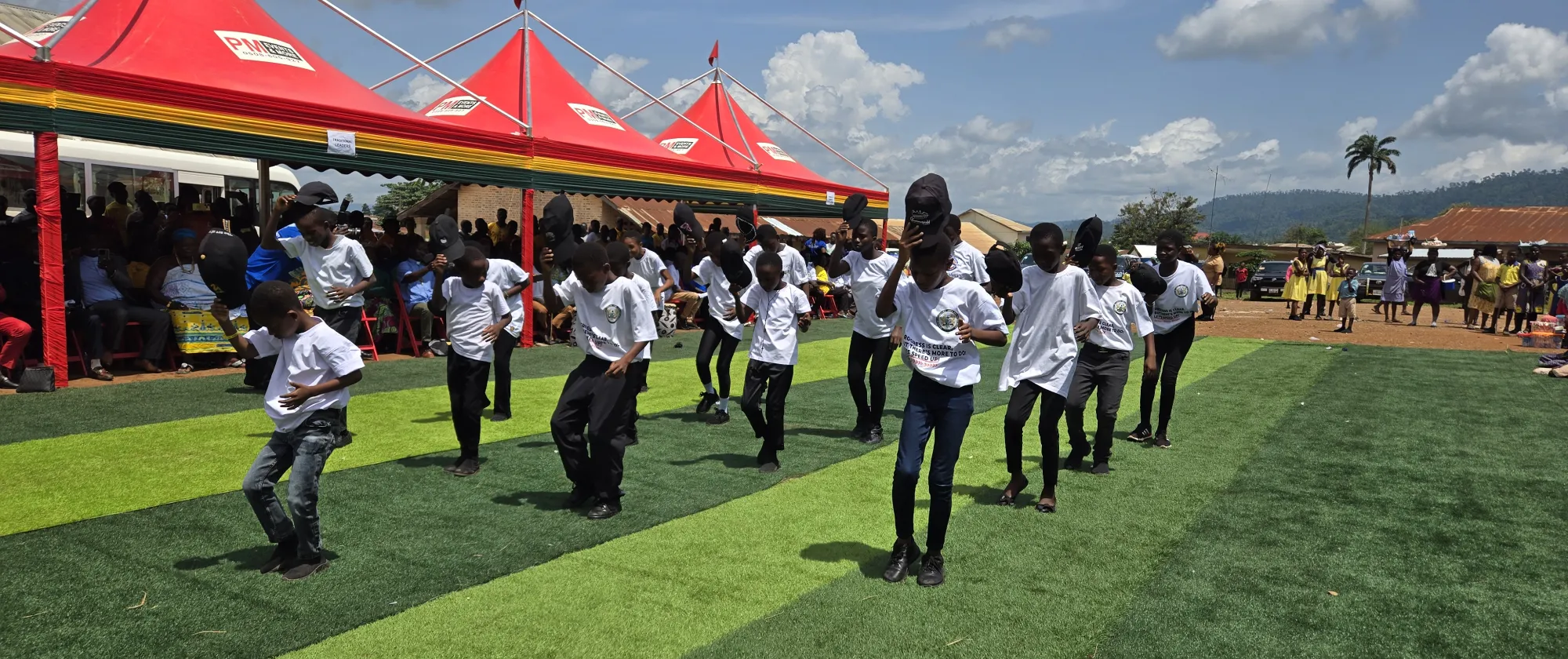
Complementing these high-level commitments, children played a central and impactful role at the event, bringing a powerful dimension to the celebrations. Through dramatic performances, the children depicted the harsh realities and long-term consequences of child labour, particularly in the cocoa and artisanal gold mining supply chains. They also recited thought-provoking poems, passionately appealing to government officials, development partners, civil society, and community leaders to take immediate and decisive action to protect children’s rights and futures.
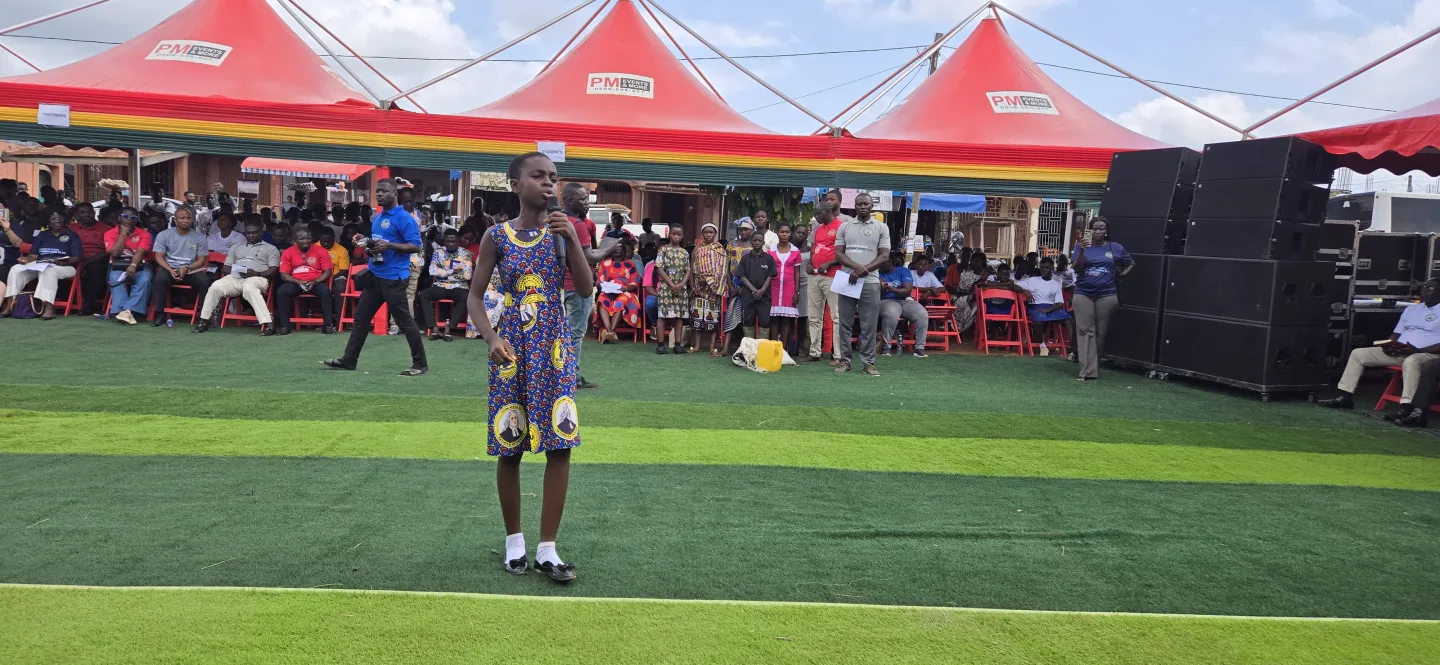
One of the girl participants, Winifred Osei Duku, delivered a heartfelt message that resonated deeply with the audience: “Kids should not be taken to farms but should be in school, because school is the future of every child.” Her words served as a reminder of what is at stake and why collective action is essential. The children’s performances not only raised awareness but also inspired renewed commitment among stakeholders to accelerate efforts toward the elimination of child labour.
“Kids should not be taken to farms but should be in school, because school is the future of every child.” Winifred Osei Duku, Girl Participant
The Chief of Sefwi Ntakam and Akonmahene of the Sefwi Traditional Area, Nana Kojo Somiah II, who chaired the event, expressed his gratitude to the Government and partners for selecting Bibiani as the host for this year’s event. He called on traditional authorities to actively join forces in the fight against child labour within their respective communities, emphasizing the vital role they play in protecting children and promoting sustainable development at the grassroots level.
The event served as a powerful platform for reflection, advocacy, and renewed commitment to ending child labour in Ghana. From the voices of children to the pledges of government officials, traditional leaders, and development partners, the event underscored the collective responsibility required to protect the rights and futures of all children. As a concrete step forward, the local government announced plans to initiate a pre-assessment of nine communities in the Bibiani area—a critical move toward formally declaring them as Child Labour Free Zones. This initiative marks a significant milestone in the national effort to eliminate child labour and ensure that every child enjoys the right to education, safety, and a childhood free from exploitation.
Related content

12 June 2026
World Day Against Child Labour

Topic portal
Child Labour
Relevant projects
Accelerating action for the elimination of child labour in supply chains in Africa (ACCEL Africa)