

Just transition
Geologist shapes a just transition, sustainable energy in the Philippines
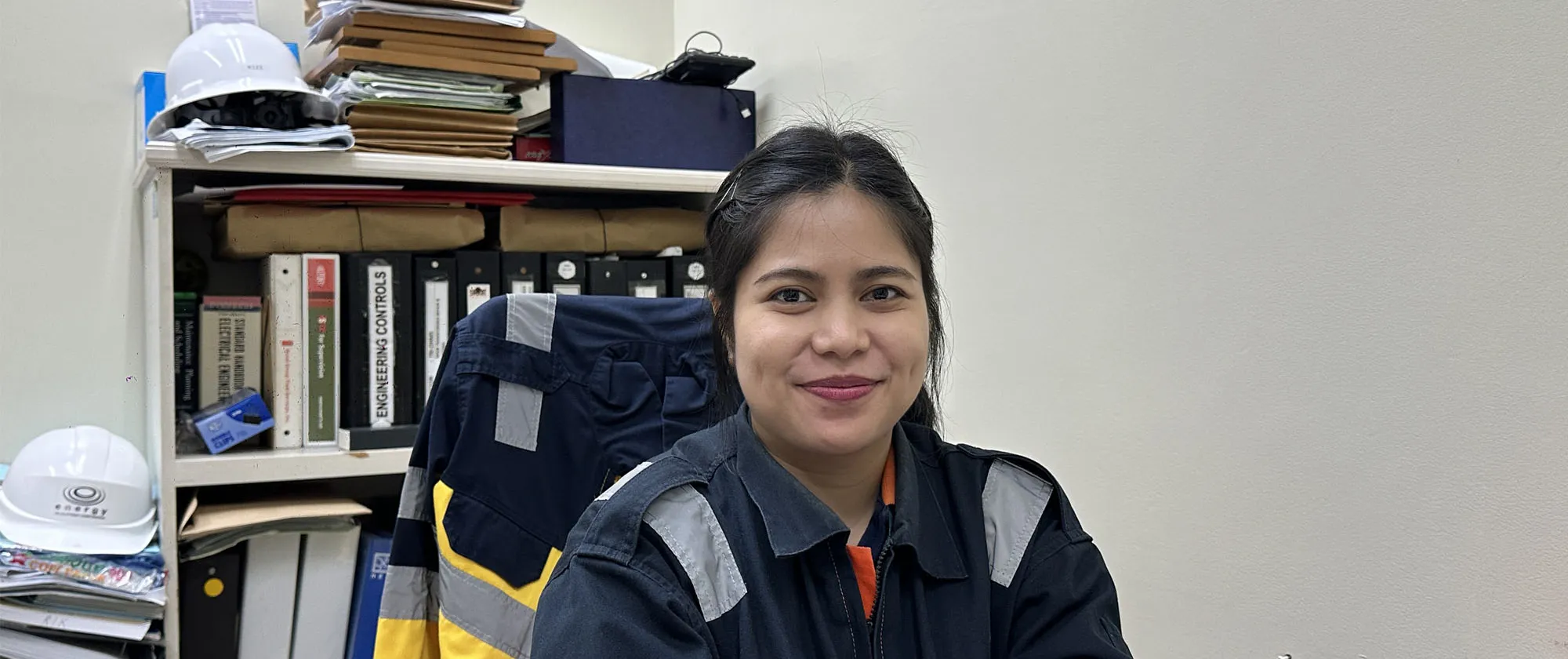
A female geologist, supervisor, and union leader champions a just transition within the Philippines' geothermal sector to ensure a sustainable future for workers and the environment.
9 September 2026
KIDAPAWAN, Philippines (ILO News) - Growing up in Mindanao, Demi Abaniel did not always dream of being a geologist. Life, however, had a different path in mind. When she was only 11 months old, her father passed away. Raised by her mother, a farmer who also worked for a non-government organization, Demi grew up watching resilience in action. Her mother carried the responsibility of raising two daughters, supported by a community of women who helped shape the person Demi would become.
"It really takes a village to raise a child. This foundation of strength, being surrounded by brave women, taught me that no challenge is too great for a woman to handle," Demi recalls.
That early lesson would prepare her for a career in one of the country's most demanding industries, geothermal energy, where she now helps ensure that the transition to clean energy is not only sustainable for the planet, but fair for the people powering it.
Demi never imagined becoming a geologist. Yet today, at 34, she serves as Resource Lead for the Mount Apo Geothermal Project, helping safeguard one of the Philippines' most important renewable energy resources for future generations.
Her work reflects the promise of geothermal energy as a reliable source of clean power. Unlike many renewable sources, geothermal energy provides continuous electricity while reducing greenhouse gas emissions. Demi believes it is one of the country's strongest tools in responding to climate change because it is future-ready.
She is equally proud of environmental initiatives such as Project Binhi, a reforestation programme that has restored native tree species around geothermal sites, proving that energy development and environmental stewardship can go hand in hand.
Her journey into geology was not without obstacles. Although more women were entering the profession, the field remained largely male dominated when she began her studies. Fieldwork demanded long days crossing mountains and rivers under difficult conditions.
"We had to prove that we could keep up with them," Demi says, recalling 13-hour treks even when she and her classmates felt unwell.
The determination that carried her through those years also shaped her leadership style. After nearly 12 years with First Gen, formerly the Energy Development Corporation, Demi has moved beyond exploration work into strategic decision-making. But alongside her technical responsibilities, she has taken on another role of advocating for workers.
In 2024, after being promoted to supervisor, Demi was elected President of the Mount Apo Supervisors Union (MASU). She had previously led the professional and technical union, where she gained firsthand experience navigating the balance between management and labour.
"You have to wear a different hat as a union leader and as a supervisor," she explains. "You have to fight for the rights as a worker but also balance the relationship with the employer."
For Demi, unions are not about creating conflict. They are about creating solutions through social dialogue and ensuring workers have a collective voice.
"We achieved more as a union because there is strength in numbers," she says, explaining how unions give confidence to workers who may otherwise hesitate to speak up.
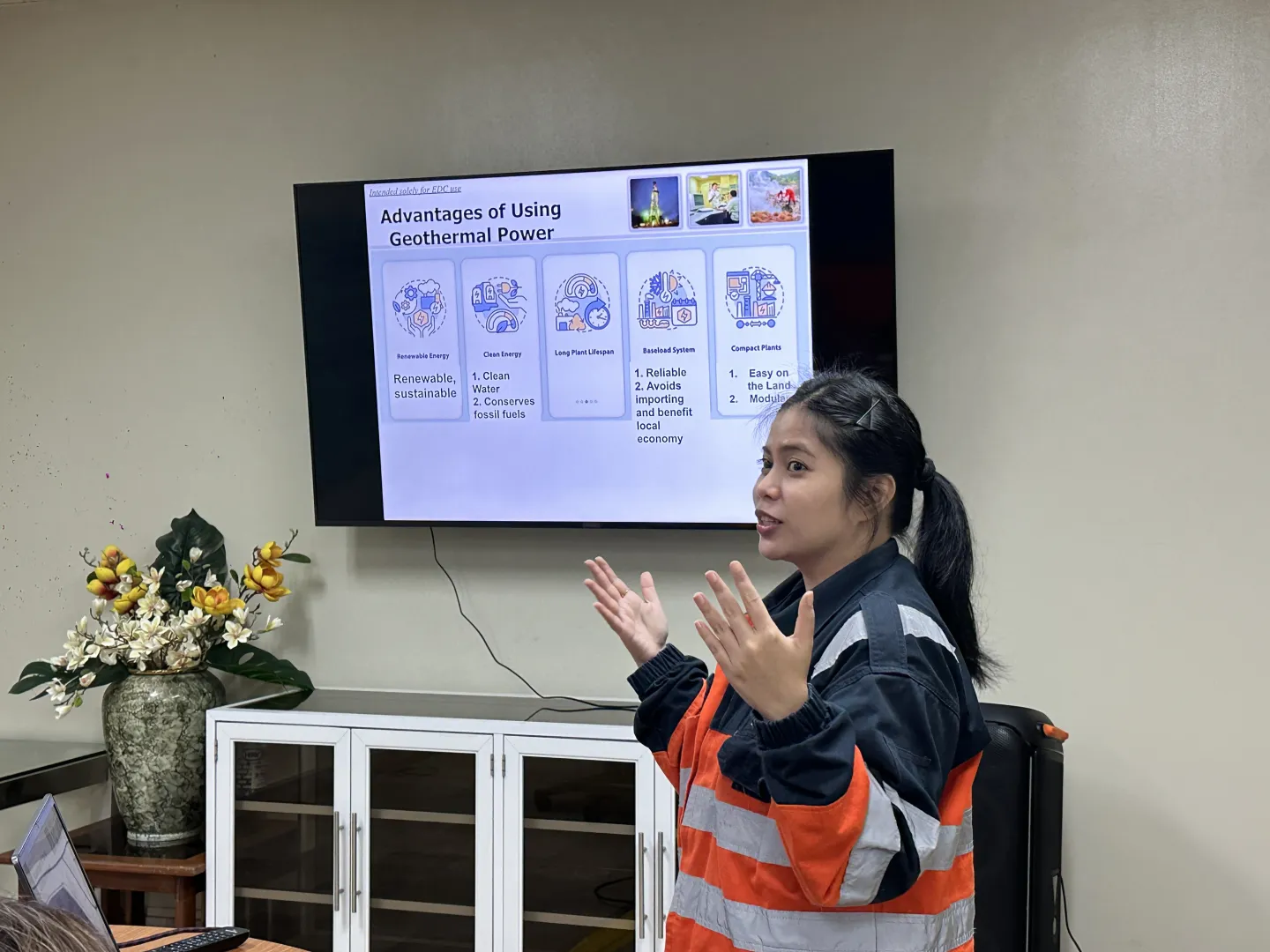
That perspective deepened after participating in the International Labour Organization (ILO) training in 2024, followed by a just transition programme under the ILO's Enhancing Tripartite Roles to Uphold Just Transitions (ENTRUST) initiative in June 2026, implemented in partnership with the Associated Labor Unions-Trade Union Congress of the Philippines (ALU-TUCP) in Mindanao.
The initiative is supported by the ILO’s Regular Budget Supplementary Account (RBSA) with contributions from Belgium, Denmark, France, Germany, Italy, Luxembourg, Netherlands, Norway, Sweden, Spain, and Qatar.
The training reinforced her belief that the shift toward a low-carbon economy will only succeed if workers are part of the process. "A just transition must be inclusive. It is not selfish" Demi explains.
For her, inclusion means investing in people as much as technology. As digitalization and artificial intelligence reshape the energy sector, she believes workers should be equipped with new skills instead of being left behind.
"New technologies should be tools to make our lives easier," she says, adding that workers must not be "closed off" to change.
Through social dialogue, she works to find common ground where both workers and employers’ benefit. Skills development, lifelong learning, and meaningful consultation become essential ingredients of a transition that creates decent jobs while strengthening clean energy industries.
By bridging corporate goals with workers' rights, Demi demonstrates that the energy transition is not only about generating renewable power. It is about ensuring that the people driving the transition have secure jobs, opportunities to grow, and a voice in shaping the future.
As a geologist, supervisor, and union leader, Demi is helping prove that climate action and labour rights do not compete. They strengthen one another. Her work is helping build a future where the shift to sustainable energy leaves no worker behind, showing that a truly just transition is powered not only by renewable energy, but by solidarity, social dialogue, and decent work.

Relevant projects

Just transition
ENTRUST Initiative: Enhancing tripartite roles to uphold just transitions in sectors undergoing green transformations