

Finding their voices: Cambodian domestic workers speak up for rights
Through the Association of Domestic Workers (ADW) and the EU-funded PROTECT project, domestic workers in Cambodia are strengthening their voice, dignity and collective power.
5 March 2026
Phnom Penh (ILO News) – Despite their essential contribution to households and the economy, domestic workers in Cambodia continue to face serious challenges, including limited access to skills training, exposure to abuse and harassment, unpaid wages and gaps in legal protection - whether at home or abroad.
Born into a farming family as the youngest of 13 children in Kien Svay District, Kandal Province, Yim Sothy’searly life was marked by hardship. After the loss of most of her family members and with her father living with a disability, severe economic difficulties forced her to leave school and begin working as a domestic worker.
In 2005, in search of better opportunities, Sothy migrated to Thailand, where she spent three years working as a domestic worker and experienced first-hand the vulnerabilities faced by migrant workers. Upon returning to Cambodia, she resumed domestic work in Phnom Penh but endured abuse from her employer and the employer’s family. These experiences strengthened her determination to advocate for the rights and dignity of domestic workers.
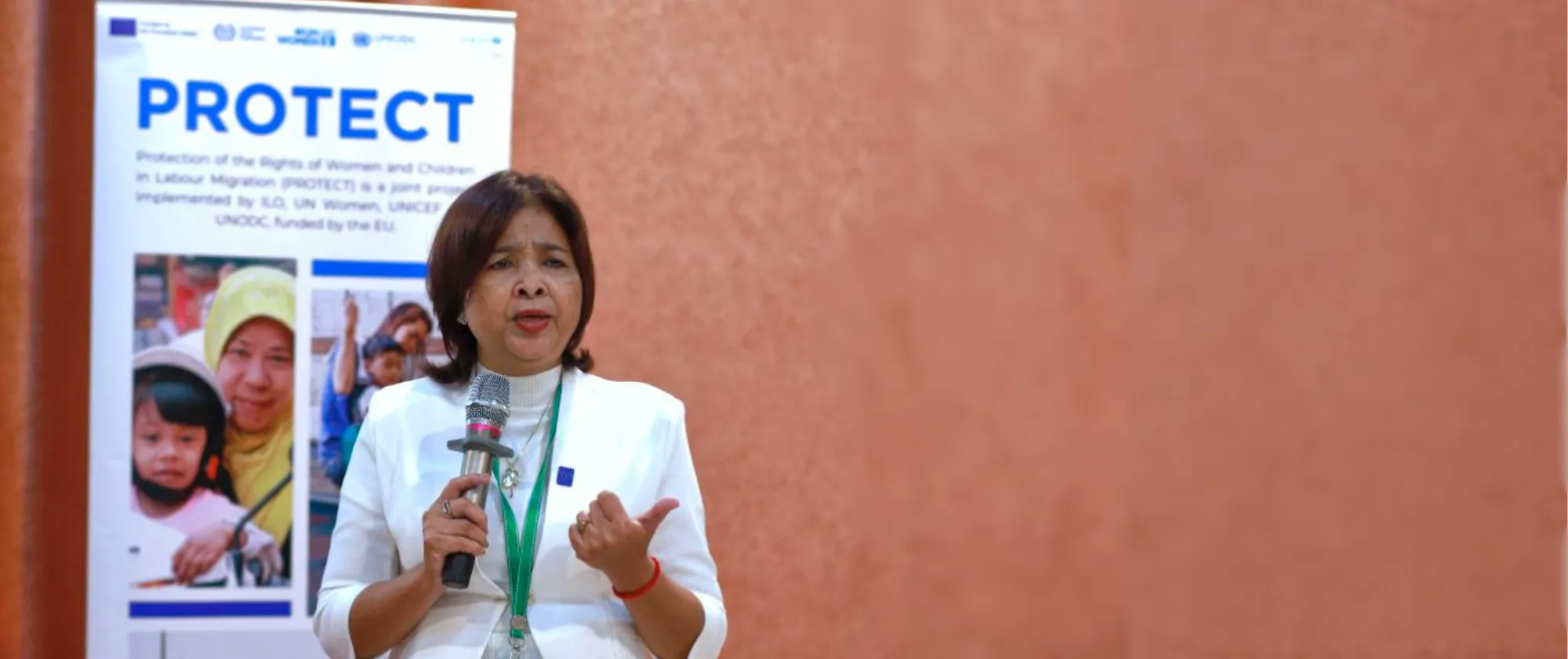
“Drawing on my experience, I started a membership-based organization representing domestic workers across Cambodia, called the Association of Domestic Workers (ADW), in 2016,” said Sothy, Director and ADW founder.
ADW promotes the rights of domestic workers by providing protection and support services to those who experience abuse, exploitation or violence, strengthening access to complaint and remedy mechanisms and advocating for legal recognition and social protection for domestic workers.
“What makes ADW’s approach unique is that it is led by domestic workers themselves. Shared experience fosters trust, solidarity and a strong sense of ownership,” she added.
What makes ADW’s approach unique is that it is led by domestic workers themselves. Shared experience fosters trust, solidarity and a strong sense of ownership.
Partnership with the PROTECT project
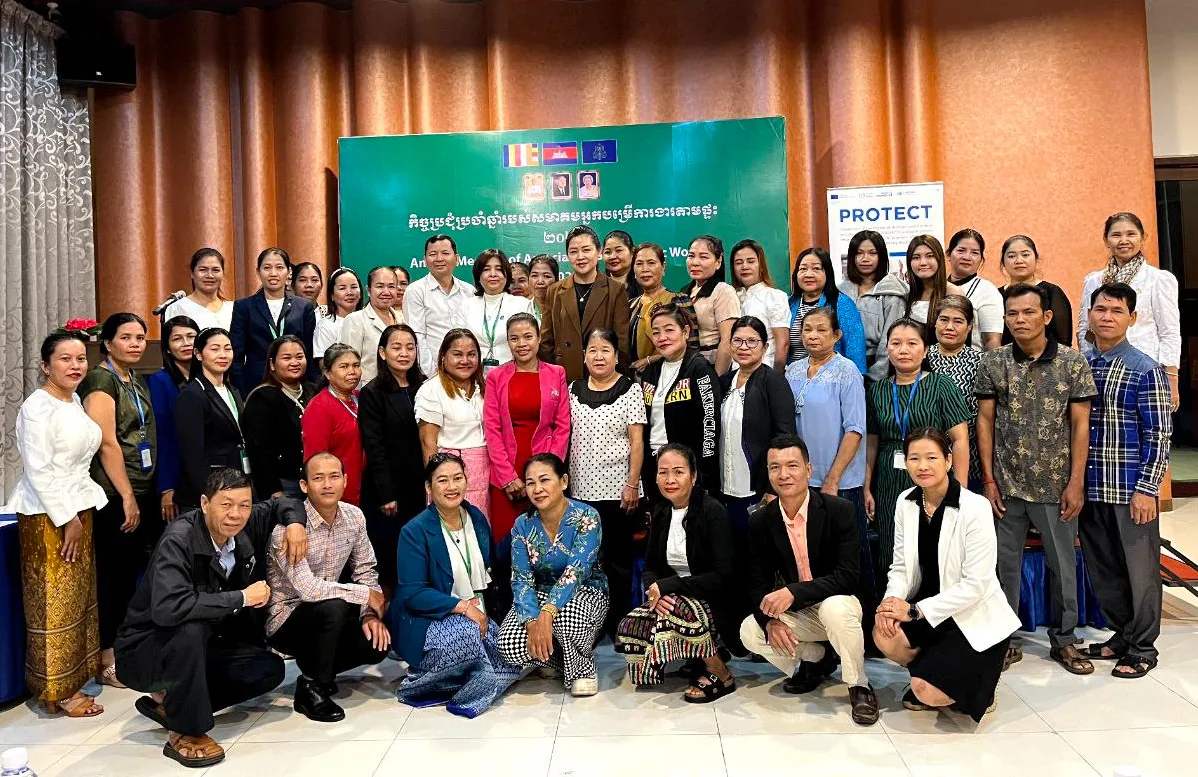
Through support from the EU-funded PROTECT project, implemented by the ILO in partnership with UN Women, UNICEF and UNODC, ADW has expanded its membership base and strengthened the capacity of domestic workers to improve their working conditions and protect their rights. Trainings supported by the project include both technical and soft skills, ranging from caregiving and cooking to negotiation, communication and financial literacy.
During the recent border crisis with Thailand, the ILO provided emergency assistance to returned women migrant workers. ADW expanded outreach in several provinces, working with local authorities to identify urgent social and legal assistance needs. Activities included raising awareness on safe migration, access to local employment opportunities through Migrant Resource Centres and the National Employment Agency, Recognition of Prior Learning under technical and vocational education and training (TVET) institutions and available social protection schemes.
With PROTECT support, domestic workers have also strengthened their public voice. Through training, outreach and media engagement, ADW members have built the confidence to speak on radio programmes and share practical information on labour rights, safe migration, working conditions, risks of abuse and available protection services.
“I feel ready to speak out when necessary. I am not shy to talk on the radio if this can help other migrant workers build their confidence,” said Meas Sophea, an ADW member.
I feel ready to speak out when necessary. I am not shy to talk on the radio if this can help other migrant workers build their confidence
Looking ahead
ADW continues its collaboration with the ILO to advance decent work for domestic workers in Cambodia, including advocacy efforts to promote alignment with international labour standards such as the Domestic Workers Convention, 2011 (No. 189) and to strengthen legal and policy protections at national level.
Related content
Labour migration
Ensuring Decent Work and Reducing Vulnerabilities for Women and Children in the Context of Labour Migration in South-East Asia (PROTECT)
Relevant projects
Labour migration
Ensuring Decent Work and Reducing Vulnerabilities for Women and Children in the Context of Labour Migration in South-East Asia (PROTECT)