

Financial skills and literacy improve the livelihoods of East Sumba’s seaweed farmers
The ILO supports seaweed farmers in East Sumba with better understanding about finance and business to boost the local economy and the community’s level of life.
22 July 2024
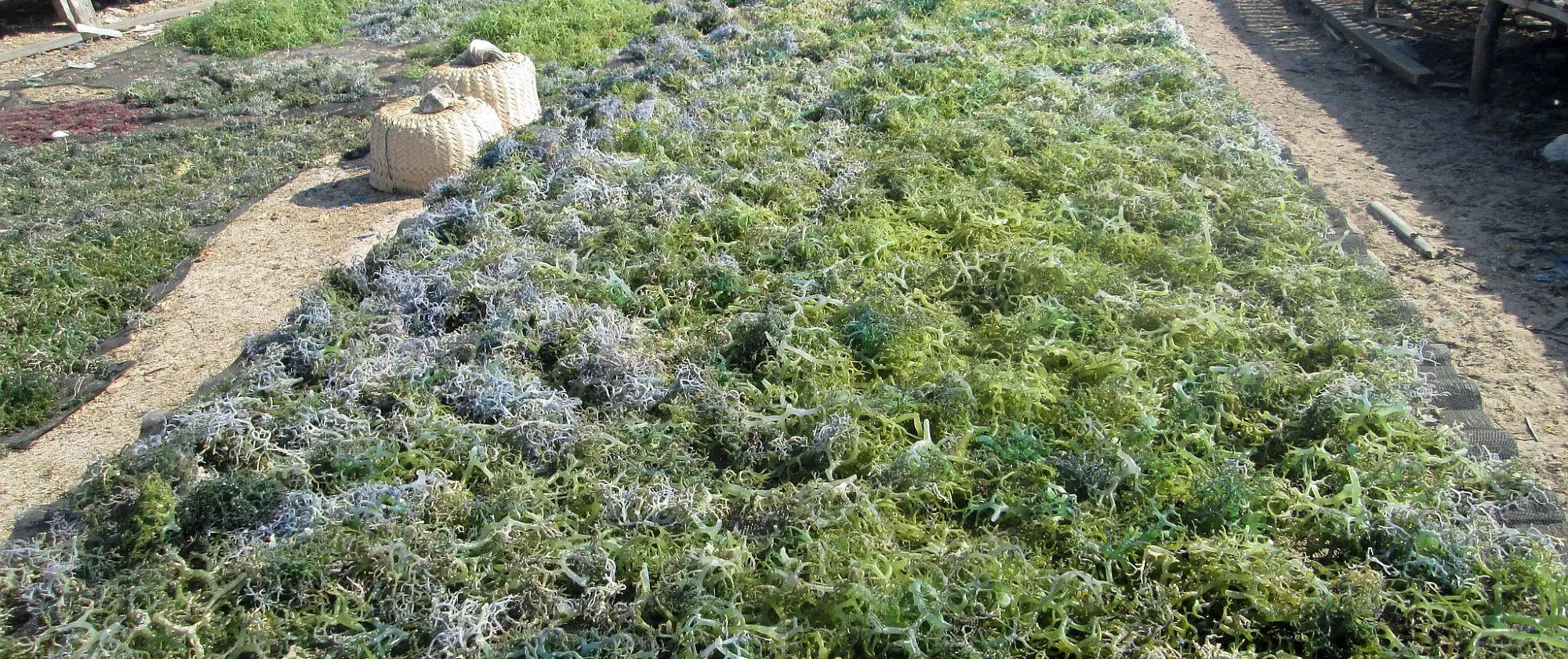
It was still early morning when Tensiana, 28 years old, started her daily routine attending her seaweed farming. Seaweed farming has been part of her life and most of her local community in Kaliuda Village, East Sumba, Indonesia which is also known as a Seaweed Cultivation Village.
“I begin my daily routine early morning. I go farming around 4am or 5am and working until 7am. When the sun rises, I go back home to take care of my husband and three children and to do house works. In the evening I will attend the farm for two or three hours from 3 pm or 4pm until 6pm,” she said, smiling.

Seaweed farming and cultivation has become her passion as she had been helping her parents since early age. Thus, when she continued her study to a vocational school, she specifically selected Agribusiness as her major. Since graduating 14 years ago in 2010, she has decided to follow her parents’ footstep—earning a living as a seaweed farmer.
I am grateful with the training programmes, business assistance and now with the microcredit that will help me improving my seaweed farm.
Tensiana, a seaweed farmer
A similar life story was also shared by Efran Pradana, 39 years old. When graduating from a senior high school, he decided to follow his parents’ footstep to become a seaweed farmer. Just like Tensiana, Efran is also passionate with seaweed farming, not only to continue the legacy of his parents, but also to continue improving the way he farms.
When they learnt about an opportunity to participate in the ILO financial and entrepreneurship education training programmes, without any hesitant, they took the chance. These training programmes were conducted by the ILO through its Promoting Micro and Small Enterprises through Entrepreneurial Access to Financial Services Project Phase 2 (Promise II Impact).
Djauhari Sitorus, ILO’s Promise II Impact Programme Manager, stated that the Promise II Impact seeks to strengthen the seaweed value chain through financial literacy trainings and the use of digital platforms which are expected to further strengthen community’s financial access and literacy. “Kaliuda Village is one of our targeted villages and we hope to work together with relevant partners and authorities to support financial literacy at the village level.”
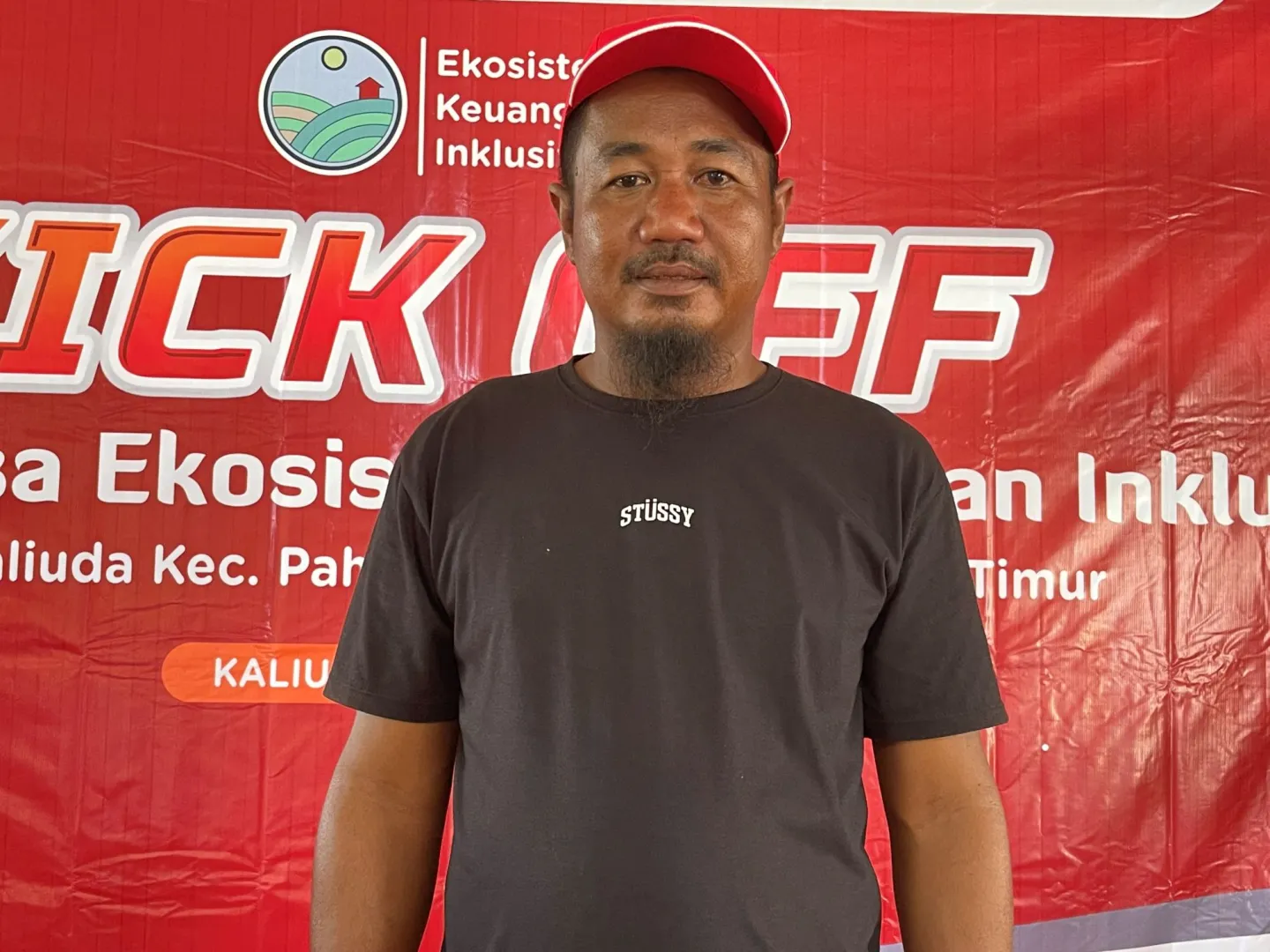
Together with 200 seaweed farmers, they joined the training and based on their business development performance, 80 farmers selected to receive personal business assistances for eight months, including Tensiana and Efran.
“I am proud to be selected to receive one-on-one business assistances where I really learn the importance of bookkeeping and financial management. I learn to record my income and expenses and separate between my farm’s finance with household’s finance,” told Efran.
Meanwhile, for Tensiana, it is not only the skills to manage and record finances, but also to develop entrepreneurship skills. “When managing my expenses, I have unnecessary expenses that I did not even realize before. Thus, I really want to start my own business by developing an added value product from seaweed like seaweed chips so that my family and I can have a better future and life.”
I am proud to be selected to receive one-on-one business assistances where I really learn the importance of bookkeeping and financial management.
Efran Pradana, a seaweed farmer
Increase the farm production with microcredit
Their dedication to apply what they have learnt from the training and business assistances had made them pass the Indonesia Financial Services Authority's (OJK) Financial Information Services System (SLIK) and were declared having a good credit history. As a result, together with other 20 selected farmers, Tensiana and Efran were granted a micro credit of IDR 5 million from East Nusa Tenggara Bank (Bank NTT) under the Kredit Merdeka programme last May with zero percent interest and no collateral.
To assist the farmers and to simplify the credit instalment payment process, Bank NTT has collaborated with PT Algae Sumba Timur Lestari (PT ASTIL), regional-owned enterprise of Sumba Timur, that the farmers who receive credits can repay their credit by sending their seaweed harvest to PT ASTIL which would calculate the values based on the market price and pay the instalment.
“I am grateful with the training programmes, business assistance and now with the microcredit that will help me improving my seaweed farm. I will pay my instalment on time,” said Tensiana. To date, the production of her seaweed farm has reached 100 kilograms of Eucheuma cottonii and 80 kilograms of Kappaphycus striatum (Sakol) seaweeds with the sale price of IDR 15,000 and 9000, accordingly.
Kaliuda Village is one of our targeted villages and we hope to work together with relevant partners and authorities to support financial literacy at the village level.
Djauhari Sitorus, ILO’s Promise II Impact Programme Manager
A similar enthusiasm was also shown by Efran who would use the credit he received to renew his farm equipment and to buy new seaweed seeds. “My farm production has reached 150 kilograms of Eucheuma cottonii and 70 kilograms of Kappaphycus Striatum (Sakol) seaweeds. I am planning to expand my farm and I hope with the new equipment and seeds, my farm production will be increased,” he wished.
Funded by the Swiss State Secretariat for the Economy (SECO), the ILO’s Promise II Impact programme is implemented in collaboration with OJK, regional development banks (BPD) and rural banks (BPR). In addition to seaweed farmers in Kaliuda Village, the programme also focuses on the financial literacy and digital empowerment of dairy farmers in Pengalengan, West Java and the patchouli oil commodity in Umong Seuribee Village, Aceh Besar Regency.
Related content

Topic portal
Social finance
Promise II Impact
Promoting SME Enterprises through Improved Entrepreneurs’ Access to Financial Services
Relevant projects
Promise II Impact
Promoting SME Enterprises through Improved Entrepreneurs’ Access to Financial Services