

From exclusion to employment: A woman’s journey in Lebanon’s construction sector
Oum Metres, a mother of three young boys and one girl, lives in the town of Damour, Lebanon. She shares her journey of stepping into an unconventional role in her community, working in construction and rehabilitation as part of the Damour Irrigation Canal Rehabilitation Project.
1 April 2025
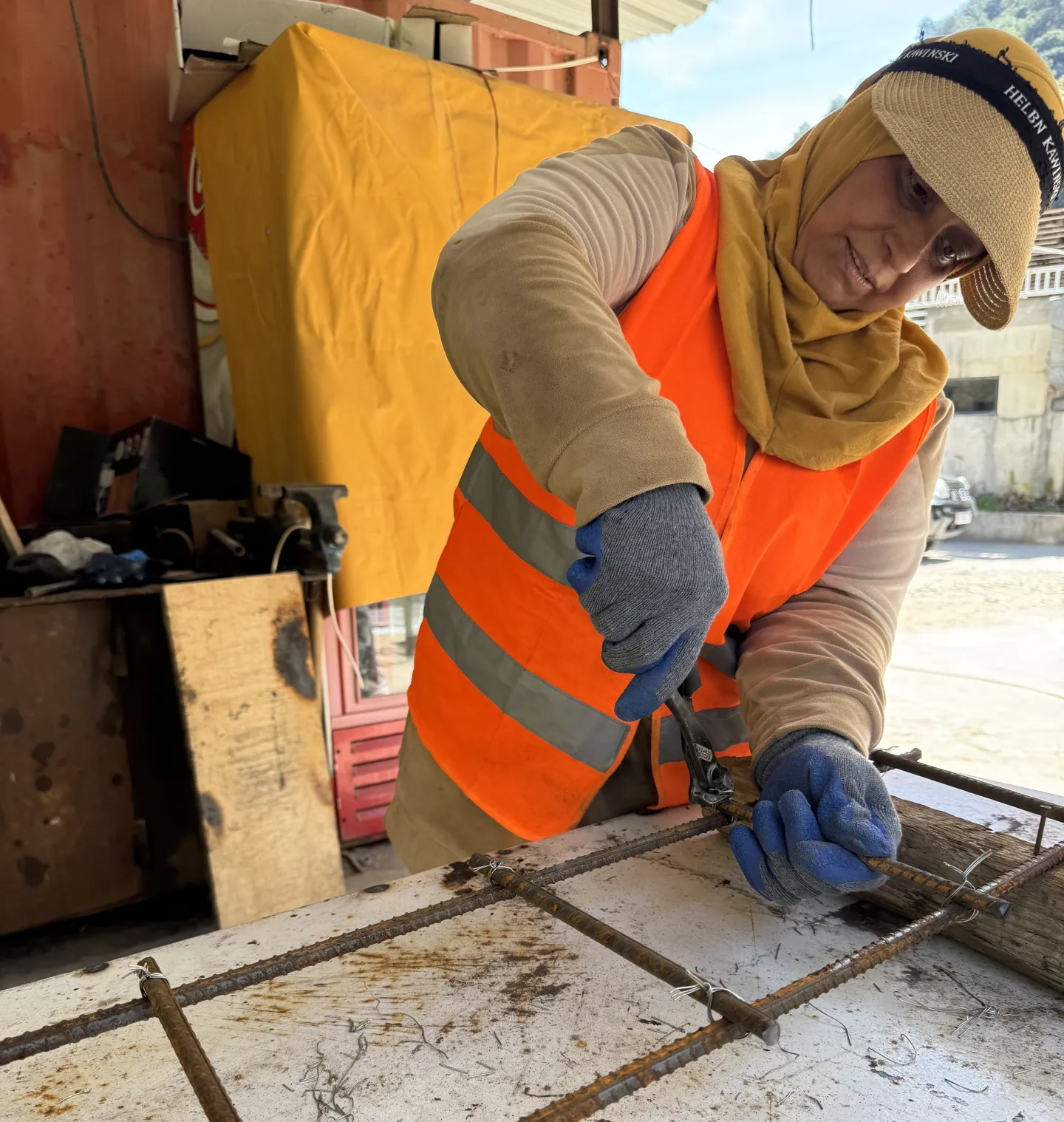
In the coastal town of Damour, Lebanon, where agriculture is a way of life, a major initiative is underway to rehabilitate the irrigation canal—a vital water source for the region’s farmers. This project is not only restoring critical infrastructure but also transforming lives, particularly for women like Oum Metres, who is redefining traditional gender roles by actively contributing to the construction and maintenance efforts.
Her journey highlights the importance of inclusive employment opportunities, made possible through the EU-funded ENABLE Programme, implemented by the International Labour Organization (ILO).
A Woman in Construction: Defying Expectations
In many rural communities, construction and labour-intensive work are traditionally seen as men’s jobs. Women are often excluded from such opportunities, not because they lack ability, but due to societal norms. However, Oum Metres has never been one to accept limitations.
“When I first joined the project, some people looked at me with doubt,” she shares. “They thought a woman couldn’t handle this kind of work. But I knew I was capable, and I was determined to prove them wrong.”
Every day, she works alongside her colleagues to restore the canal, contributing to tasks such as:
- Rebar cutting and bending to the required lengths and shapes.
- Steel tying to prevent movement during concrete pouring.
- Assisting in formwork installation, as well as concrete mixing and pouring activities.
Through her dedication, she has earned the respect of both her supervisors and peers.
“She is one of the hardest-working members of the team,” says a project engineer. “Her commitment and strength inspire others, proving that women have an essential role in this kind of work.”
The ENABLE Programme: Creating Opportunities for All
This initiative is part of the EU-funded ENABLE Programme, which is implemented by the International Labour Organization (ILO) to support vulnerable workers by providing short-term employment and skills training.
By ensuring fair wages, decent working conditions, and gender-inclusive recruitment, the programme aims to strengthen economic resilience in Lebanon’s most affected communities.
For Oum Metres, this opportunity has been life changing.
Before joining this project, I struggled to find work. Now, I am earning a stable income, supporting my family, and proving that women belong in every field—including construction.
Oum Metres
With the training provided by the programme, she has not only learned technical skills but has also gained confidence in her abilities. Local Resource-Based Technology (LRBT) and Decent Work Principles are key aspects of the ENABLE Programme, ensuring that labour-intensive projects benefit both workers and the communities they serve.
Restoring Damour’s Lifeline
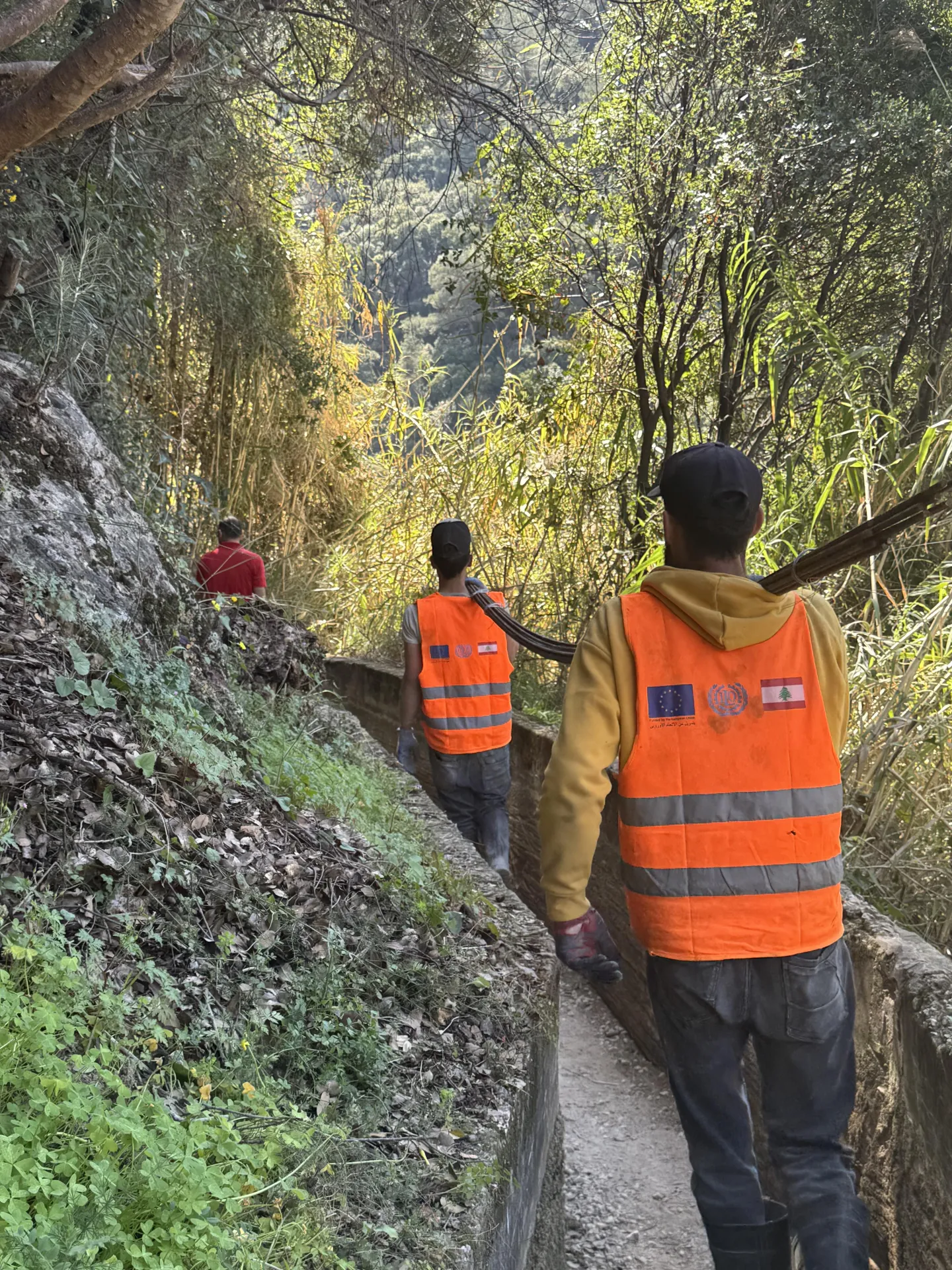
The Damour Irrigation Canal Rehabilitation Project is a critical investment in local agriculture, ensuring that farmers have access to the water they need to sustain their crops. The project spans 15 kilometers, with efforts focused on:
- Clearing obstructions to restore water flow
- Repairing damaged sections to enhance efficiency
- Building protective structures to prevent future deterioration
- Employing local labour to create job opportunities
For farmers, the canal’s restoration means greater agricultural productivity and improved food security. For workers like Oum Metres, it represents a path to economic independence and a chance to reshape societal expectations.
“When I see the water flowing again, I feel proud,” she says. “This is more than just a job. We are building something that will benefit future generations.”
A Role Model for Future Generations
Despite the challenges, Oum Metres remains committed to her work, hoping that her story will encourage more women to pursue non-traditional careers.
“I want women to know that we are just as strong and capable as men,” she says with a smile. “We can work, earn, and contribute to our communities.”
As the Damour Irrigation Canal Rehabilitation Project progresses, her journey serves as an example of empowerment and resilience. Through the EU-funded ENABLE Programme implemented by the ILO, she has gained employment, training, and financial independence, proving that when women are given opportunities, they thrive.
Oum Metres’ story is one of perseverance, empowerment, and hope. As she continues her work, she stands as a symbol of change, paving the way for a more inclusive future where women are recognized as equal contributors to society.
Related content

Project
Empowering Networks and Activation for Building Long-term Employment (ENABLE)
Relevant projects
Project
Empowering Networks and Activation for Building Long-term Employment (ENABLE)