


Enhancing Occupational Safety and Health (OSH) in Uganda’s Coffee Sector through WIND Training
The ILO’s ACCEL Africa project and CLEAR Supply Chains initiative trained 23 officials and farmers in Masaka District through the WIND methodology to improve safety, health, and gender inclusion in coffee production. The training strengthened local OSH capacity, fostered farmer-led innovation, and promoted safer, more sustainable workplaces across Uganda’s coffee-growing communities.
19 September 2025
MASAKA (ILO News) - From September 15 to 18, 2025, the International Labour Organization (ILO), through its ACCEL Africa project and in collaboration with the CLEAR Supply Chains initiative, conducted a comprehensive Workplace Improvement in Neighbourhood Development (WIND) training.The training brought together 23 participants, including officials from the Ministry of Gender, Labour and Social Development (MGLSD), the Ministry of Agriculture, Animal Industries and Fisheries (MAAIF), as well as representatives from the district local governments of Masaka, Manafwa, Sironko, Bulambuli, and Mbale. The objective was to build their capacity to promote safer, healthier, and more sustainable workplaces within Uganda’s coffee-growing communities.
As part of the training, participants engaged in field-based learning, visiting a local coffee farmer’s home farm and a coffee hulling factory. Using the WIND action checklist, they observed real-life work environments, identified existing OSH hazards, and documented both best practices and areas needing improvement in coffee production and processing.
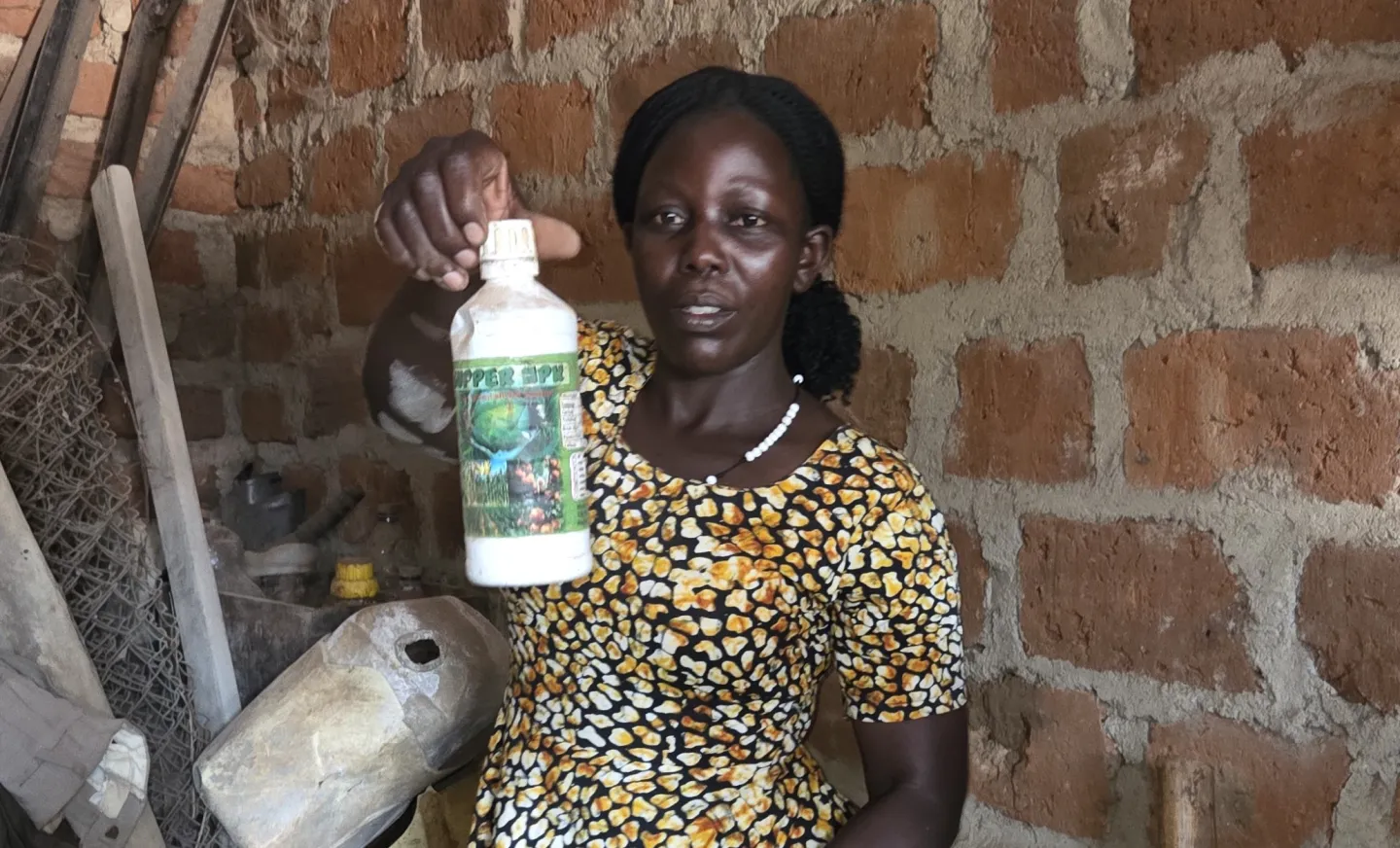
During the farm visit, Veronica, a local coffee farmer, shared practical methods she uses to manage her farm safely and efficiently. She showcased how she organizes her space with designated workstations, clearly marked storage areas for tools and pesticides, and systems for safe material handling. She also demonstrated the correct use of personal protective equipment (PPE) to minimize exposure to hazardous chemicals.
Participants gained valuable insights into areas such as material handling and storage, workstation setup, hazard control, and welfare facilities. The sessions also included discussions on gender-based violence (GBV) prevention, community involvement, and the creation of inclusive, safe, and cooperative farming environments.
Participants from Eastern Uganda highlighted innovations in Robusta coffee harvesting, including the use of adjustable harvesting baskets that help reduce physical strain and improve ergonomic safety, an improvement over the traditional use of plastic basins.
“I’ve learned an innovation in coffee harvest collection that is not yet practiced in Greater Mbale. Farmers still use basins, which strain their backs and lead to health problems. With this method, we can reduce those health risks and improve worker well-being during harvest.” Sidra, Senior Labour Officer from Mbale District
The peer learning experiences demonstrated the power of farmer-led innovation and reinforced the value of practical, locally relevant solutions as promoted through the WIND methodology.
Thanks to this training, participants identified key OSH risks in coffee farming and processing and developed immediate, context-specific action plans to address them and are now better prepared to cascade this knowledge within their communities.
The ILO and its partners remain committed to supporting Uganda’s coffee sector through continued technical assistance, follow-up activities, and the scaling up of the WIND methodology across the coffee-growing districts. These efforts aim to create lasting change in how occupational safety and health are approached within agricultural communities.
Relevant projects
Accelerating action for the elimination of child labour in supply chains in Africa (ACCEL Africa)