

Productivity Ecosystems for Decent Work
Empowering women in the leather and footwear sector through skills and opportunity
5 June 2026
Durban, South Africa (ILO News) - Fifteen women in Durban, many of them victims of gender-based violence (GBV), came together with a shared goal, to rebuild their lives through skills, dignity, and economic opportunity.
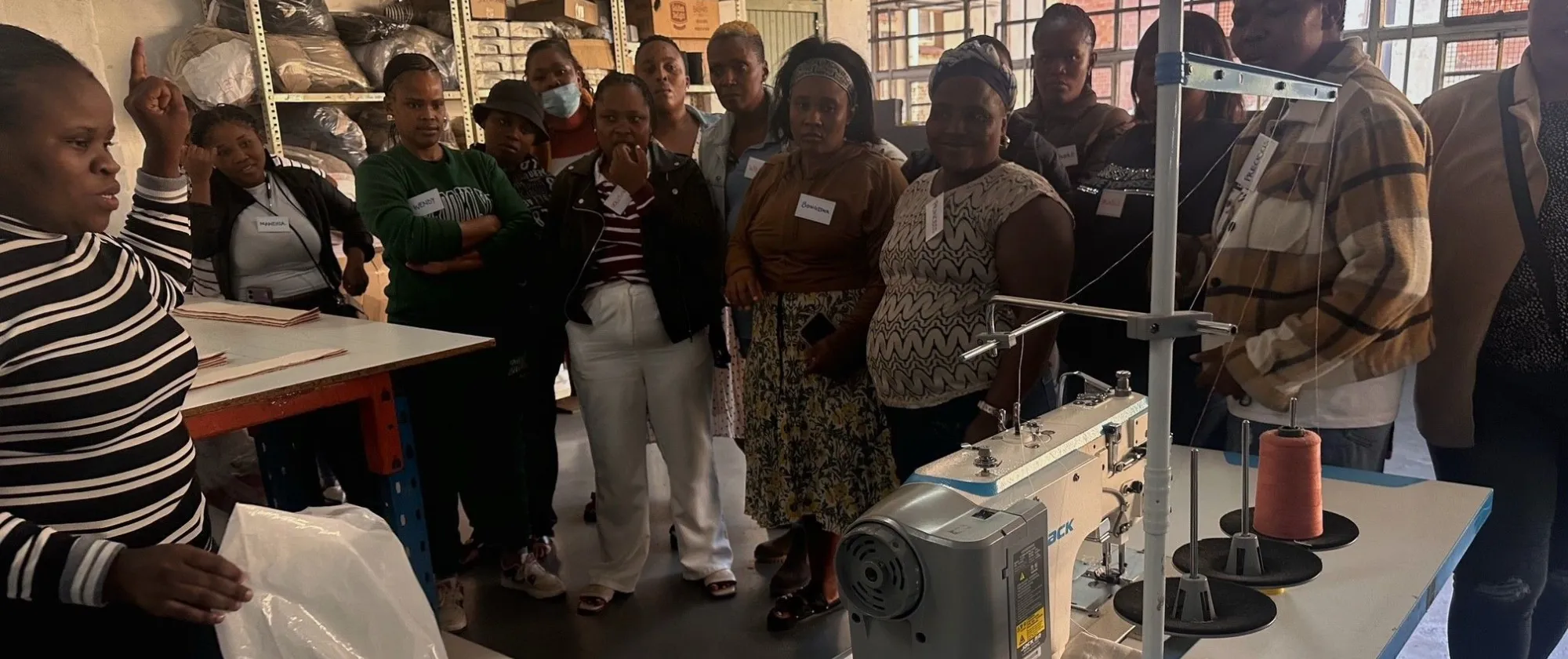
Through the ILO’s Productivity Ecosystems for Decent Work project, implemented in partnership with SAFLEC, the women completed a targeted empowerment programme designed not only to transfer technical skills, but to restore confidence and create tangible pathways to sustainable livelihoods. At its core, the programme responded to a critical barrier. Economic dependency, by equipping women with practical, market-relevant skills in handbag production and sewing, alongside business knowledge and access to industry networks, the initiative aimed to support participants in generating income, building enterprises, and participating more fully in the economy.
Over five days, participants progressed from basic machine operation and safety to producing multiple finished products, including tote bags and lined zipper pouches. By the end of the training, participants completed the programme and achieved full competency, each producing at least three saleable items, an important milestone in building both skill and confidence.
Beyond technical training, the programme placed strong emphasis on enterprise development and long-term sustainability. Participants received practical tools for costing, pricing, and business planning, and each developed a personal business profile to support future market access. At the same time, all participants were integrated into regional leather and footwear cut-make-trim (CMT) networks and industry platforms, ensuring that they leave the programme connected, not isolated, from real economic opportunities. The human impact of the intervention was profound with participants describing the experience as transformative, emphasizing the pride of producing high-quality products and the confidence gained from working in a professional environment. Many expressed gratitude for the supportive learning space and the opportunity to acquire skills they could immediately use.
This training has changed my life in an enormous way. I was able to rebuild my life and provide a stable and happy home for my daughter and two sons. Balindile Nkabani survivor of emotional physical abuse
Across the group, there was a shared sense of renewed hope, the belief that they could now support themselves and their families thereby creating sustainable pathways to ending economic dependence and reducing GBV.
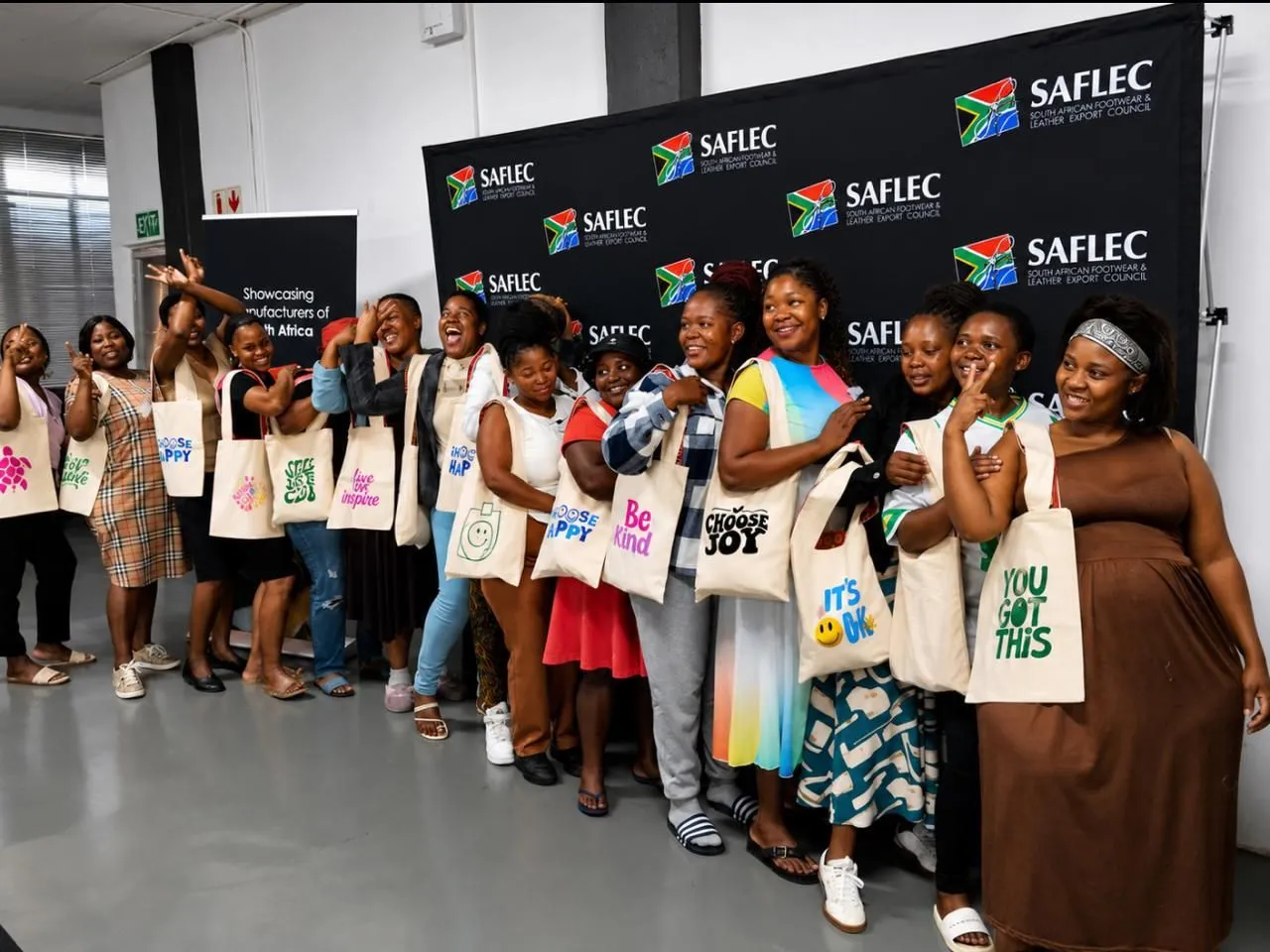
Importantly, the programme did not end with training with participants now actively linked to industry networks through regional leather and footwear CMT groups, where they can access subcontracting opportunities and peer support. Their business profiles are being shared through SAFLEC’s SME database, opening doors to potential buyers and partnerships. Ongoing mentorship, future training opportunities, and market access initiatives will continue to support their growth, while the skills and tools gained enable them to pursue self-employment, small business development, or production work within established leather and footwear value chains. Early indications point to strong potential for sustained impact. With technical skills, business knowledge, and industry connections in place, participants are now positioned to transition from training into income generation.
The integration into the broader productivity ecosystem significantly increases their chances of building resilient livelihoods and remaining active in the sector over time. By combining skills development, enterprise support, and ecosystem integration, this initiative demonstrates how a human-centred approach can deliver meaningful and lasting change. Beyond the immediate outputs the programme has created a pathway to independence, dignity, and a more secure and sustainable future.
About the Programme
The Productivity Ecosystems for Decent Work programme is implemented by the ILO with support from the Swiss State Secretariat for Economic Affairs (SECO) and the Norwegian Agency for Development Cooperation (NORAD). In South Africa, the programme focuses on the automotive and leather and footwear sectors, applying a systemic approach that targets root causes of low productivity and informality at macro, meso, and micro levels. By strengthening local and national capacities, the initiative aims to foster inclusive, sustainable economic growth.
Relevant projects
Productivity ecosystems for decent work