


Digitalization and financial inclusion
Digital innovation elevates rural finance and supports local MSMEs in Indonesia's Central Java province
A rural bank in Pati, Central Java, Indonesia with support from the ILO, has enhanced its financial services, empowering clients to manage their finances better, strengthen local businesses and support economic growth.
18 July 2025
PATI, Central Java, Indonesia (ILO News) - Siti Musyarofah, a mother of two, has been a client of Rural Bank (BPR) Artha Huda Abadi (AHA) in Pati, Central Java, since 2022. For the past three years, she has used BPR AHA to manage her family’s savings, drawn from her salary as a teacher and her husband’s small stationery business operated from home.

She recalled that six months ago, routine banking tasks required hours of travel and waiting in line. But with the implementation of BPR AHA’s new core banking system (CBS), those long trips are no longer necessary. She now manages her account easily through mobile banking.
“Now, I feel better served. I can instantly access my account and view records in real time. Regular updates on products and financial literacy shared by BPR AHA have also strengthened my trust in the bank,” she said.
Through her mobile banking, Siti can now easily manage her finances at any time and from anywhere. This access to digital financial services has strengthened her role in family decision-making and supported her financial independence. “I can now easily manage my family finances, support our family business by tracking income and expenses and make timely decisions,” she stated.
Since late 2024, BPR AHA has received technical support to upgrade CBS from the ILO’s Promoting SMEs through Access to Digital Financial Services–Phase 2 (Promise II Impact) project, supported by the Swiss State Secretariat for Economic Affairs (SECO). The upgrade enabled the bank to introduce real-time credit assessments, simplified loan applications, integrated WhatsApp communication and user-friendly mobile and online banking services.
Now, I feel better served. I can instantly access my account and view records in real time.
Siti Musyarofah, a client of BPR AHA
As a result, transaction times have plummeted from an average of 30 minutes to just 5, allowing both staff and clients to focus more on growth and productivity. Beyond speed and convenience, digital banking reduces the need for physical visits, long queues, and paper-based processes, improving occupational safety, cutting paper waste and helping entrepreneurs concentrate on expanding their businesses.
M. Islam, a long-time client since 2019 and a distributor of snacks and tapioca flour, has seen firsthand the advantages of the upgraded system. He recalled how loan applications used to involve lengthy waits and uncertainty, along with limited credit ceilings.
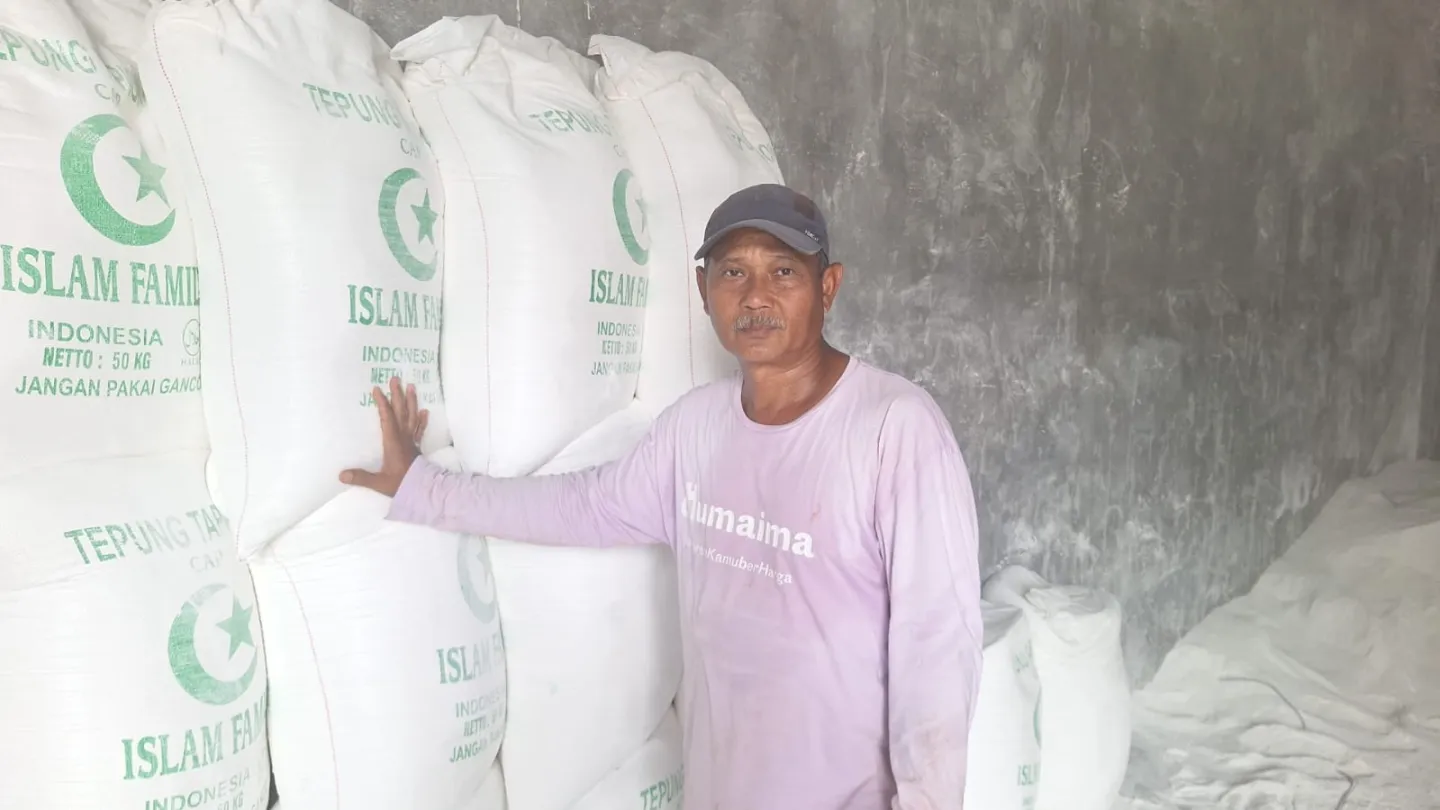
The loan ceiling has also increased from 300 million to 500 million Rupiah. It helps my business planning and growth.
M. Islam, a long-time client of BPR AHA
Today, with an enhanced system, the bank can more accurately evaluate the creditworthiness of clients who lack formal financial records or substantial collateral. For informal workers and entrepreneurs like Islam, this opens the door to greater financial access and opportunities for business growth and local job creation.
“Before, it could take two weeks. Now, I can complete everything in one week and submit documents online. The loan ceiling has also increased from 300 million to 500 million Rupiah. It helps my business planning and growth,” he said.
Thanks to this progress, not only has he expanded his business, but his wife has also grown her gold auction business, boosting their household income and contributing to the local economy.
Related content

Promise II Impact
Promoting SME Enterprises through Improved Entrepreneurs’ Access to Financial Services

Topic portal
Social finance

Digitalization and financial inclusion
ILO boosts efficiency with digital upgrades for Central Java’s rural financial institutions in Indonesia
Relevant projects
Promise II Impact
Promoting SME Enterprises through Improved Entrepreneurs’ Access to Financial Services