

Building Information Modelling
Digital construction skills training opens pathways for Filipino youth
As Building Information Modelling (BIM) reshapes construction and the skills it demands, a new free training will equip young people in the Philippines with skills for emerging digital construction opportunities.
MANILA (ILO News) - For Architect John Myco Magcalas, the future of construction is already taking shape on his computer screen.
At 28, Architect Magcalas works and leads a team handling international Building Information Modelling (BIM) projects.
“BIM is the future now. Everyone should be doing this. It is the smarter approach to construction.”
His work brings together architecture, engineering and other construction disciplines in a shared digital environment, allowing teams to identify potential problems before they reach the construction site.
It is a career he did not initially imagine for himself.
In high school, Architect Magcalas knew how to draw, but he had little idea where the skill might take him. He later studied architecture and, after graduating, discovered that the profession offered paths beyond traditional architectural design. One of them was BIM.
Architect Magcalas began working with BIM in 2019. Since then, digital construction has enabled him to work alongside specialists and consultants from different disciplines, including professionals he once only imagined meeting when he was a student.
The experience has also shown him why BIM matters for the future of the construction industry.
“It is not simply just modelling,” he said. BIM, he explained, goes beyond creating a three-dimensional representation of a building. Information can be embedded into a digital model and used across different stages, from design and construction to the management of a completed building.
For construction companies, this can mean spotting clashes and errors earlier, reducing waste and avoiding costly problems on site. For workers, it also means that digital skills are becoming increasingly important as construction practices evolve.
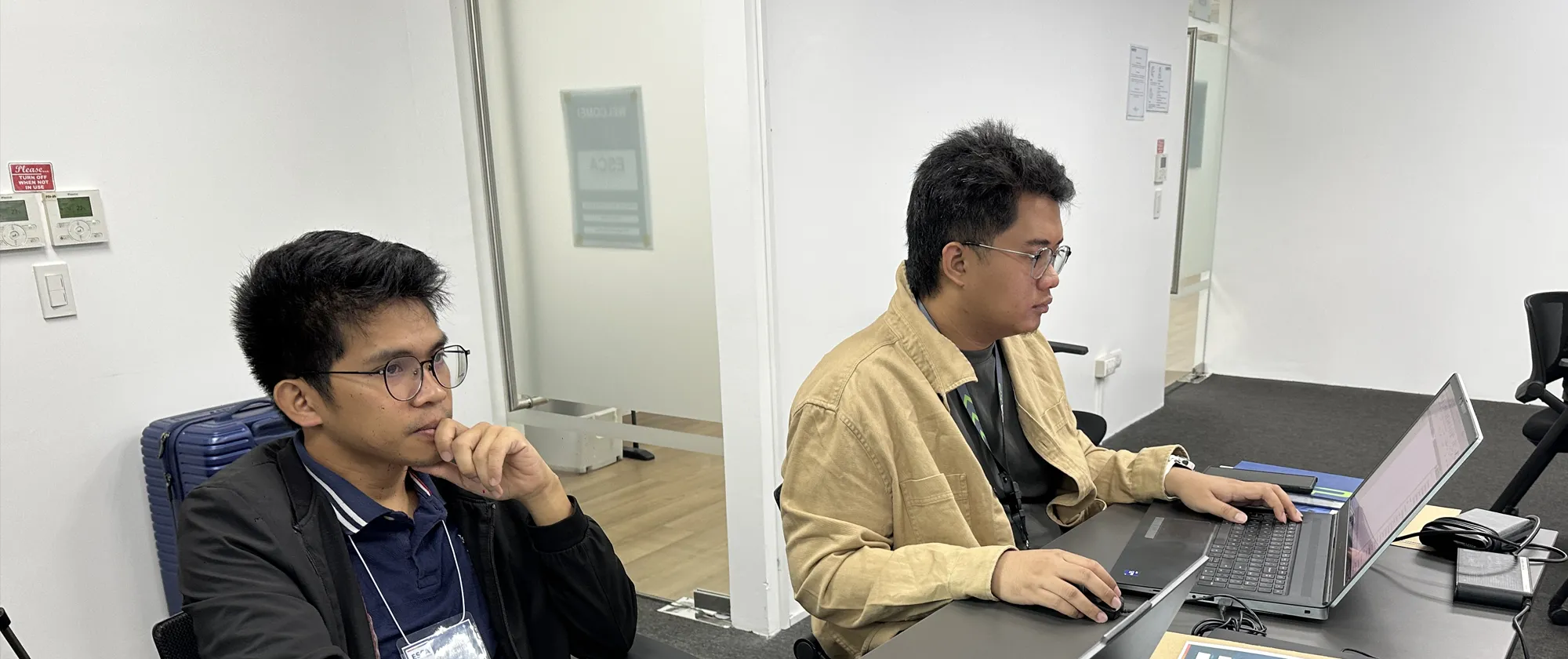
In May 2026, Architect Magcalas was among the pilot batch who took part in an intensive BIM training in Manila through the ILO-Korea Partnership Programme on Advancing Digital and Green Skills for Youth in ASEAN.
Supported by Korea Polytechnic University, the training exposed participants to BIM approaches and learning materials developed with Korean expertise. Architect Magcalas volunteered to participate after ESCA’s research and development team looked for an experienced BIM practitioner who could learn from the training and share the knowledge within the company.
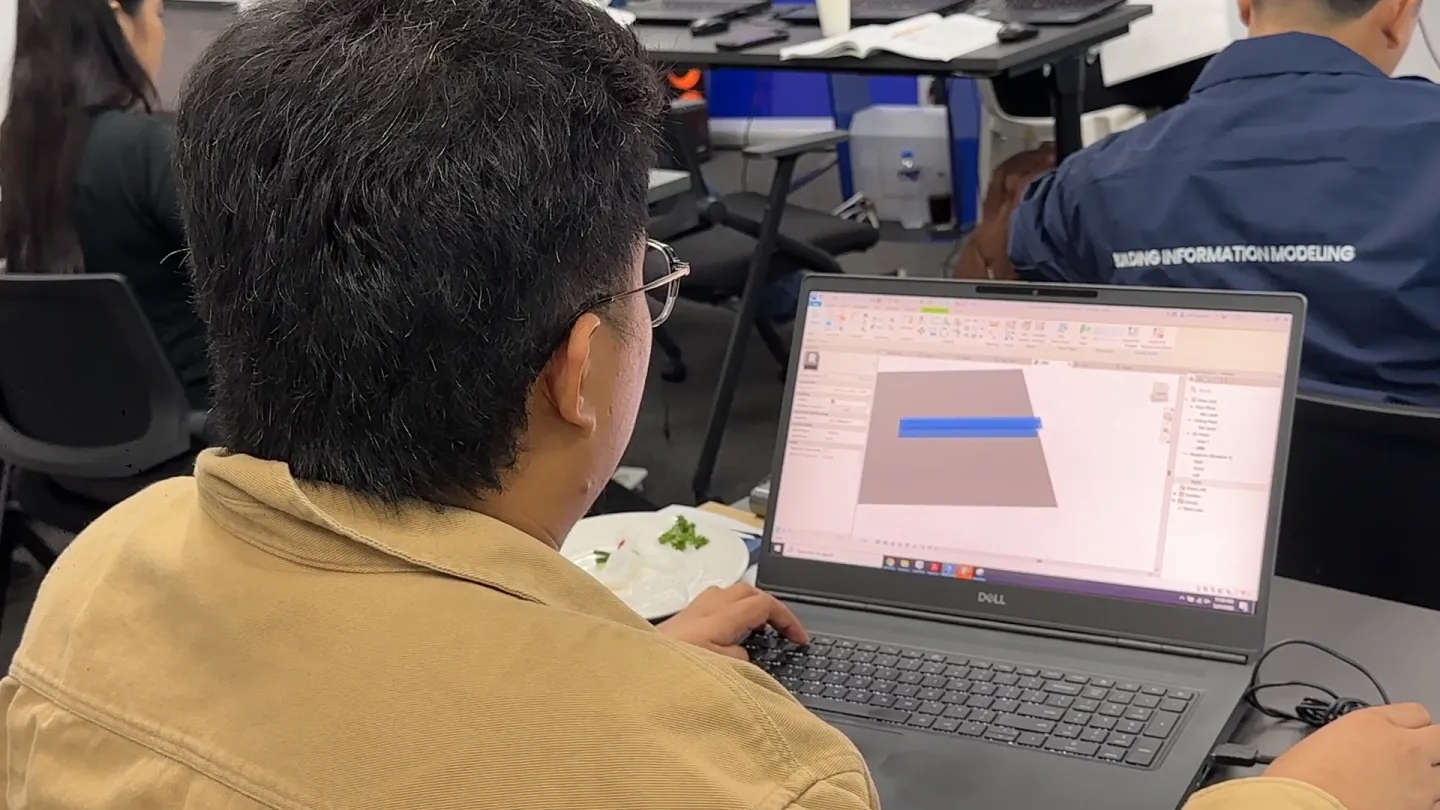
He was particularly struck by the structured approach. “Everything is in order, from theory to the proper way of doing things,” he said.
For Architect Magcalas, the experience raised a bigger question on how international knowledge can be adapted to Philippine construction practices and eventually shared more widely.
He hopes the lessons can contribute to developing approaches and standards suited to the Philippine context, while making BIM skills accessible to students, draftspeople, young professionals and construction workers.
The ILO-Korea Partnership Programme works with national and industry partners, including the Technical Education and Skills Development Authority, Philippine Constructors Association, Department of Labor and Employment and Construction Manpower Development Foundation, to help equip young people with digital and green skills for the changing world of work.
This is increasingly important as BIM becomes widely used in international construction markets. For young Filipinos, learning BIM can help expand the range of jobs and projects for which they can qualify, including opportunities linked to global construction value chains.
A new group of young people will soon have the opportunity to develop these skills.
Through BRIDGE Construction, 40 slots are available for young workers and career shifters aged 18 to 30 who want to enter digital construction, including those with no previous BIM experience. The two-month training combines basic and advanced BIM training, supervised industry learning and career coaching.
The BIM training is free. Participants who progress to the supervised industry learning stage will also receive stipends, helping make the transition from training to workplace experience more accessible.
Applications are open until the end of September 2026, with training scheduled from October to November at ESCA Incorporated in Mandaluyong City.
For Architect Magcalas, investing in young people’s digital skills is not simply about learning new software. It is about ensuring that Filipino workers can participate in, and help shape, the transformation of an industry that will increasingly rely on digital technologies.
“We hope we can create our own standards and our own syllabus and share them throughout the Philippines.”
For a young architect whose own career changed when he discovered BIM, that future is no longer something to imagine. It is something the next generation can be equipped to build.

Additional details
References
- DOI: N/A
Relevant projects

Skills
Advancing Digital and Green Skills for Youth in ASEAN - Philippines

Skills
Advancing Digital and Green Skills for Youth in ASEAN