

Care economy
Daycare that feels like home
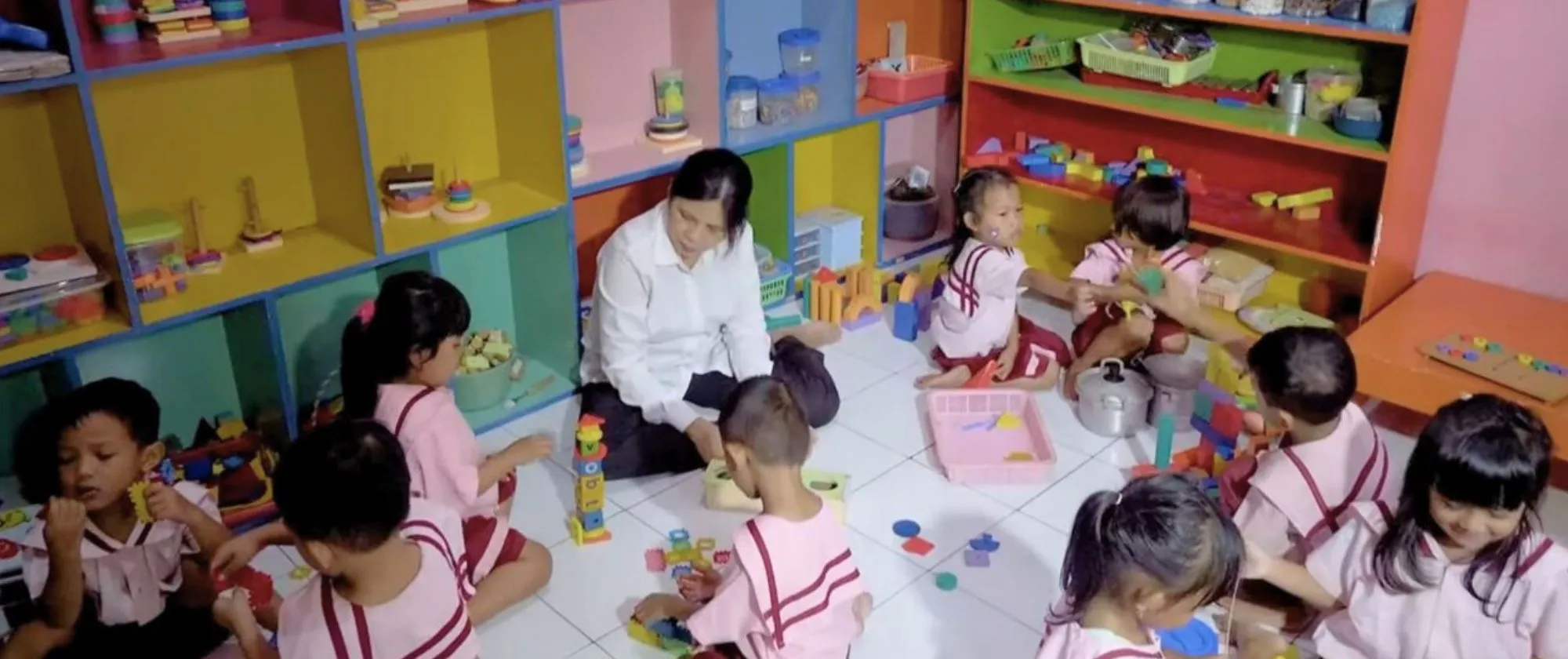
The Beringharjo Early Childhood Education Centre provides a sense of security and comfort to both the children and their parents, who work as traders at Yogyakarta’s Beringharjo Market in Indonesia, allowing them to focus fully on their livelihoods.
29 August 2025
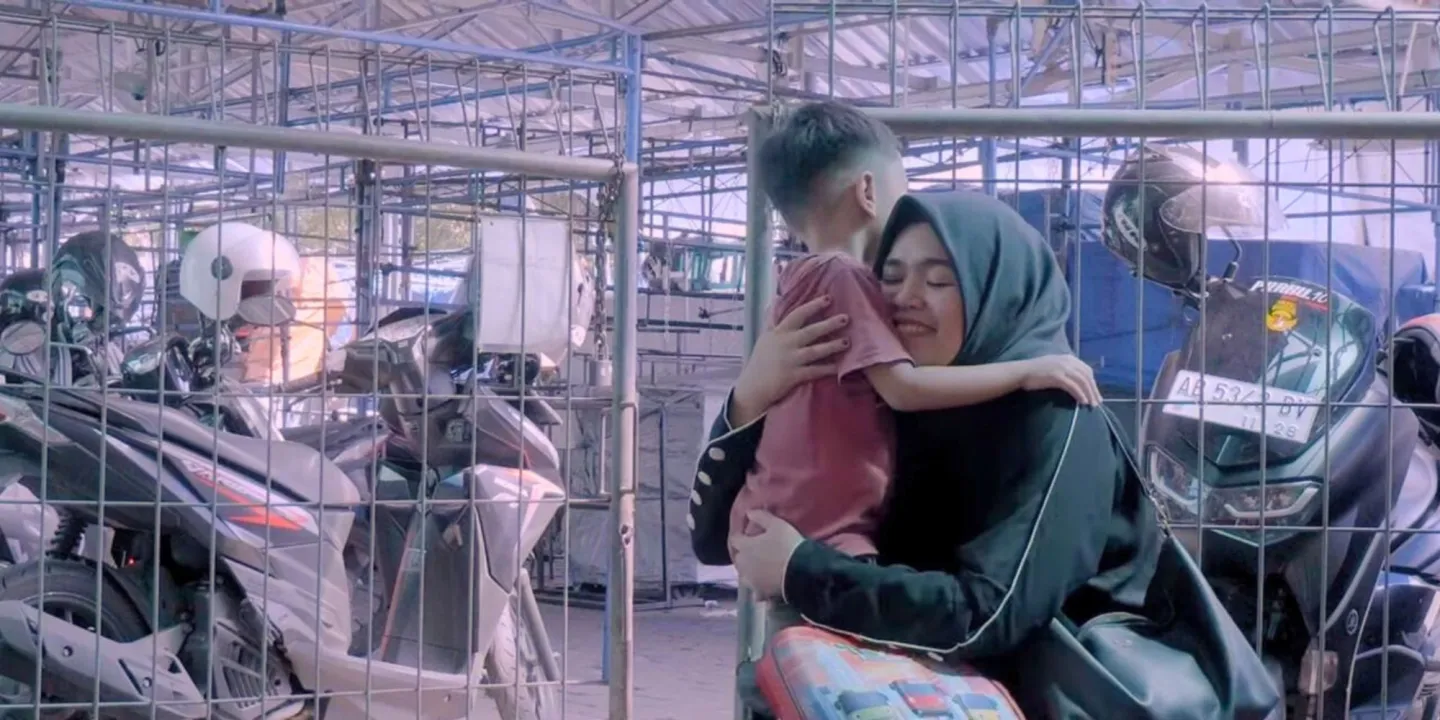
YOGYAKARTA, Indonesia (ILO Story) - Each morning, Nelli Sovia, a trader at Yogyakarta’s Beringharjo Market in Indonesia, drops off her son at the Beringharjo Early Childhood Education Centre. She discovered the centre through fellow traders while searching for a daycare that was both affordable and high-quality.
“I used to be a flight attendant,” Nelli recalled. “But when I became pregnant, I chose to resign. After my son was born, I went through a divorce and became a single mother.”
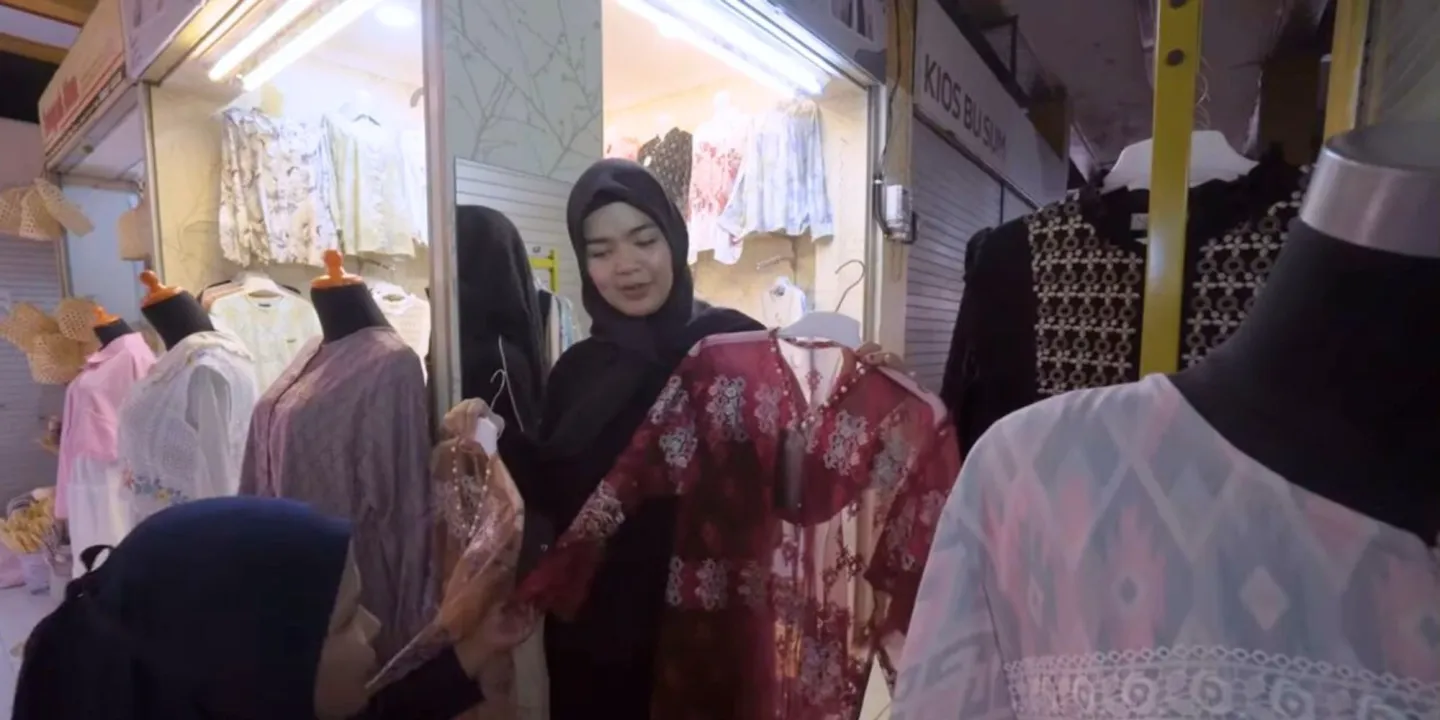
To regain her emotional strength, Nelli returned briefly to her hometown in Padang, West Sumatra. Once she felt ready, she relocated to Yogyakarta and began working as a market vendor at Beringharjo.
“The Beringharjo Centre has been a lifeline for me as a businesswoman,” she said. “The market is not safe or suitable environment for children, and being new here, I also have to manage rent, food and other living costs.”
While many daycare centres charge up to IDR 100,000 (around US$6) per day, the Beringharjo Centre offers full-day services for just IDR 5,000 (US$0.30), without compromising on facilities or hours.
The Beringharjo Centre has been a lifeline for me as a businesswoman.
Nelli Sovia, a trader at Yogyakarta’s Beringharjo Market in Indonesia
The centre provides a well-organized daily routine. Mornings begin with playtime, followed by engaging, play-based learning activities. Children receive a morning snack, a nutritious lunch at noon and another snack in the afternoon. They are bathed and put down for naps before pickup.
“When I collect my son, he’s clean, rested and smells lovely,” Nelli smiled.
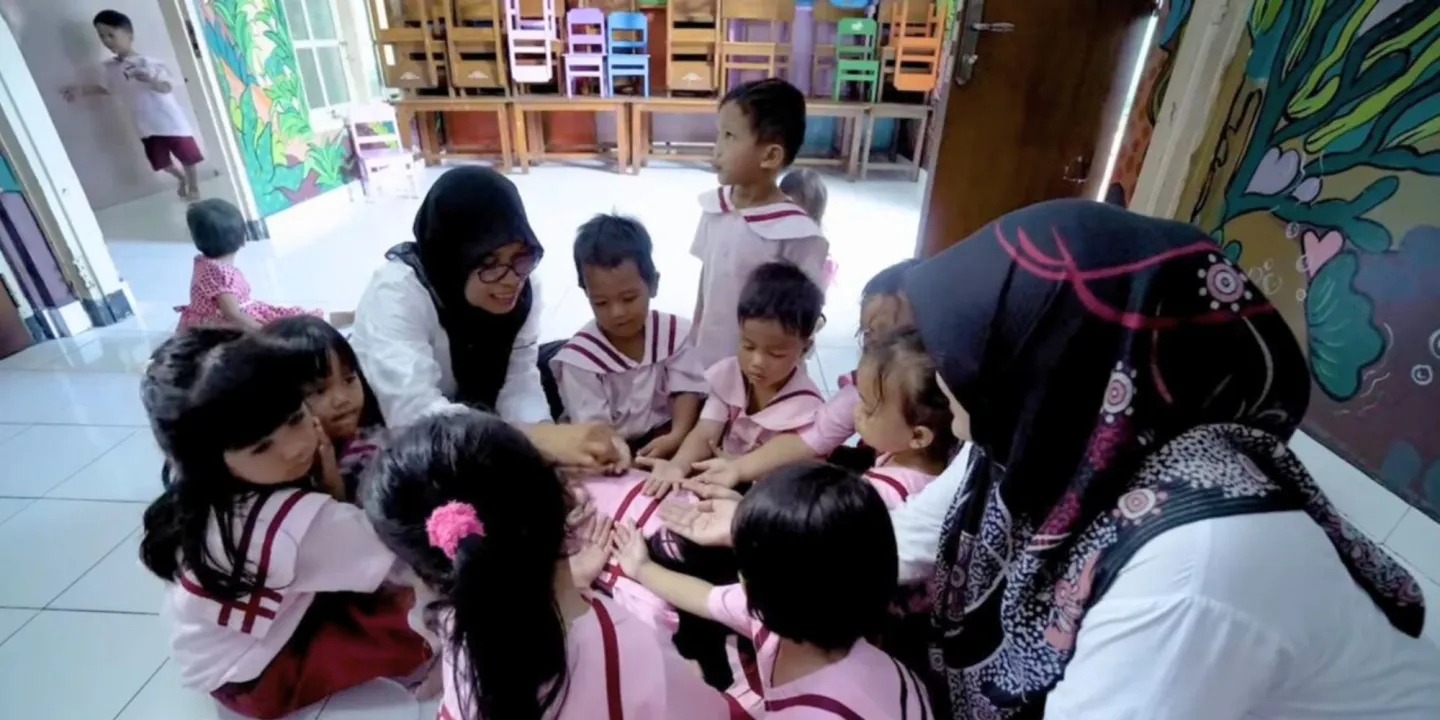
Yustina Suyantini, the Educational Coordinator, explained that the daycare staff come from diverse academic backgrounds, including degrees in Early Childhood Education and Psychology, as well as high school graduates. All undergo both basic and advanced training and are officially recognized as technical personnel by the Office of Women’s Empowerment and Child Protection. Their salaries meet Yogyakarta’s minimum wage standards and include employment and health insurance.
The teacher-to-child ratios are carefully maintained: for ages 2-3: 1 teacher per 4-5 children; for ages 3-4: 1 teacher per 5-8 children; and for ages 4-5: 1 teacher per 8-10 children.
Some arrive with habits like using harsh words or getting into arguments. It is our role to gently guide them and help shape them into respectful, well-mannered individuals.
Yustina Suyantini, the Educational Coordinator
Most children at the centre come from families of market traders. As a result, they often mirror the language and behaviour of adults around them. “Some arrive with habits like using harsh words or getting into arguments,” Yustina noted. “It is our role to gently guide them and help shape them into respectful, well-mannered individuals.”
For Nelli, the daycare has been transformative. With her son well cared for, she can focus fully on her business. Still, she hopes the centre will eventually open on weekends. “On Saturdays and Sundays, I have to bring my son to the market. It is hard to keep him in one spot and I worry he might wander off or get lost,” she said.
Early Dewi Nuriana, Programme Coordinator for the Care Economy at the ILO in Indonesia, highlighted the critical importance of ensuring early childhood care and education (ECCE) centres are accessible, affordable and of high quality, especially for workers with family responsibilities, with women being particularly impacted.
“These centres play a pivotal role in enabling women to enter and remain in the workforce,” Early remarked. “At the same time, it is essential to guarantee fair working conditions for ECCE personnel, as this not only improves the quality of care but also enhances the overall well-being of caregivers and their families.”
She further noted that, according to a report from the Ministry of Finance, Nelli represents just one of the 64.2 million small and medium enterprises (SMEs) and 117 million SME workers who together contribute 61 per cent to Indonesia’s Gross Domestic Product (GDP). In contrast, Yustina is one of 400,000 preschool teachers nationwide who enjoys decent working conditions even as many ECCE educators continue to face significant decent work challenges.
These centres play a pivotal role in enabling women to enter and remain in the workforce. At the same time, it is essential to guarantee fair working conditions for ECCE personnel, as this not only improves the quality of care but also enhances the overall well-being of caregivers and their families.
Early Dewi Nuriana, Programme Coordinator for the Care Economy at the ILO in Indonesia
Related content
Project
The Care Economy in Indonesia
Care economy
My journey against tradition as a stay-home-father
International Day of Older Persons
Elderly care in Indonesia: The visible and invisible
Relevant projects
Project
The Care Economy in Indonesia