

Creating jobs and technology transfer in Africa by strengthening Japan-ILO partnership
Through its Employment-Intensive Investment Programme, the ILO is tackling protracted crisis, enhancing resilience, addressing poverty and inequality by creating decent work for all.
22 May 2026
-
 Mito TSUKAMOTOBranch Chief of Employment in Investments, Employment, Skills and Sustainable Enterprise Department, ILO
Africa is confronting a range of interconnected structural challenges, including rapid population growth, persistent unemployment, rising informality, infrastructure deficits, and constraints in governance and institutional capacity. At the same time, geopolitical volatility and increasingly frequent and intense climate-related shocks natural hazards are driving instability, disproportionately affecting the most vulnerable and marginalized communities and placing additional strain on social cohesion.
These challenges are unfolding within a rapidly changing demographic and economic landscape of Africa. The continent has the youngest population in the world, with millions of young people entering the labour market every year. This presents a significant opportunity for growth, but only if sufficient productive and inclusive employment can be created. In reality, labour demand and formal job creation have not kept pace with labour supply, often due to structural constraints. As a result, many young people remain in informal employment, often characterized by low wages, lack of job security and limited social protection. Africa’s employment challenge is therefore both quantitative and qualitative.
Climate change further compounds these challenges. Droughts, floods, land degradation, and other climate-induced disasters are affecting livelihoods, particularly in rural areas where communities depend heavily on natural resources. In fragile contexts, environmental stress can exacerbate displacement and resource competition. Addressing these interlinked challenges requires integrated, human-centred approaches that combine employment, prevention and recovery, and environmental sustainability.
The International Labour Organization (ILO), established in 1919, promotes social justice and promote decent work for all through its unique tripartite structure, bringing together governments, employers, and workers. One of its flagship initiatives is the Employment-Intensive Investment Programme (EIIP), which promotes job creation through appropriate technologies and labour-based approaches, particularly in infrastructure development.
Since the 1970s, EIIP has demonstrated the effectiveness of linking employment creation with the development and maintenance of essential public assets. It has played a pioneering role in promoting labour-based infrastructure approaches, including rural road maintenance, which has since been widely adopted by development partners and multilateral development banks.
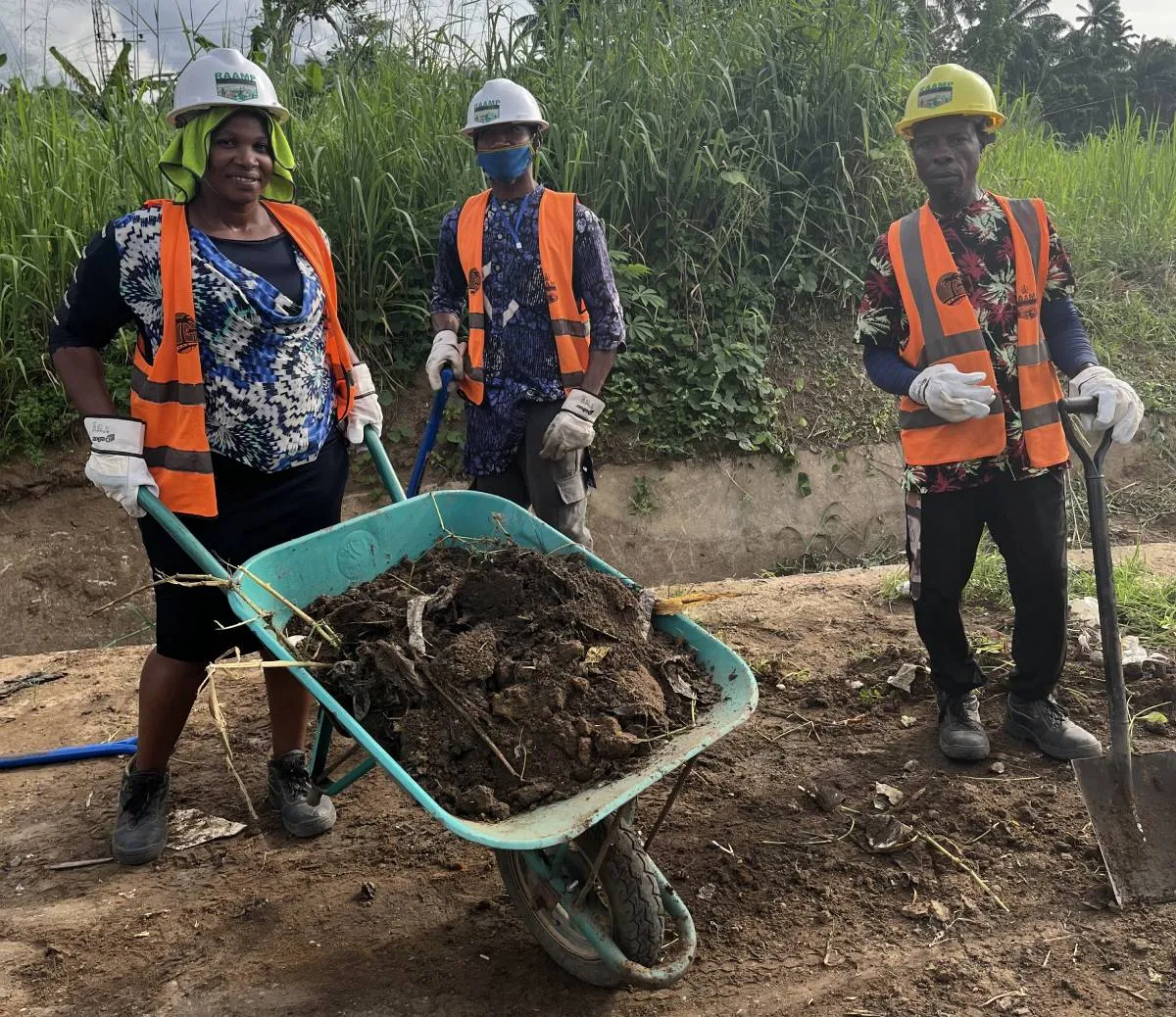
Over time, EIIP has collaborated with major institutions such as the World Bank and regional development banks. A notable example is Nigeria’s Rural Access & Agricultural Marketing project (RAAMP), which aims to improve agricultural productivity through better transport and agro-logistic centres (ALC) to stimulate growth. With ILO support, the project emphasizes decent work, skills development and social inclusion. The partnership is expected to generate millions of workdays through both direct and indirect employment, promoting participation by women and persons with disabilities. Importantly, it also ensuring that decent work elements are embedded in the World Bank’s bidding documents and their safeguard policies. In addition to the African Development Bank (AfDB) and Agence Française de Developpement (AFD), European Investment Bank (EIB) and Islamic Development Bank (IsDB) have also joined forces with a commitment to finance these overall efforts.
At its core, the EIIP promotes the optimization of labour in public investments—maximizing the use of local labour, skills, and materials. This approach was inspired by the work of the late Fritz Schumacher, the influential economist known for promoting appropriate technology, particularly in his seminal book Small Is Beautiful: Economics as if People Mattered (1973). This thinking remains as relevant today as ever. His views were that growth should serve human well-being rather than purely maximize output or profit.
Beyond infrastructure, in some countries, the EIIP increasingly supports the design of national public employment (works) programmes, many which have become well-tested and proven in Africa. ILO continues to work with governments, social partners, development banks and international and national stakeholders to work hand-in-hand, also at the macro-level to assess the employment impacts of sectoral interventions to ensure that decent work, gender empowerment skills development, local enterprises growth, and pathways are created in an inclusive, productive and sustainable manner. This collaboration has contributed to closing infrastructure gaps, strengthening institutional capacity, and enhancing resilience to shocks.
A key feature of EIIP today is the integration of environmental sustainability. “Green Works” and nature-based solutions (NbS) have expanded the programme’s scope to include activities such as restoration and maintenance of public infrastructure, community assets, natural areas and landscapes that contribute to environmental goals such as adaptation to climate change and nature conservation. These interventions are particularly relevant in Africa, where livelihoods are closely linked to natural resources. By restoring ecosystems while creating jobs, they reduce vulnerability of local communities and support a just transition. NbS, which is getting increasingly global attention, use ecosystems to address societal challenges, including biodiversity loss and food security. The ILO, together with partners, has highlighted the significant employment potential of NbS especially for the most vulnerable groups.
Importantly, this reflects a broader evolution of the approach. While infrastructure remains a key entry point due to high demand, particularly in Africa, EIIP increasingly encompasses a wider range of interventions. This expansion highlights the effectiveness of employment-intensive approaches in delivering social, environmental, and economic outcomes simultaneously, placing people at the centre.
Japan has been a longstanding partner of the ILO, including through the Tokyo International Conference on African Development (TICAD) framework. Within this framework, the EIIP has served as a central pillar of ILO engagement, promoting job creation through labour-based, ‘appropriate technologies’ and contributing to inclusive and sustainable growth in Africa.
In the Gambia, a Japan-supported project applied Do-nou technology, based on the use of soil-filled bags,for infrastructure development and disaster risk reduction to create jobs and skills development. The initiative benefitted more than 1,000 young people, 40 per cent of whom were women, ad demonstrated how simple, adaptable technologies can generate both economic and social impact. Partnered with a Japanese NGO, Community Road Empowerment (CORE), the project. The EIIP supported the replication and expansion of Do-nou technology into Ethiopia, Kenya, Madagascar, Mozambique. It also led to the creation of new enterprises, including one established by a young woman who secured her first public works after the project.
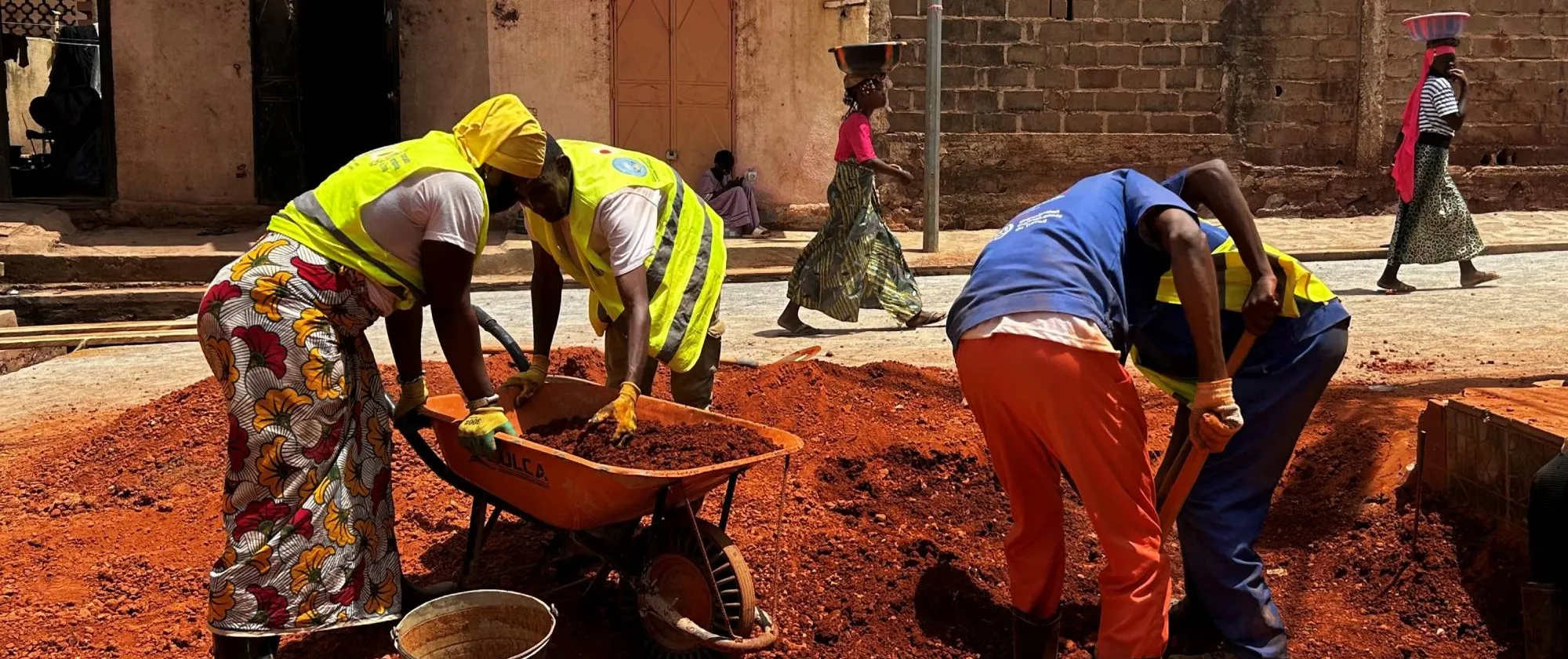
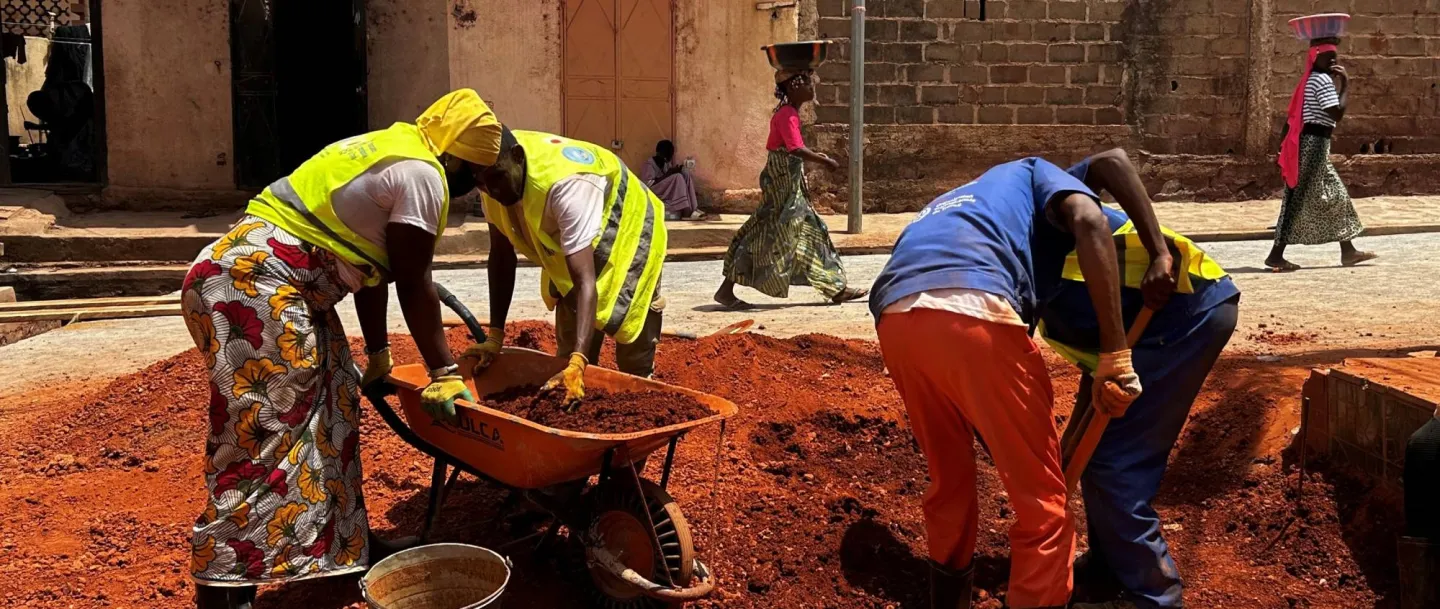
A more recent EIIP example funded by the Government of Japan is a project in peri-urban Bamako, Mali (2025-26), which promotes livelihoods and social cohesion among internally displaced persons (IDPs) and host communities. Using employment-intensive approaches, the project generated over 7,500 workdays and employed 120 unskilled workers. In parallel with job creation through labour-intensive road works, participants received training in occupational safety and health, conflict prevention and resolution and decent work principles.
The project also piloted Japanese soil stabilization technology (STEIN), adapting it to labour-based use in local conditions.
These examples illustrate how Japanese technologies can be effectively adapted as “appropriate technologies” for labour-based projects across Africa. For Japanese companies, experiences through EIIP show that the most promising opportunities may not come from exporting technology in a conventional sense, but from working with local governments, training institutions, enterprises, and communities and supporting them in adapting technology to African local context.
Capacity building remains central to EIIP’s approach. Since the 1990’s, it has supported the establishment and strengthening of labour-based training centres across Africa. Many of these institutions continue to operate with support from partners such as JICA, contributing to skills development, enterprise creation, and the gradual formalization of informal work. A General Agreement of Cooperation (GAC) among these centres further strengthens collaboration in research and training.
At high-level forums such as TICAD, EIIP has also contributed to policy dialogue linking employment, livelihoods, resilience and development. These discussions emphasize that job creation, skills, and disaster risk reduction must be addressed together to tackle the root causes of vulnerability.
In conclusion, EIIP represents an evolving and adaptable approach to Africa’s development challenges. By placing employment at the centre of investment strategies, it enables development outcomes and long-term benefits that are not only economically viable but also socially inclusive and environmentally sustainable. Through strong partnerships—including with Japan-, the ILO is well-positioned to continue to lead these efforts and promote decent work as a cornerstone of sustainable development.
(This article is an English adaptation of an article originally written for publication in the Summer issue of AFRICA, the magazine of the Africa Society of Japan.)
Related content
Topic portal
Employment-intensive investment
TICAD9
ILO at the 9th Tokyo International Conference on African Development

ILO project strengthens resilience and social cohesion through inclusive livelihoods and jobs in Mali