


PROSPECTS Impact
Climate solutions drive dairy livelihoods for refugee and host communities in Ethiopia
A partnership led by the ILO is helping refugee and host communities in Ethiopia’s Somali Region increase incomes and build resilience through climate-smart dairy solutions.
20 April 2026
Kebribeyah, ETHIOPIA (ILO News) – In the arid lowlands of Ethiopia’s Somali Region, drought and water scarcity continue to strain pastoralist livelihoods. An innovative partnership between the International Labour Organization (ILO) and Vétérinaires Sans Frontières Suisse (VSF Suisse) is helping change that.
Together, they are transforming the dairy value chain for both refugee and host communities. The initiative introduces climate-smart feed technologies, access to water, and strengthens animal health services. It also supports cooperatives development and community-led market systems.
These efforts are helping communities build resilience, increase incomes and access new economic opportunities, especially for women.
Implemented under the PROSPECTS Partnership funded by the Government of the Netherlands, the Approach to Inclusive Market Systems (AIMS) dairy value chain intervention in Kebribeyah Woreda is promoting more sustainable livestock production and enterprise development.
Journey of resilience: from displacement to sustainable livelihood in a camp
Amina Ahmed Oumer, a mother of five living in Kebribeyah Refugee Camp, took part in hydroponic green fodder production training. The training was delivered by VSF Suisse with the support of the Woreda Pastoral Development Office and the Refugees and Returnees Service (RRS). The training equipped participants with practical skills in hydroponic system setup, tray management, seed sprouting, water management, and hygienic fodder handling.
The impact was immediate. Amina now feeds fresh fodder to her four goats and two sheep, significantly improving their health and milk production. “The milk from one of my goats increased from just one cup to two cups a day,” she shares with pride. “That’s from about 0.25 to 0.5 liters per goat per day.”
Beyond improving nutrition, the initiative has opened up new income opportunities. Amina now sells surplus fodder to neighbouring refugee households, particularly during the dry season when feed is scarce, earning between ETB 125 and 150 (approximately US$ 1) per jerrycan-sized portion. What began as a subsistence activity has evolved into a small but growing microenterprise for Amina.
Looking ahead, Amina plans to expand production, acquire more milking goats, and increase her sales. She hopes to train other refugees in the climate-smart hydroponic method, multiplying the impact across the kaberibeyah refugee camp.
Asha Mohamud Mohamed, a 36-year-old mother of seven, shares a similar story. Standing beside her small hydroponic fodder shed, she recalls the challenges she once faced.
“Before this project, feeding my goats was very hard, especially when water was scarce,” she says.

After receiving training alongside 30 other refugees, Asha adopted hydroponic fodder production. This method produces nutrient-rich feed using very little water, no soil and limited space.
With maize, wheat, and sorghum seeds provided as startup inputs, she was able to harvest fresh fodder within just seven days of planting.
“Now I harvest green grass every week,” she says. “I used to feed cereals directly to the goats, but this method gives them better nutrition and saves money.”
The change has been transformative. Her herd has grown from two to five goats, and her family now consumes milk regularly.
“I can now buy small goats, fatten them, and sell them,” she adds “The hydroponic fodder helps me feed them even in the dry season.”
Investing in water security and sustainable public assets
Water access remains a major challenge in Kebribeyah Woreda. To address this ILO-PROSPECTS worked with VSF Suisse and the Pastoral Development Bureau of the Somali Region to construct two water detention ponds in Guyo and Garbi Kebeles.
The ponds can hold 6.16 million and 6.61 million liters of water., respectively. They now support communities that previously had to migrate during dry periods.
Dr. Bashir Ahmed Mahamed, Focal Person for Livestock at the Pastoral Development Bureau, highlights the significance:
“Kebribeyah is a drought-prone area where water is very scarce. These water detention ponds now serve the surrounding communities who used to migrate during dry seasons. Milk production has increased and livestock health has improved.”

Constructed using the Employment Intensive Investment Programme (EIIP) approach, the ponds generated short-term jobs while transferring practical skills to community members.
“What makes this project unique is its participatory approach,” Dr. Bashir adds. “Communities helped build these ponds and are now using the same techniques in other woredas.”
Local authorities have fully taken over responsibility for the infrastructure. The ponds are now part of Ethiopia’s “Yelemat Tirufat” (Bounty of the Basket) initiative to strengthen food security. “These facilities are already increasing milk production, and our office is planning to expand into honey and fish breeding at these ponds,” Dr. Bashir added.
Key result of an integrated approach to improve the dairy value chain
The AIMS was developed in close collaboration with UNHCR. It aims to make livelihood interventions for refugees more sustainable and market-driven.
Stephen Opio, Chief Technical Advisor of ILO PROSPECTS in Ethiopia and Sudan, underlined the impact of the intervention, “The initiative has contributed to enhanced productivity, stronger livelihoods, improved market systems, and increased resilience among both refugee and host communities”.
Livestock productivity within the targeted community has increased significantly. Farmers now have better access to affordable and nutrient-rich feed such as Total Mixed Ration (TMR), hydroponic fodder and forage trees.
Refugee and host households recorded an 81.5 per cent increase in milk yields. This has generated more than ETB 2 million in additional income from surplus milk sales.
The Garbi Cooperative located in Garbi Kebele in Kebribeyah woreda alone generated over ETB 1.2 million in revenue. This shows the commercial viability of the model.
Targeted support, including equipment, raw materials and training, has strengthened the cooperative’s performance. New market linkages with five external dairy groups are also helping it grow.
Stronger feed systems and climate resilience
The project is also improving feed production systems and building climate resilience.
- Within nine months (between September 2024 and May 2025), the cooperative produced 914 quintals of TMR. About 65 per cent of the inputs were sourced locally.
- Hydroponic units introduced among 30 refugee households led to 172 per cent increase in monthly fodder production.
- In addition, 700 households received Moringa, Leucaena, and Papaya seedlings. These support better nutrition, climate adaptation and new income opportunities.
- Efforts to improve market access have included a Market Linkage Workshop and Trade Fair. These events helped connect buyers and sellers and increased the commercialization of feed products. Infrastructure development is also underway.
- A modern dairy cooling facility is being built in Guyo Kebele. It is expected to enhance cold chain systems, reduce post-harvest losses and support the commercialization of dairy products and services.
As climate pressures intensify, solutions like these are proving critical. By linking communities to markets and strengthening local capacities, the partnership is creating pathways to more resilient and sustainable livelihoods.
Related contents

Strengthening cooperatives
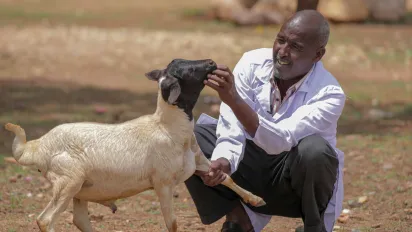
How ILO PROSPECTS is strengthening livestock farming in Ethiopia’s Somali Region
International Year of Cooperatives
ILO advances dairy value chain in Ethiopia by strengthening cooperatives

Factsheet
Approach to Integrated Market Systems: Dairy value chain in the Somali Region, Ethiopia

News
Pastoralists in Ethiopia find a cure for hard-to-reach veterinary services

Approach to Inclusive Market Systems
Evaluation of Market Systems Development Interventions for Refugee and Host Communities in Jijiga, Ethiopia
Relevant projects
ILO-Netherlands Partnership
Partnership for improving prospects for forcibly displaced persons and host communities (PROSPECTS) in Ethiopia
Programme
Partnership for improving prospects for forcibly displaced persons and host communities (PROSPECTS)