


Strengthening cooperatives
How ILO PROSPECTS is strengthening livestock farming in Ethiopia’s Somali Region
The ILO's PROSPECTS Partnership enhances livestock farming in Ethiopia’s Somali region through innovative solutions, improving feed production, resilience, and economic opportunities for both refugees and host communities.
19 February 2025
Addis Ababa, Ethiopia – In Ethiopia’s Somali region, livestock farming is a cornerstone of community livelihoods, yet challenges such as erratic rainfall, limited grazing land, and scarce resources threaten its sustainability. The International Labour Organization’s (ILO) PROSPECTS Partnership, in collaboration with VSF-Suisse, is implementing innovative solutions to enhance livestock production and improve economic opportunities for the hosts and refugees in the region.
By introducing multipurpose forage trees, hydroponic green fodder production, and commercial animal feed production, the initiative is fostering resilience, food security and enhancing livelihoods.
Introducing multipurpose forage trees for sustainable livestock production
For livestock farmers in the region, access to nutritious feed has long been a challenge. Recognizing this, ILO introduced Moringa and Leucaena trees - species known for their high nutritional value, soil-enhancing properties, and economic benefits.
With over 3,000 tree seedlings distributed to 1,103 households, farmers are now equipped with sustainable resources to improve their livestock feed. In addition, targeted training on seedling and nursery management ensures that these communities can maintain and expand their tree production over the period of time.
Hydroponic green fodder production for resilience
With erratic rainfall, poor soil conditions, and limited farming space, traditional livestock feeding methods often fall short. To address the challenges, the PROSPECTS program has promoted hydroponic green fodder production - a soil-free cultivation method that produces fresh, nutritious feed year-round.
In Kebribeyah camp, 30 refugee households have been trained to adopt this sustainable farming practice, bringing them livestock even in drought prone conditions. This initiative not only boosts food security but also empowers communities with practical skills that foster self-reliance.
Commercial animal feed production for improved quality
To improve the quality of livestock feed, a cooperative in Gerbi Kebele, located 20 kms outside Kebribeyah town, was selected to establish a commercial animal feed production unit. The cooperative was supported to produce high quality livestock in the form a concentrate and total mixed ration.
Through a cost sharing model, Gerbi cooperative constructed the shed for production unit, while the project supplied the required feed processing machineries, including chopper, hammer mill grinder and mixer.
After the machineries were installed, all members of the cooperatives were trained in basic machine operation and minor protective maintenance.
Now the cooperative is producing animal feed for the members as well as selling to the community living around the area. This initiative has not only enhanced livestock health but has also created new economic opportunities.
Over four months (September to December 2024), 50 lactating cows fed with Total Mixed Ration (TMR) produced 21,761 liters of milk. While 22 per cent of the milk was consumed by the households of cooperatives, remaining milk generated revenue of ETB 765,675 (approximately US$6100).
The TMR diet significantly improved milk production, increasing the average daily yield per cow by 1.63 liters, an increase of 81.5% compared to pre-TMR levels.
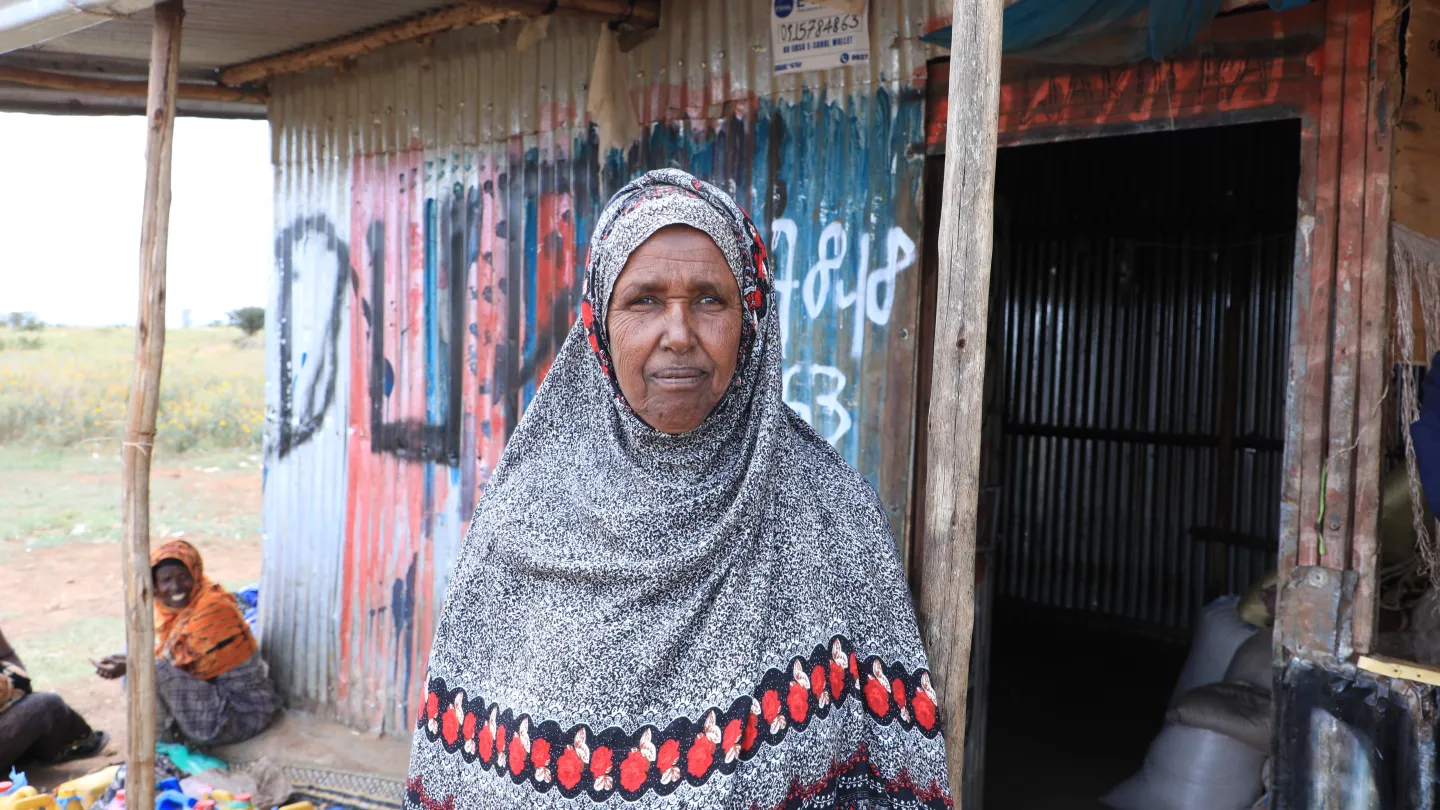
“The new animal feed has improved the milk production for cooperative members and for the surrounding communities buying it.”
Marya Muhammed, chair of the Gerbi Kebele cooperative.
Next steps for sustainable development
Looking ahead, the PROSPECTS Partnership supported by Government of the Netherlands, plans to finalize the construction of dairy cooling facilities. Additionally, the program will focus on developing value chains for dairy products to improve quality and market access.
These initiatives are crucial for the sustainable development of livestock production in the Somali region, contributing to food security, improved livelihoods, and the overall resilience of refugees and their host communities.
By empowering farmers with innovative practices and knowledge, the PROSPECTS Partnership is paving the way for a brighter future for Somali's livestock sector.
Related contents
International Year of Cooperatives
ILO advances dairy value chain in Ethiopia by strengthening cooperatives

News
Pastoralists in Ethiopia find a cure for hard-to-reach veterinary services

Factsheet
Approach to Integrated Market Systems: Dairy value chain in the Somali Region, Ethiopia

Approach to Inclusive Market Systems
Evaluation of Market Systems Development Interventions for Refugee and Host Communities in Jijiga, Ethiopia
Relevant projects
ILO-Netherlands Partnership
Partnership for improving prospects for forcibly displaced persons and host communities (PROSPECTS) in Ethiopia
Programme
Partnership for improving prospects for forcibly displaced persons and host communities (PROSPECTS)