

Our impact, their story
From carrying firewood to carrying hope: Emmanuel’s journey out of child labour
At just 16, Emmanuel has lived a life far heavier than the firewood he once carried every morning. Forced into hazardous work as a child, he nearly lost his education and his hope, until support from the ILO's partners helped him find his voice, return to school, and become a young leader against child labour in his community. This is his story, told in his own words.
1 December 2025
Wonuga Emmanuel: My name is Emmanuel, I am 16 years old and I come from a mountainous village in Sironko District, Eastern Uganda. I am the second last of ten children from three different mothers, some of my sisters were unfortunately forced into early marriage.
The memory of that heap of firewood resting on my little feet and legs remains so fresh as if it just happened, I was coming down the hill, exhausted, when my strength gave out. The heavy heap of firewood slipped and crushed my leg. The pain was beyond imagination for a short moment. Holding back tears, I forced myself up, lifted the firewood, and limped home. As if the pain I had was not enough, my father’s words shattered me. Without asking what had happened, he shouted, “that is your problem, you didn’t walk like a man.” In that moment, I felt deeply discouraged and struggled to understand why my life had taken this path.
Nevertheless, from an early age, my life seemed to revolve entirely around firewood, so much that it felt almost like a companion I never asked for. Every morning, whether it was a school day or not, I rose before the sun, often on an empty stomach, and walked long distances into the bushes to collect bundles of firewood larger than my own body. I pushed through thorny paths, crossed cold rivers, and climbed steep hills with that heavy load balanced on my head.
Many times, I found myself wondering quietly: Why must my childhood look like this? Why am I suffering like this?
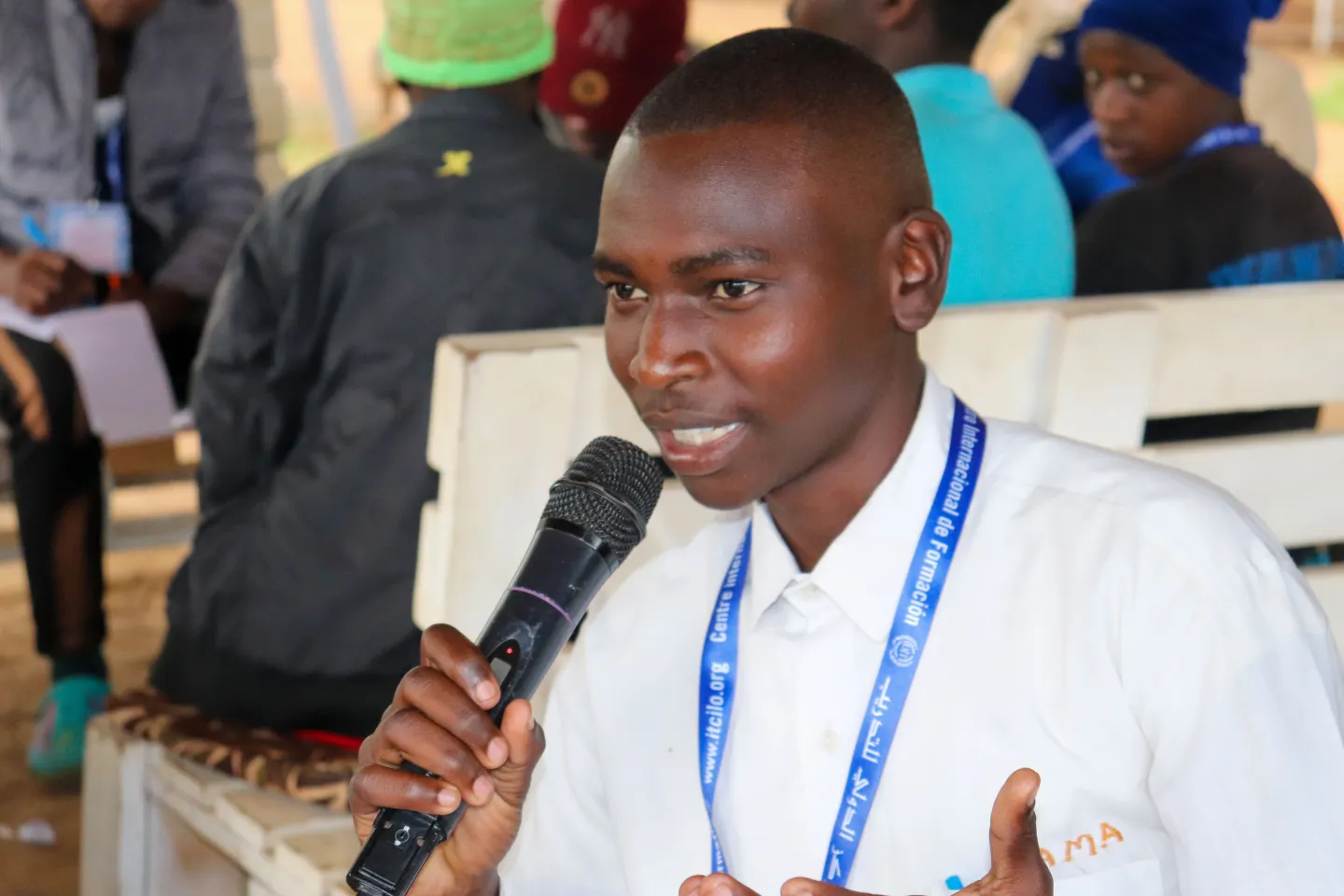
I loved going to school, and even when my body was in pain, I pushed myself to attend. But because of the heavy workload at home, I could manage to be in class only twice a week. I began to lose hope. I felt myself slipping toward giving up, until 2022, when something changed. Nascent RDO and the ILO came to our village to teach the community about child labour and its dangers. I gathered my courage and shared my story. For the first time, someone saw my struggle not as laziness, but as abuse. That moment changed everything for me.
The NGO agents taught me important life skills. I began to understand myself better, to care for myself, and to believe in what I could become. I was about 14 when they supported me to join a small community mechanics garage. There, I learned how to repair motorcycles while earning a little money. For the first time in my life, I felt proud.
With the money I earned at the garage, I saved and returned to school. Today, I am in Senior Three, paying most of my school fees through my work as a mechanic. My parents contribute what they can, and now I feel more focused than ever on building my own future.
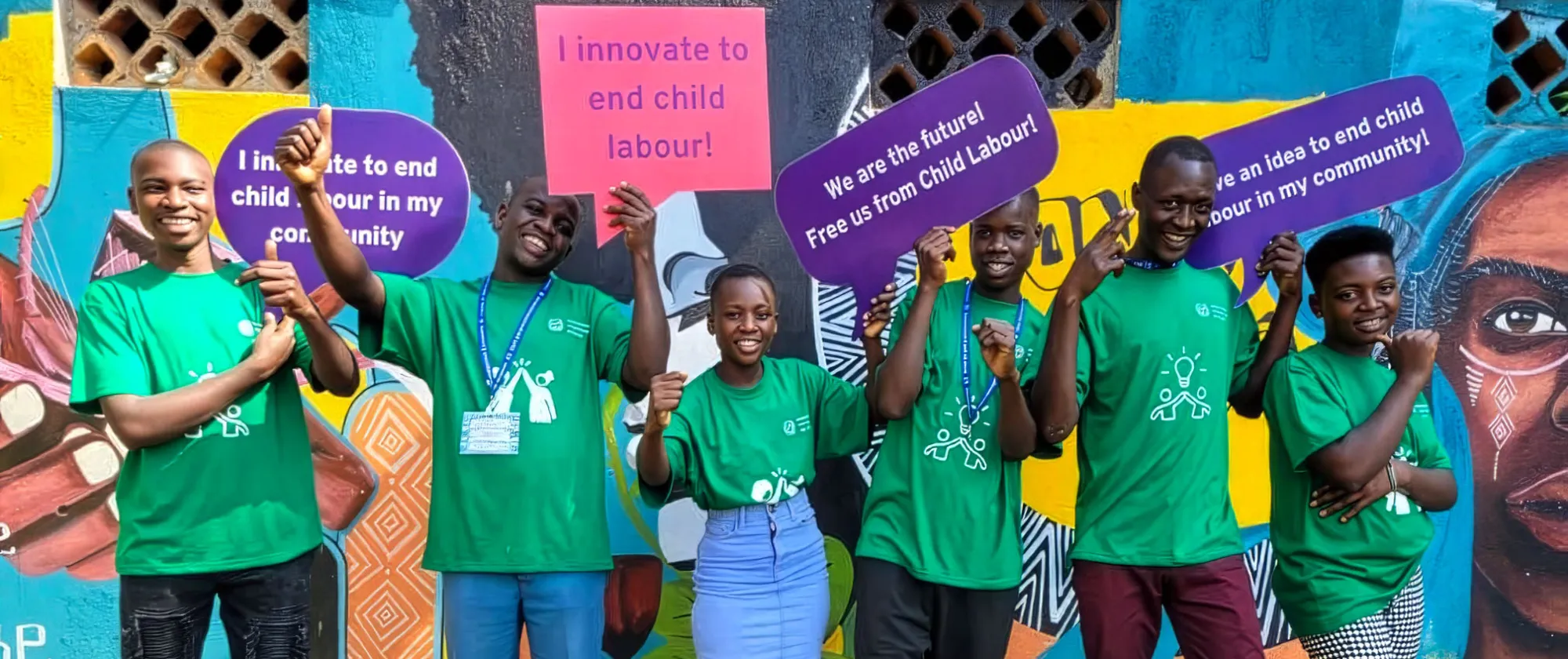
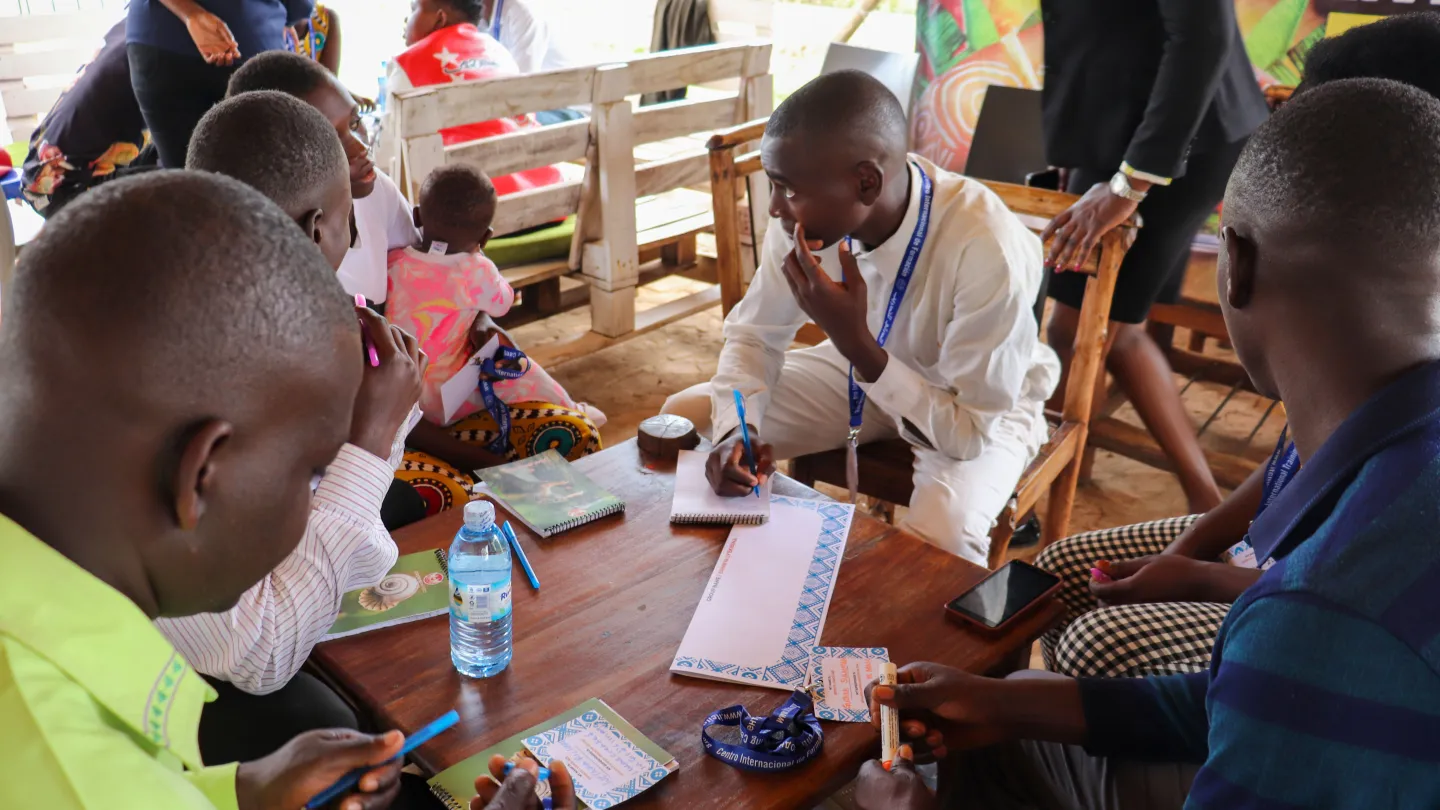
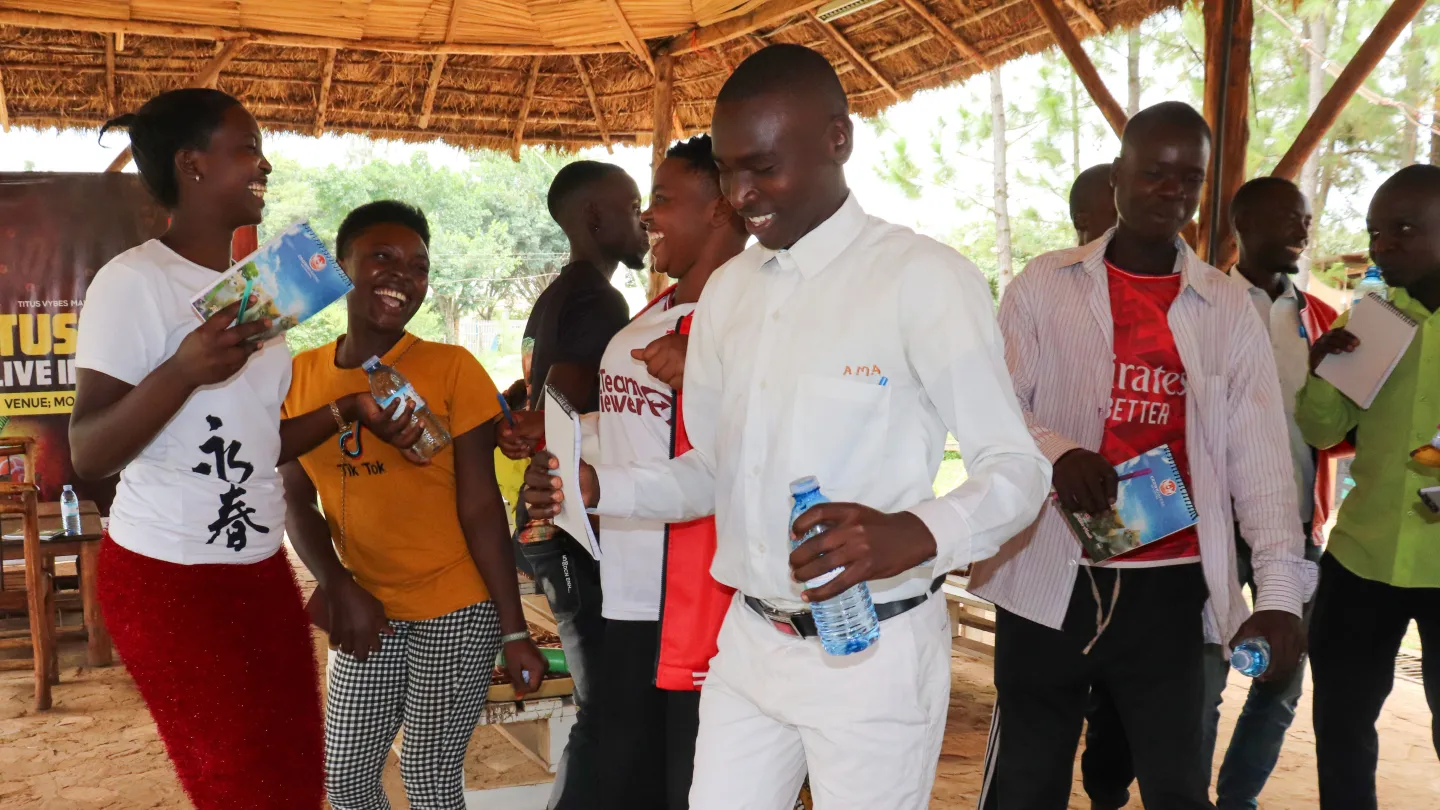
Last year, in my village, the ILO, ITCILO and Nascent RDO-U mobilized young people to develop solutions to eliminate child labour. They called it a “Hackathon.” I was happy to join, and we created a group called “United Youth Hook” because we believe we can “hook” child labour and end it for good. I became the speaker of the group, and we mobilized elders, met community leaders, went to the sub-county, and even received a certificate from the local government. We now work confidently! Our work was noticed by the district, and they even announced us on the radio as a “medicine” for child labour.
I never believed that a boy who once carried firewood in pain would one day speak to a distinguished audience on this platform. I feel honored, and thank you for this opportunity, not only to listen to me, but to know that the voice of young people can still be heard.
What changes are still deeded in my community?
In my sub-county, there is no secondary school. Children walk long distances, and many never make it to secondary school. Poverty and hunger force many children back into child labour, just like me in the past.
We need:
- Better access to education,
- Better ways to teach communities about self-awareness and children’s rights,
- and programmes that give children hope, new skills, and address poverty.
What is your message to world leaders and donors?
Your support has helped children like me return to school, gain skills, and find hope. Please do not stop. Invest more in ending child labour!
Wonuga Emmanuel
If I could speak directly to world leaders, I would tell them: I am rooted in your struggle and our struggle to free us. I am ready to continue the work you began in my community, but we cannot do it alone without you. Your support has helped children like me return to school, gain skills, and find hope. Please do not stop. Invest more in ending child labour! Invest in education! Invest in young people and address poverty! When you give us knowledge, we use it to help our peers. We become stronger, more resilient, and the sky becomes the limit.
My dream is to have money, not for myself, but so I can help my community. I want to serve people. I want to be the reason another child is saved from child labour. I want to be the voice that tells someone, “Your life can change.” Because if a boy who once cried alone in the hills can stand on a world stage, then every child deserves that chance.
Your life can change. Because if a boy who once cried alone in the hills can stand on a world stage, then you also can. Every child deserves that chance!
Wonuga Emmanuel
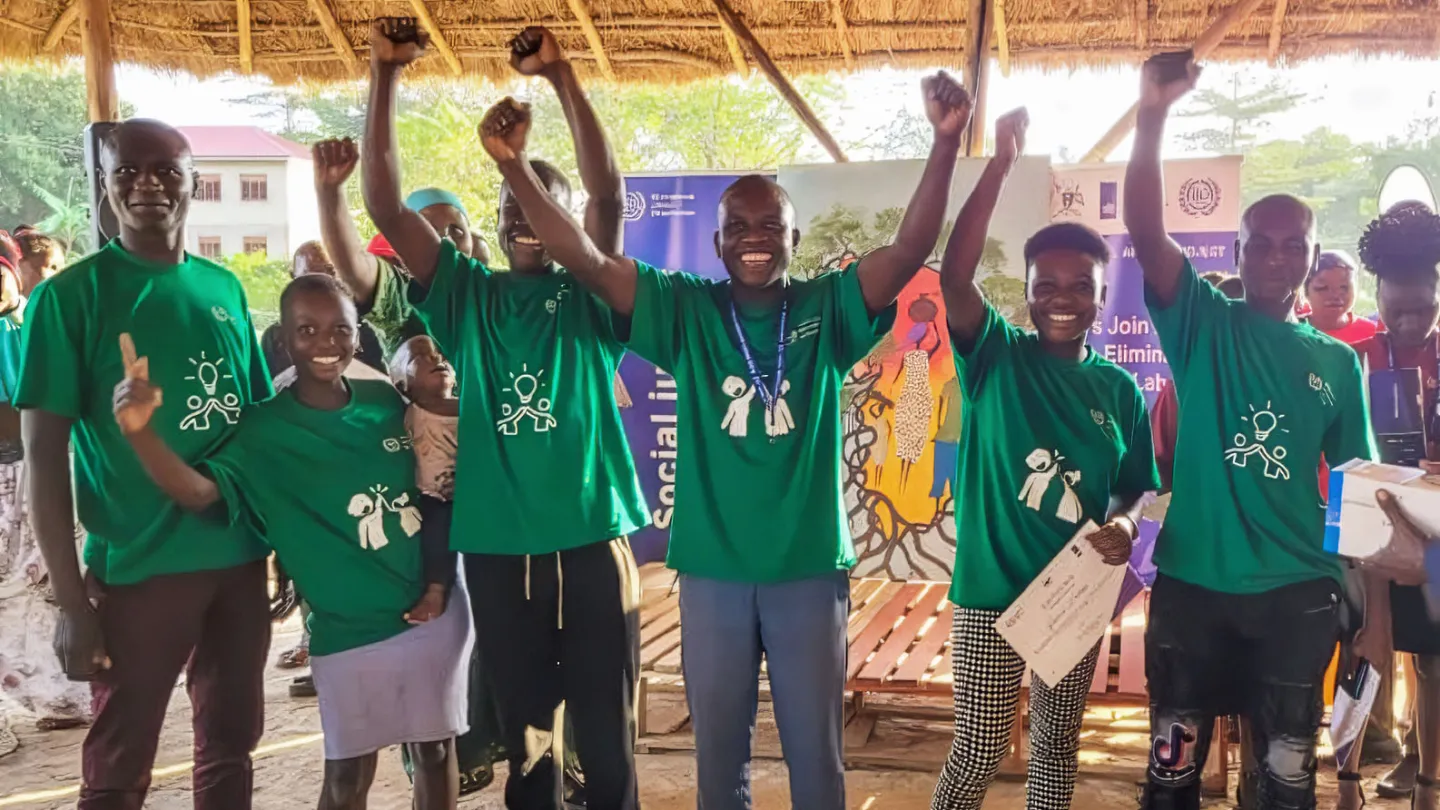
- ACCEL Africa is funded by the Ministry of Foreign Affairs of the Netherlands.
Related content
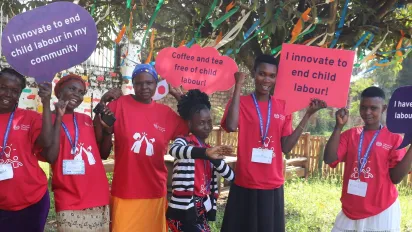
Empowering communities to combat child labour: The Mwezze Hack
Accelerating action for the elimination of child labour in supply chains in Africa (ACCEL Africa)
Relevant projects
Accelerating action for the elimination of child labour in supply chains in Africa (ACCEL Africa)