


Côte d’Ivoire strengthens financial inclusion for rural communities to combat child labour
More than 1,100 producers, members of Village Savings and Loan Associations (VSLAs), rural women and young people benefited from a campaign promoting decentralized financial services, organized by ACCEL Africa and financed by the Ministry of Foreign Affairs of the Netherlands.
29 June 2026
MORONOU & NAWA, CÔTE D'IVOIRE (ILO News) – In rural areas of Côte d’Ivoire, particularly in the Moronou and Nawa regions, access to formal financial services remains a major challenge for many farming households. Faced with irregular incomes, unexpected expenses and insufficient social protection, these families are particularly vulnerable to economic hardship, which can lead to difficult choices that negatively affect children’s schooling.
By contrast, households with access to appropriate financial mechanisms, such as savings or responsible credit, are better equipped to cover school-related expenses, cope with lean periods and manage unexpected costs. This is the approach adopted by the ACCEL Africa project, which seeks to strengthen the economic resilience of households as a means of contributing to the prevention of child labour.
To address this concrete need, the ACCEL Africa project, financed by the Ministry of Foreign Affairs of the Netherlands, organized a campaign to promote decentralized financial services in the Moronou and Nawa regions from 8 to 13 June 2026. The initiative was carried out in partnership with Côte d’Ivoire’s Agency for the Promotion of Financial Inclusion (APIF-CI).
The campaign builds on financial education activities previously conducted for more than 500 ACCEL Africa project beneficiaries in Grand-Zattry and M’Batto, including members of Village Savings and Loan Associations (VSLAs), cooperative groups, rural women and young people. These beneficiaries received financial education training that strengthened their knowledge of budgeting, savings, responsible borrowing and digital finance.
However, following the training and during discussions with beneficiaries, a clear reality emerged: while financial education is essential, it must be followed by practical support in accessing financial services if it is to have a lasting impact. The campaign was therefore designed as an operational bridge between knowledge and action, bringing financial institutions directly into the heart of rural communities.
A total of 1,170 people, including 709 women, participated in the campaign across six localities: Ahounan, Akpibo and Agnia in Moronou, and Zakéoua, Gadago and Zougouzoa in Nawa.
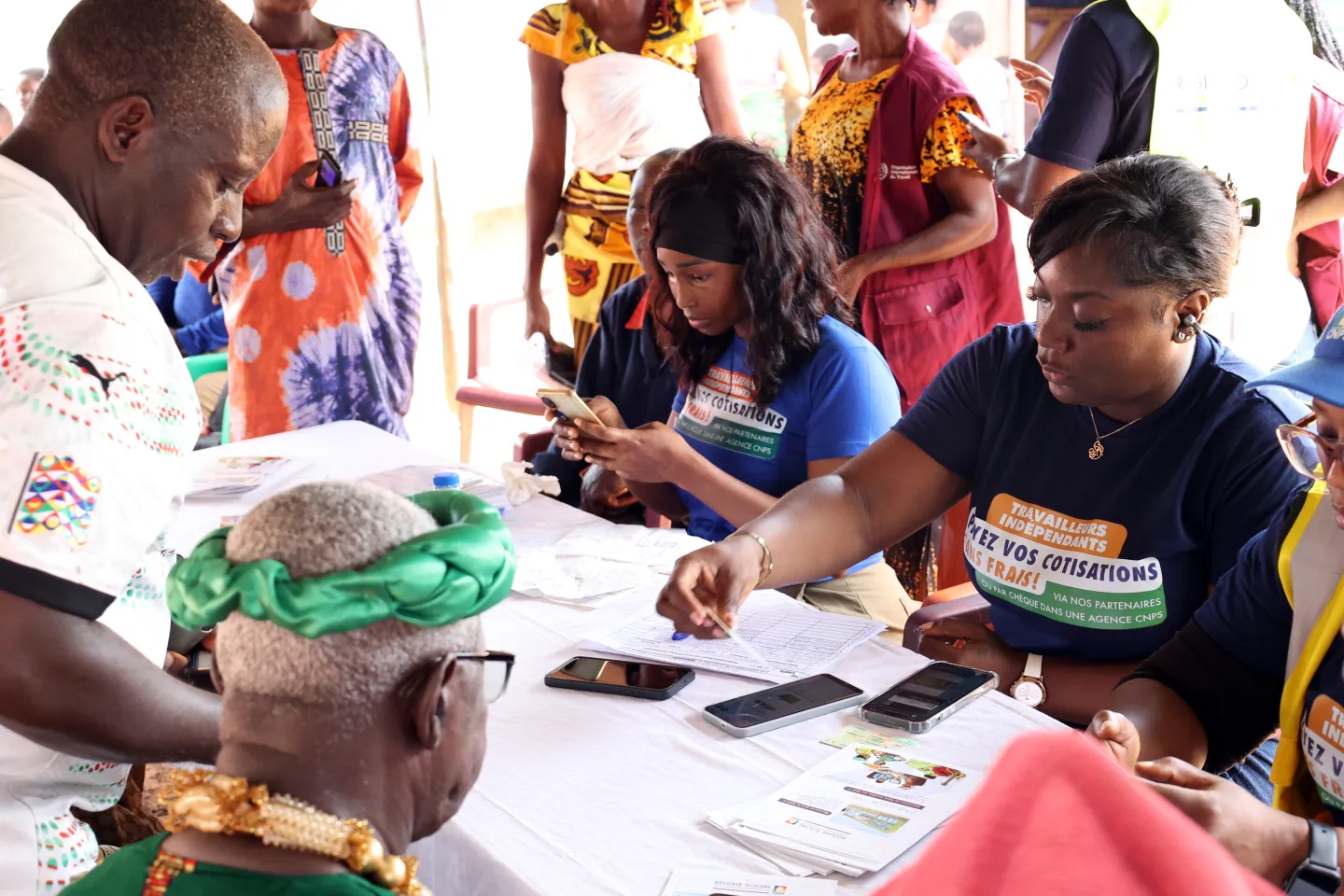
Orange Money and Orange Bank Africa supported the opening of 381 accounts: 214 in Grand-Zattry and 167 in M’Batto. Wave Côte d’Ivoire supported 266 beneficiaries with account openings, account reactivations and the practical use of digital financial services. UNACOOPEC-CI assisted 121 people, who were particularly interested in savings products, access to credit and the reactivation of dormant accounts.
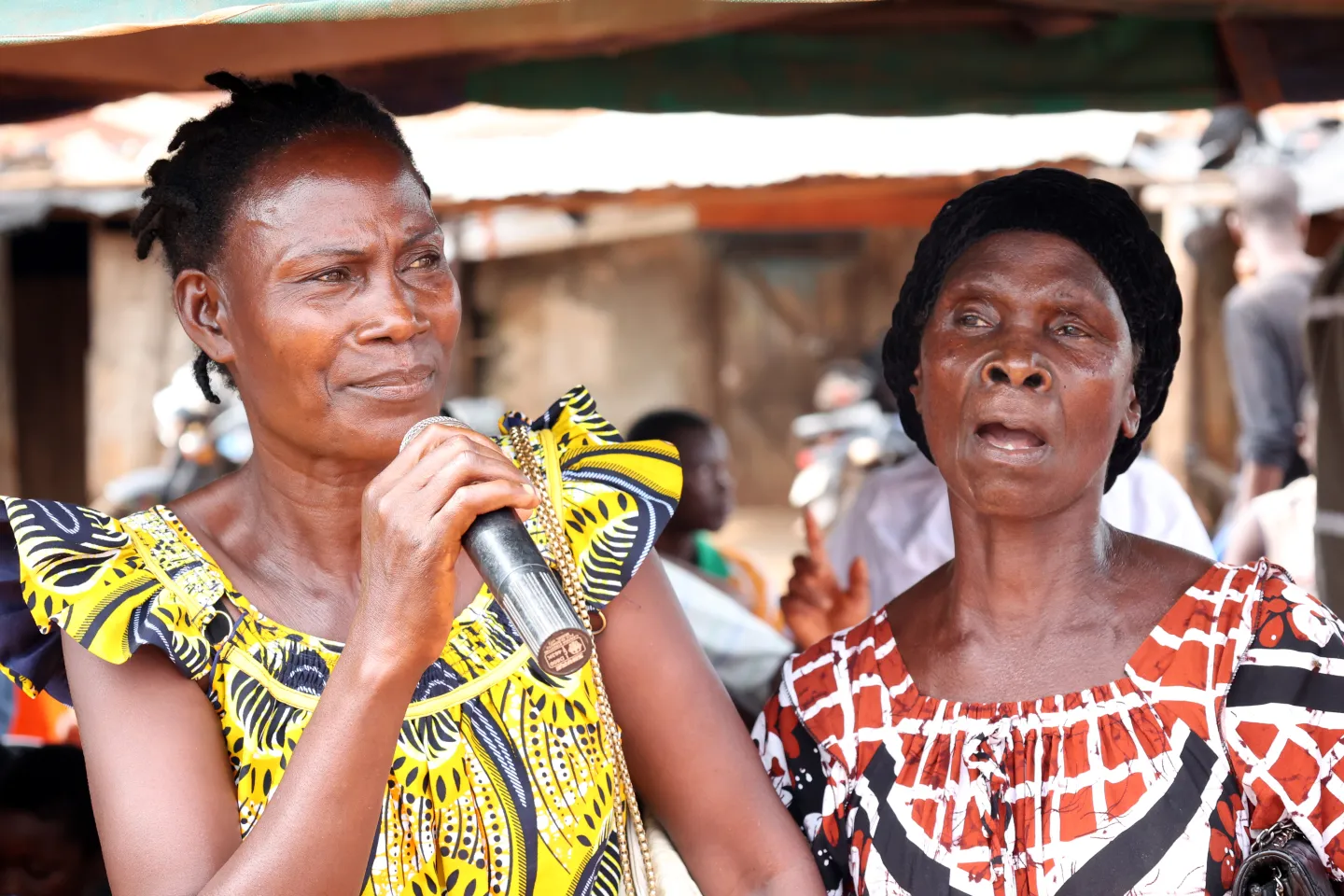
The strong participation of women throughout the campaign, particularly in Gadago and Zougouzoa, confirms the central role women play in managing the finances of rural households. By strengthening their financial autonomy, the campaign indirectly contributes to improving households’ ability to invest in children’s health, nutrition and education.
The campaign demonstrated that sustainable financial inclusion in rural areas depends on a combination of complementary measures: financial education, accessible local services, community-based support and effective access to appropriate financial products. Agents of change, who serve as essential links between institutions and communities, play a key role in achieving lasting changes in financial behaviour.
The results achieved confirm the relevance of this community-based financial outreach model and support its continuation and expansion to other ACCEL Africa project intervention areas. This would help consolidate the gains made through financial education and contribute to reducing the vulnerability factors that may lead to child labour in agricultural supply chains.
With this in mind, the ILO, APIF partners and financial institutions intend to continue and strengthen this community-based approach. However, sustaining the results will depend on the quality of post-campaign follow-up. To this end, a monitoring mechanism will be established with partner financial institutions to document actual account openings, credit applications, challenges encountered and beneficiaries’ additional needs, with a view to consolidating the results achieved and sustainably strengthening their financial inclusion.
Social protection and financial inclusion: Complementary approaches to supporting rural households
Alongside the financial institutions, the National Social Security Fund (CNPS) played a distinct role in the campaign. The CNPS is the public institution responsible for social security. Its participation aimed to provide producers and rural workers with enrolment in and access to the Social Security Scheme for Self-Employed Workers (RSTI).
Membership in the RSTI provides access to benefits that neither savings nor credit alone can guarantee, including a retirement pension and daily allowances in the event of illness, accident or maternity. For farming households with irregular incomes, these protections reduce the risk that an unexpected shock will lead to difficult choices, including resorting to child labour.
The scheme is also tailored to the needs of rural workers: contributions, calculated on the basis of a declared flat-rate income, can be paid by mobile payment without the need to visit a branch. A mobile account opened on the same day during the campaign can therefore become the means through which a self-employed worker pays social security contributions, providing a concrete illustration of the complementarity between financial inclusion and social protection.
The figures confirm the relevance of this approach: the CNPS registered 372 people in the Social Security Scheme for Self-Employed Workers (RSTI), including 236 women, with a total of CFAF 616,700 collected in social security contributions. This result illustrates the genuine demand for social protection among self-employed workers and confirms that community-based information and outreach can encourage participation in schemes that remain relatively little known in rural areas.
Workers enrolled during the campaign now have everything they need to continue independently: a social security identification number and the ability to make contributions remotely through mobile payments, without having to visit a branch. The first payment made during the campaign thus marks the beginning of an ongoing relationship with the social security system, which will be supported and strengthened through post-campaign follow-up conducted with the CNPS.