

Article
Between work and school: The struggle of children in Lebanon’s agricultural fields
The ILO, through the PROSPECTS partnership, is supporting Lebanese and Syrian children, families and communities to combat child labour across Lebanon’s agricultural areas.
24 December 2025
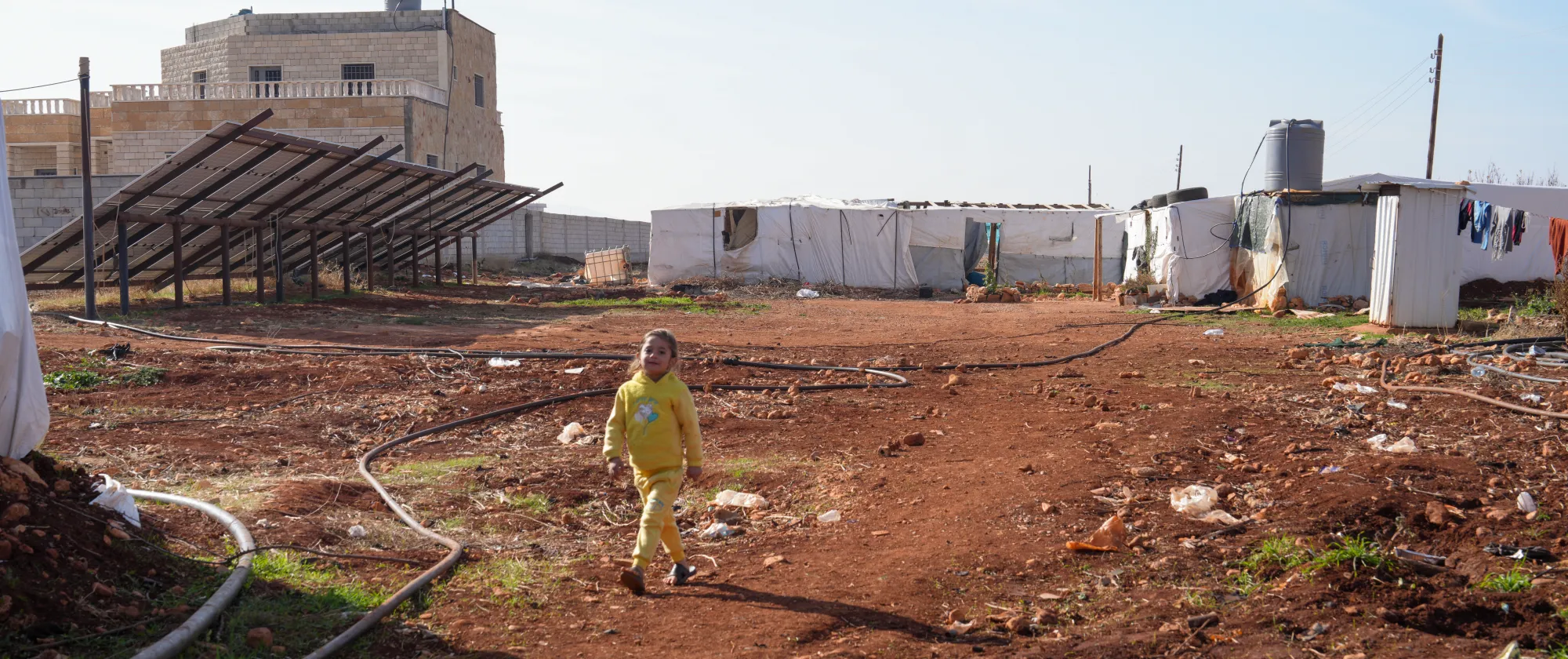
BEKAA VALLEY (ILO News) – Ali is an eleven-year-old Syrian boy. He lives with his parents in Lebanon, on a small patch of land next to the agricultural fields where they work.
His family fled the war in their home country in 2015, finding refuge in neghbouring Lebanon. But life here has also brought its own hardships. Low-paid agricultural labour, freezing winters, scorching summers, very little schooling, and a future filled with uncertainties that many other children do not usually face.
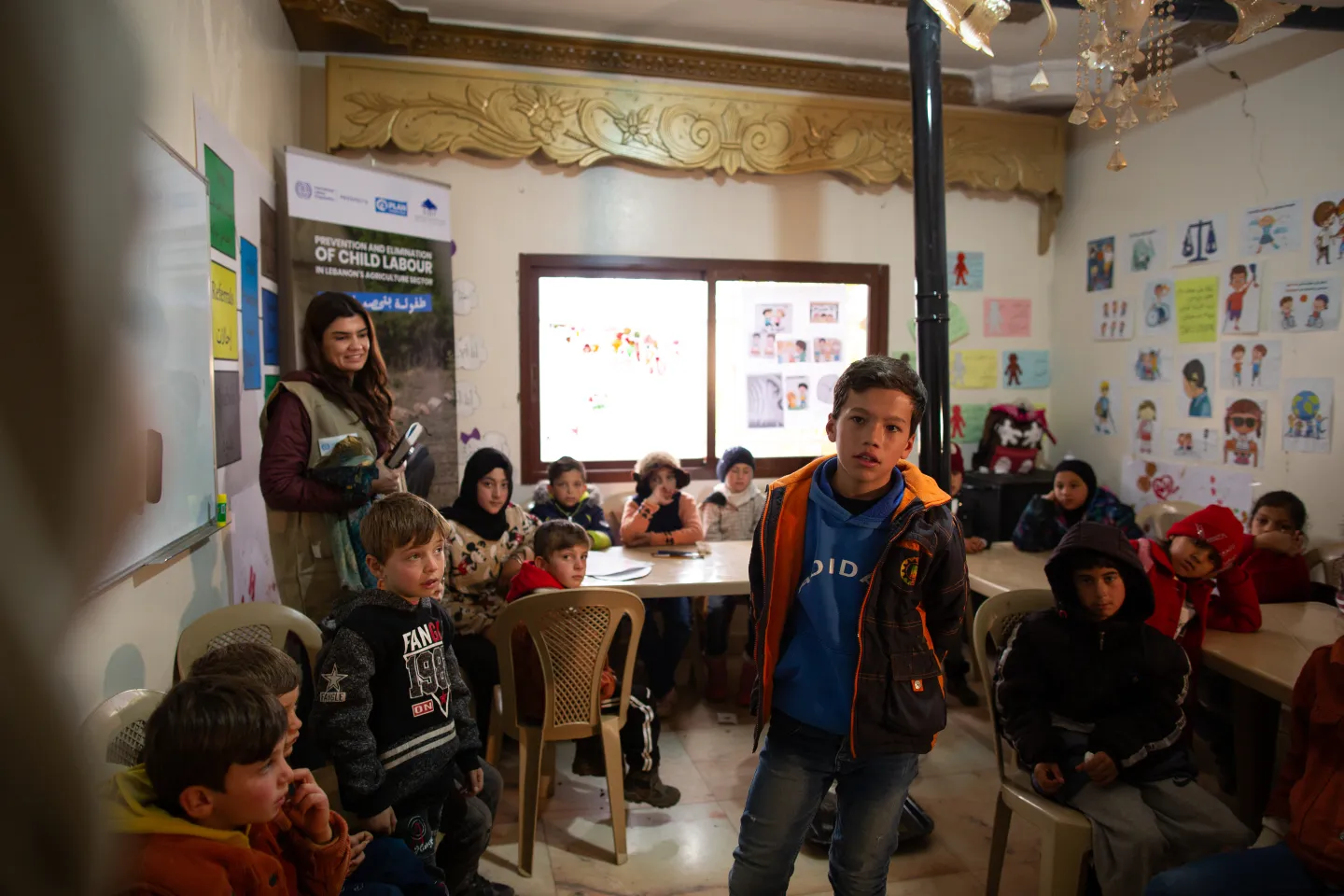
“I work, then I go to school at one o’clock and leave at two,” said Ali at a local centre where children can study, play and receive psychosocial support through the International Labour Organization (ILO) and its local partners, Plan International Lebanon and The Rene Moawad Foundation. “After that, I go home, eat and sometimes play.”
Beside him sits 9-year-old Sham, who eagerly stands to share her story.
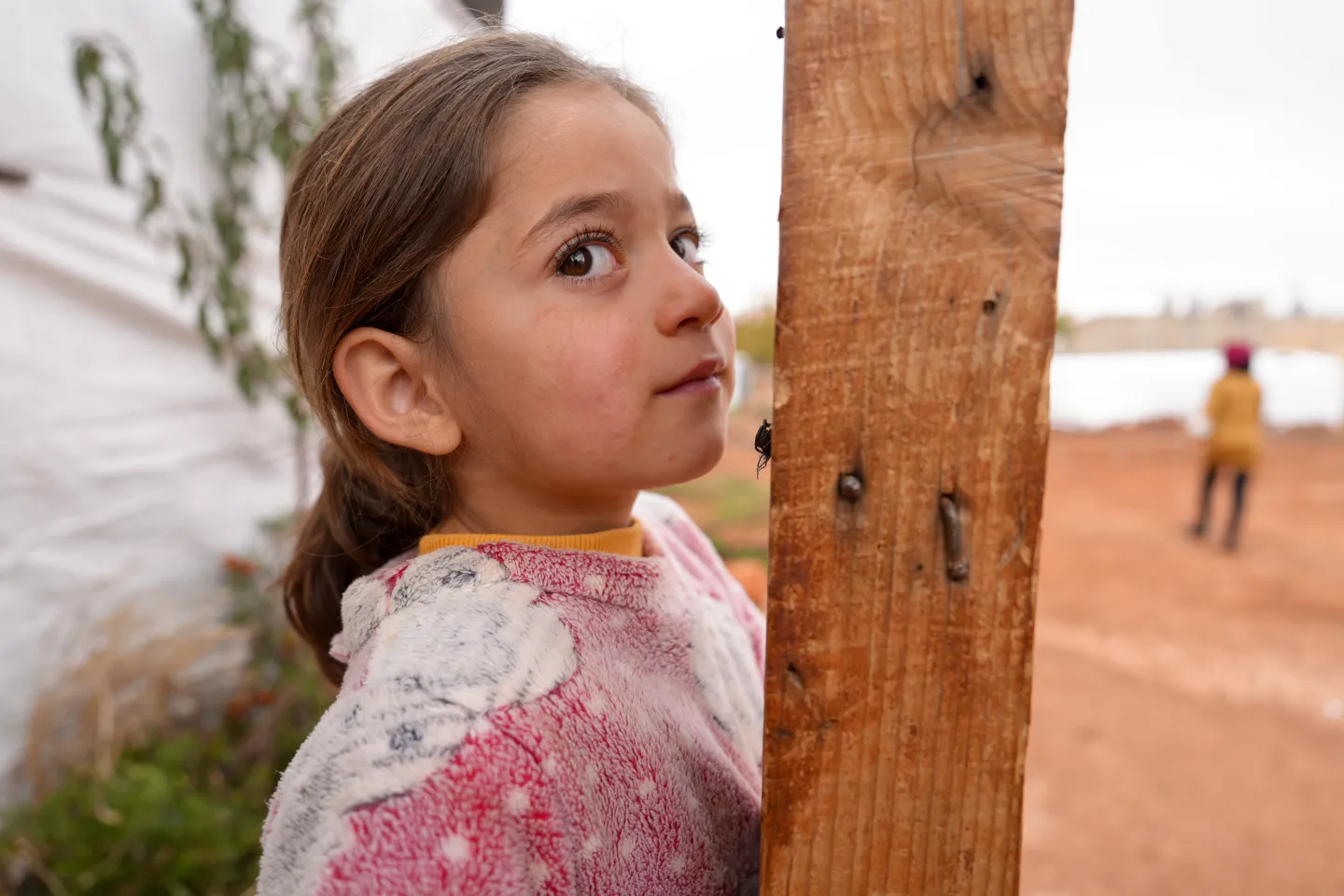
Like Ali, she lives in a tented settlement nearby and attends the same local centre. Her family fled Syria in 2011 during the first waves of displacement. Now, during the winter harvest, she helps her father dig and collect potatoes in the field just beyond their tent.
I don’t get paid when I work; I just help my dad.
Sham,9-year-old Syrian refugee
The settlements where Ali and Sham live are informal, scattered across farmland and town outskirts. Some house only a few families, while others shelter nearly 1,000 people. None are officially recognised as camps, and most lack basic services such as clean water, sanitation and waste disposal - a situation further exacerbated by reduced assistance and funding shortages. Families rely on small wood-burning stoves to bring brief relief from the cold; temperatures here often drop below zero during the winter months.
“I go to school sometimes,” Sham said quietly. “I don’t get paid when I work; I just help my dad.”
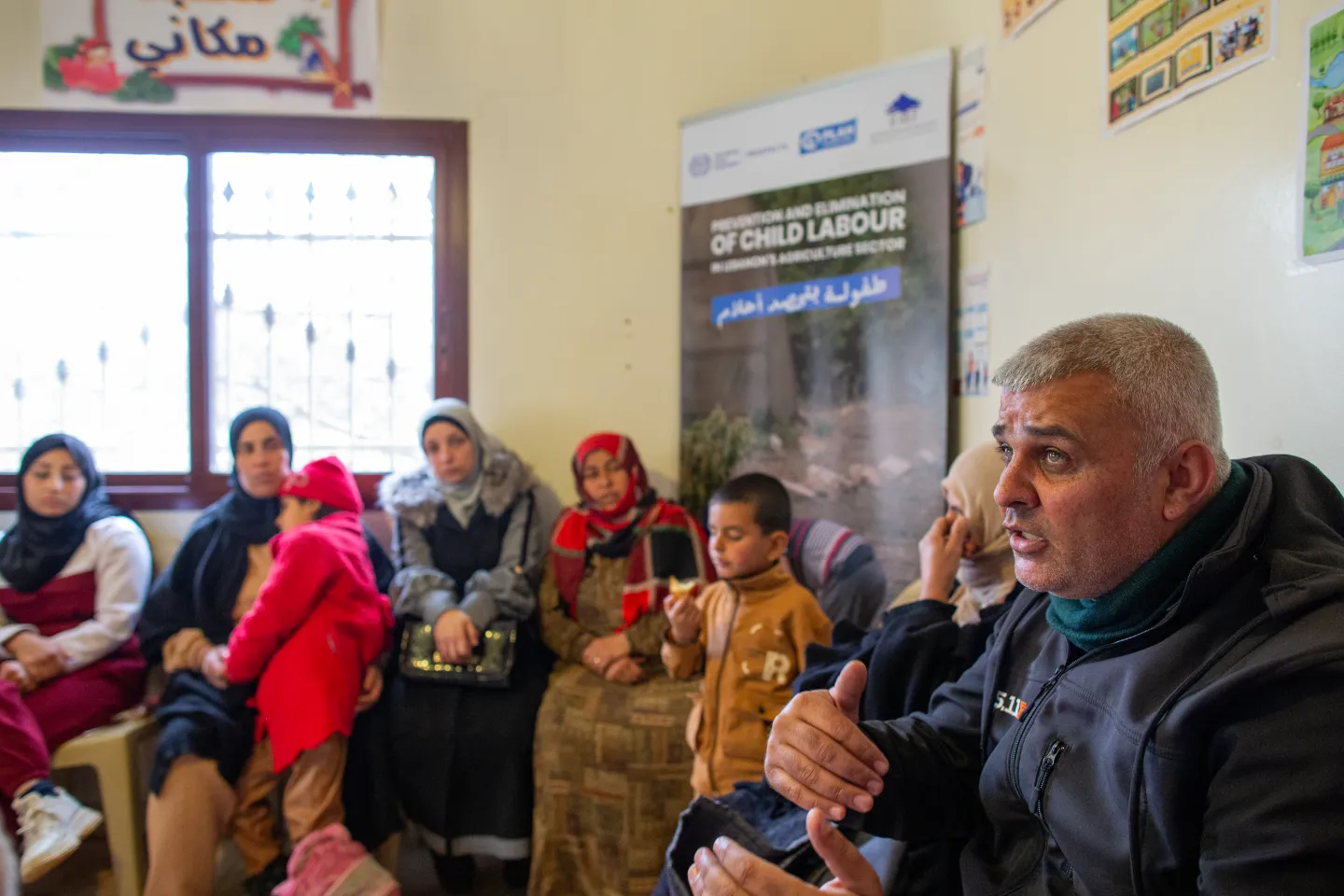
Many children in these settlements – sometimes as young as seven - are already working, including in some of the worst forms of child labour. During the potato harvest, most children in the fields are under ten, parents say during an ILO-run session for families at the centre.
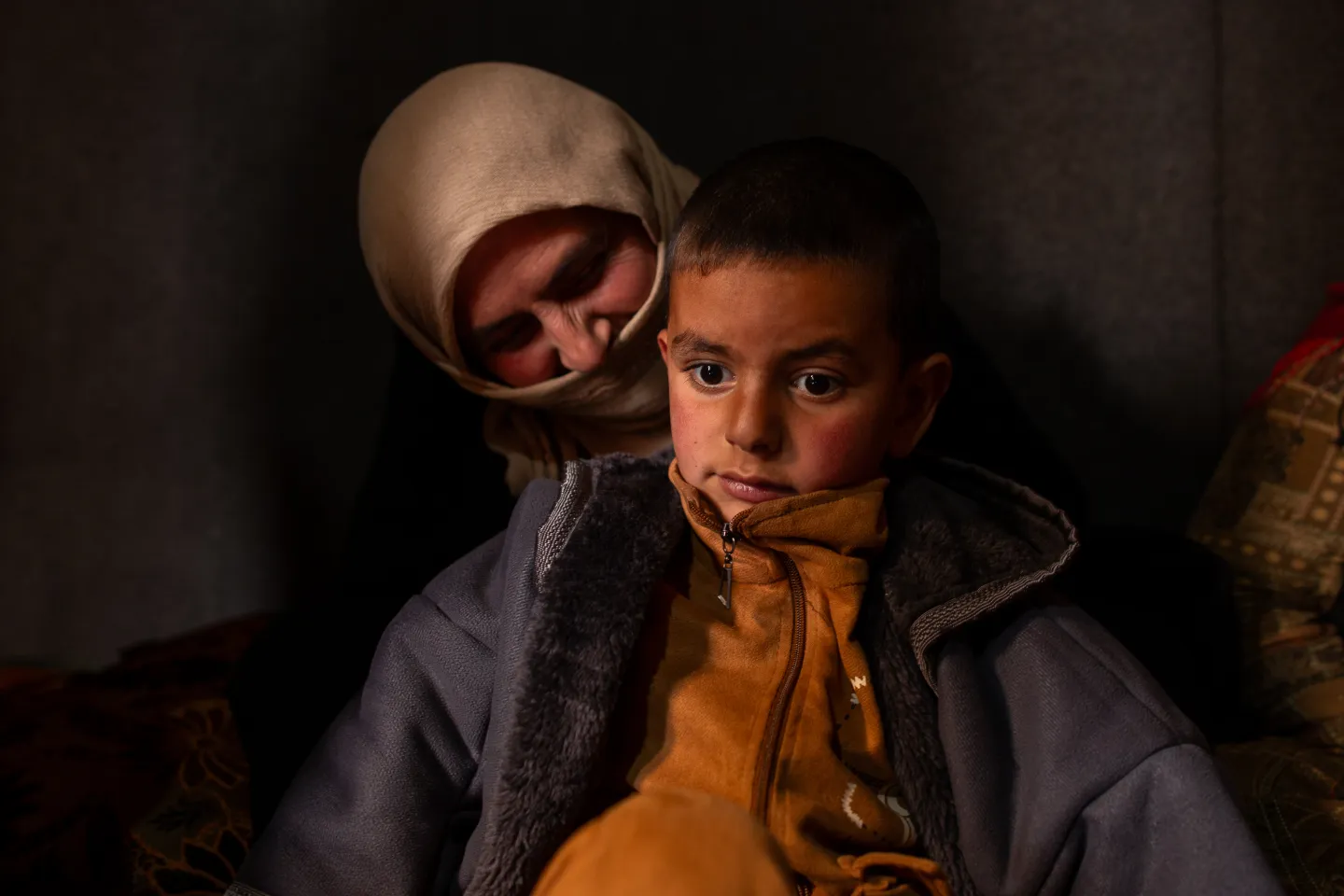
Stories like Ali and Sham’s are not isolated. Child labour continues to be a serious challenge across Lebanon, affecting both Lebanese and refugee children across all regions and social backgrounds, according to the 2023 Lebanon Multiple Indicator Cluster Survey (MICS).
Conducted by the Central Administration of Statistics (CAS) with UNICEF’s support, the survey examined the situation of children and women nationwide, collecting data from nearly 20,000 households as part of the Netherlands-funded PROSPECTS partnership.
The findings show that a significant share of children in the 5–17 age bracket are engaged in work, with the highest prevalence among adolescents aged 15–17. Boys are particularly vulnerable, often taking on jobs that disrupt schooling and expose them to unsafe conditions. Many adolescents spend long hours in physically demanding work, with few opportunities to imagine a future beyond day-to-day survival.
Also, regional differences are clear. Child labour rates vary across governorates particularly in agriculture, construction, and services. These are shaped by local economic conditions, labour demand, and household vulnerability. Rates are lowest in Beirut, 7 percent, and highest in settlements of displaced Syrians, 23 percent, where 40 per cent of working children are engaged in hazardous work.

The Bekaa Valley is a case in point. It remains one of the regions most affected by child labour, shaped by high poverty, heavy reliance on seasonal agricultural work, and the concentration of Syrian refugee families in informal settlements. Children here often work in agriculture—planting, harvesting, and sorting crops—frequently from a young age and under physically demanding conditions.
Harvesting crops under the hot sun or cold winter winds, boys and girls shoulder responsibilities far beyond their years.
“I have been here for 13 years,” Fatima, a mother who fled Syria during the conflict, said at the session. “My husband has been away for four years and rarely sends money, so all the responsibility falls on me. I work, and my eldest daughter, who is only ten, works with me because I have no one else to help.”
Fatima explained that they earn about five dollars a day each, barely enough to live.
No mother wants her child to work, but when there is no alternative, what choice do we have?
Fatima, a Syrian refugee who fled Syria during the conflict
“If my child gets sick, I cannot afford medicine,” she said. “No mother wants her child to work, but when there is no alternative, what choice do we have? If I go to work elsewhere, who will take care of my children? I have no relatives here. You see very young children working in the fields, carrying heavy sacks. How can that not affect their health?”
Despite having lived in the area for over a decade, she and her family still have no access to hospitals or schools, and she said that while someone might earn 200USD a month, survival requires 500 to 800USD.
Locals also face similar struggles.
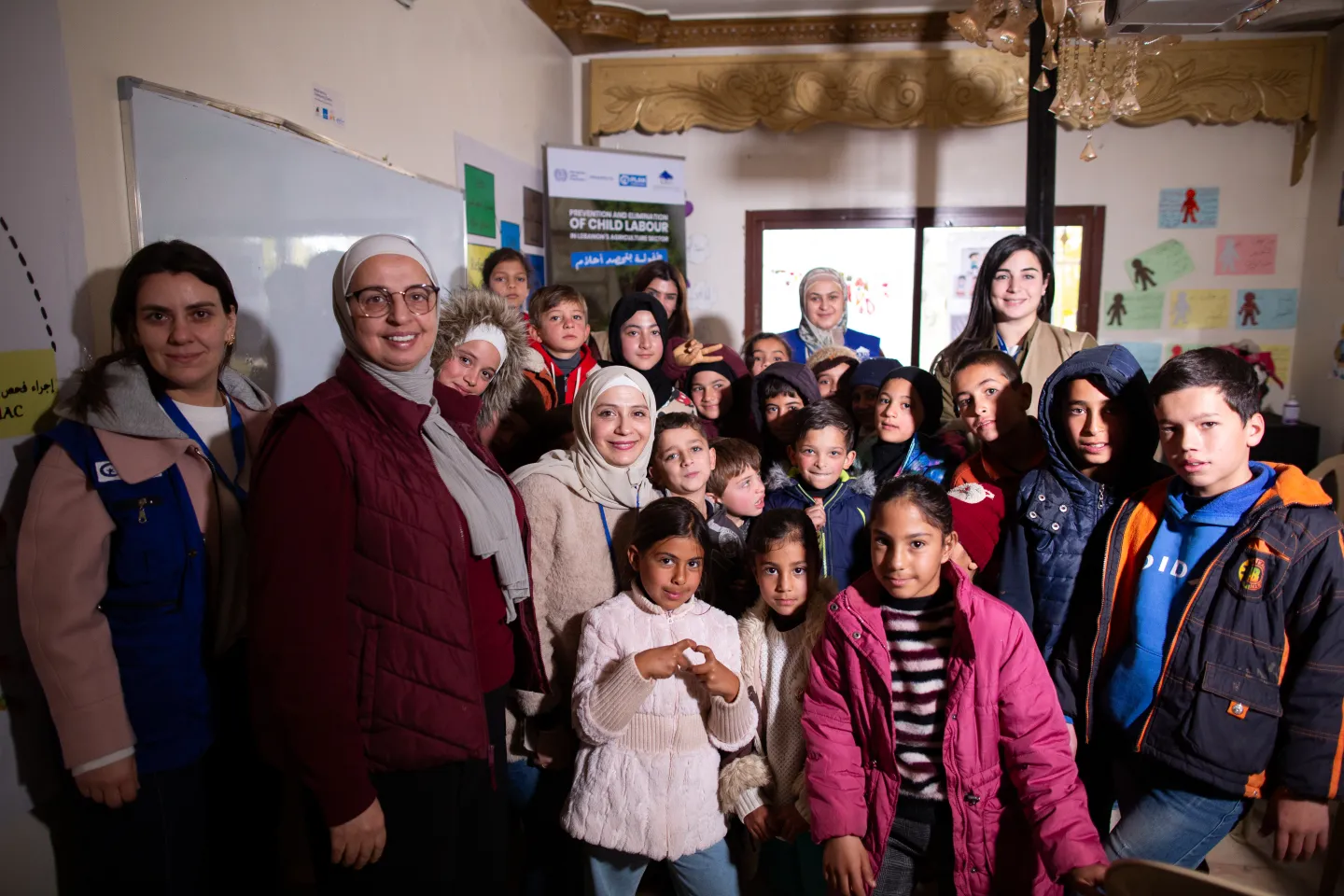
“My eldest child is 17,” said a Lebanese mother at the session. “He has psychological issues from the recent conflict in Lebanon. I have other children as well. I cannot enrol them all in school. I am Lebanese, but even so, I cannot do anything in this country. We must listen to each other. There is no Syrian or Lebanese suffering alone: this crisis affects everyone. Conflicts have exhausted us all.”
There is no Syrian or Lebanese suffering alone: this crisis affects everyone. Conflicts have exhausted us all.
A Lebanese mother attending the session
Through PROSPECTS, the ILO is leading a taskforce of national and international partners to tackle the worst forms of child labour in agriculture across different areas of the country through a dual approach, combining community-level support with national policy action.

On the ground, the project is set to provide case management services to 300 children, like Ali and Sahm, psychosocial support to 600 at-risk youngsters, occupational safety training to 100 adolescents and economic empowerment activities to strenghten caregivers’ access to livelihood.
Meanwhile, families are also starting to benefit from income-generation and business training, while older siblings will be linked to skills development and employment opportunities in the course of one year.
Local Child Labour Committees in Akkar, North Lebanon, and Bekaa are also being currently strengthened to coordinate efforts between ministries, municipalities, and social partners.
We are working to return these children to school through a package of programmes implemented with international and local partners,
Maha Kattaa, ILO PROSPECTS Chief Technical Advisor for the Arab States
Efforts are also underway at the policy level. With PROSPECTS support, the National Child Labour Steering Committee has been revitalized this year, led by the Ministry of Labour, and work is ongoing to update the National Action Plan on the worst forms of child labour. Rapid assessments in key agricultural areas are helping to identify risks, while capacity-building workshops are equipping humanitarian and development actors to protect children more effectively.
“At the ILO, we are working to return these children to school through a package of programmes implemented with international and local partners,” said Maha Kattaa, ILO PROSPECTS Chief Technical Advisor for the Arab States. “These programmes support not only the children but also their families, who need economic assistance to meet basic household needs.”

The context is shifting rapidly. Following political changes in Syria in 2024, many refugees have begun returning home. Challenges remain. Many homes were destroyed or occupied during the conflict, leaving families without shelter. Yet, at the session, families showed hope: with support, they would return and resume farming, just as they did before the war.
“With large numbers of Syrians returning home, the demand for agricultural workers in Lebanon has increased,” Kattaa said. “This rise heightens the risk of child labour in agriculture and further limits Syrian children’s access to formal education. It highlights the urgent need for flexible policies and regulations to govern Syrian workers across all sectors, particularly in farming”.

Back at the centre, little Sham speaks with quiet determination. Despite working in the fields, her desire to study remains unwavering. Around her, other children share their dreams: a doctor, a teacher, a singer, a football player, a police officer, a hairdresser, a manicure specialist.
Even if we work, we must continue school. Education is important. Education is everything.
Sham, a young Syrian refugee
Sham smiles, her voice steady: “We are happy. We want more activities, more learning, more fun. Even if we work, we must continue school. Education is important. Education is everything.”
Related content

ILO PROSPECTS Lebanon supports social enterprise initiatives in Lebanon

ILO project provides financial support and education for Lebanon’s agricultural sector

Our impact, Their voices
Brighter light and higher hopes: Solar energy systems keep technical schools running in Lebanon

International Youth Day
Youth highlight importance of skills development for a better future
Relevant projects

ILO-Netherlands Partnership
Partnership for improving prospects for forcibly displaced persons and host communities (PROSPECTS) in Lebanon
Programme
Partnership for improving prospects for forcibly displaced persons and host communities (PROSPECTS)