

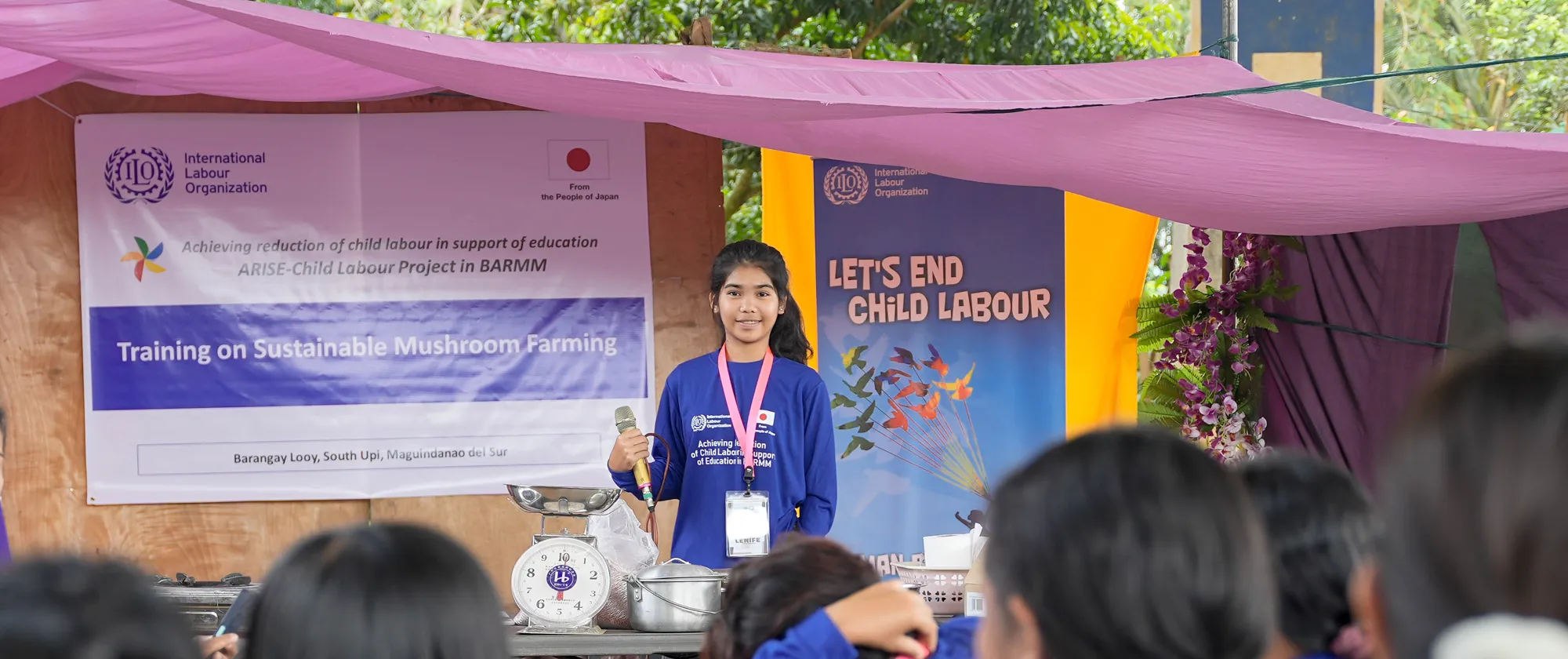
Child labour
Bangsamoro communities unite to end child labour
Communities and partners convened in South Upi in the Philippines to amplify the call to end child labour and the launch a community-based service outlet through the ILO’s Japan funded child labour project.
12 August 2025
MAGUINDANAO DEL SUR, Philippines (Philippines) — In the heart of rural Mindanao, a powerful message resonated through the community of Barangay Looy: child labour must end, and every child deserves a safe, healthy, and a better future. This strong call in the Bangsamoro Autonomous Region in Muslim Mindanao (BARMM), where families, local leaders, and development partners gathered to push for lasting change. The International Labour Organization’s Achieving reduction of child labour in support of education (ARISE) Child Labour Project, funded by the Government of Japan convened communities and partners to address child labour in the region.
The initiative aims to end child labour by addressing its root causes—poverty, lack of access to education, and limited livelihood opportunities—especially in vulnerable agricultural communities. The ARISE project promotes community-based solutions that empower families and protect children’s rights.
“Ending child labour is not just about pulling children out of the fields,” said Ma Jennylyn Aguinaldo, Project Manager of the ILO ARISE Child Labour Project. “It’s about ensuring families have access to decent jobs, sustainable livelihoods, and social protection. Without these, the cycle continues.”
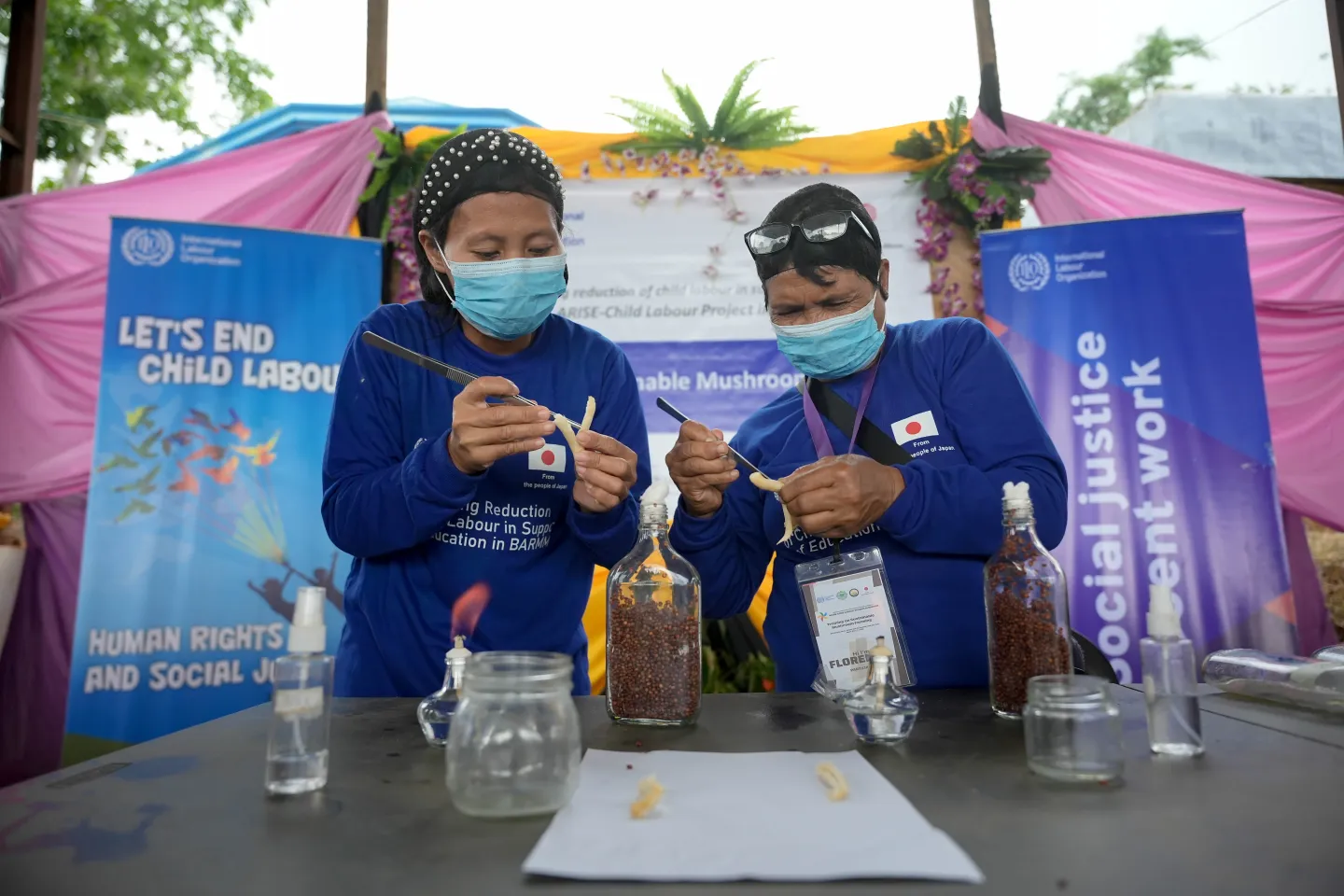
To fight these challenges, partners like the Food and Agriculture Organization (FAO), through its Resilient Livelihoods Development (RLD) Project with the United Nations Population Fund (UNFPA) and support from the Government of Australia (DFAT), are promoting climate-resilient and nutrition-sensitive livelihoods. These initiatives empower women and youth-led cooperatives to build safe, viable food enterprises—reducing economic pressures that often lead to child labour.
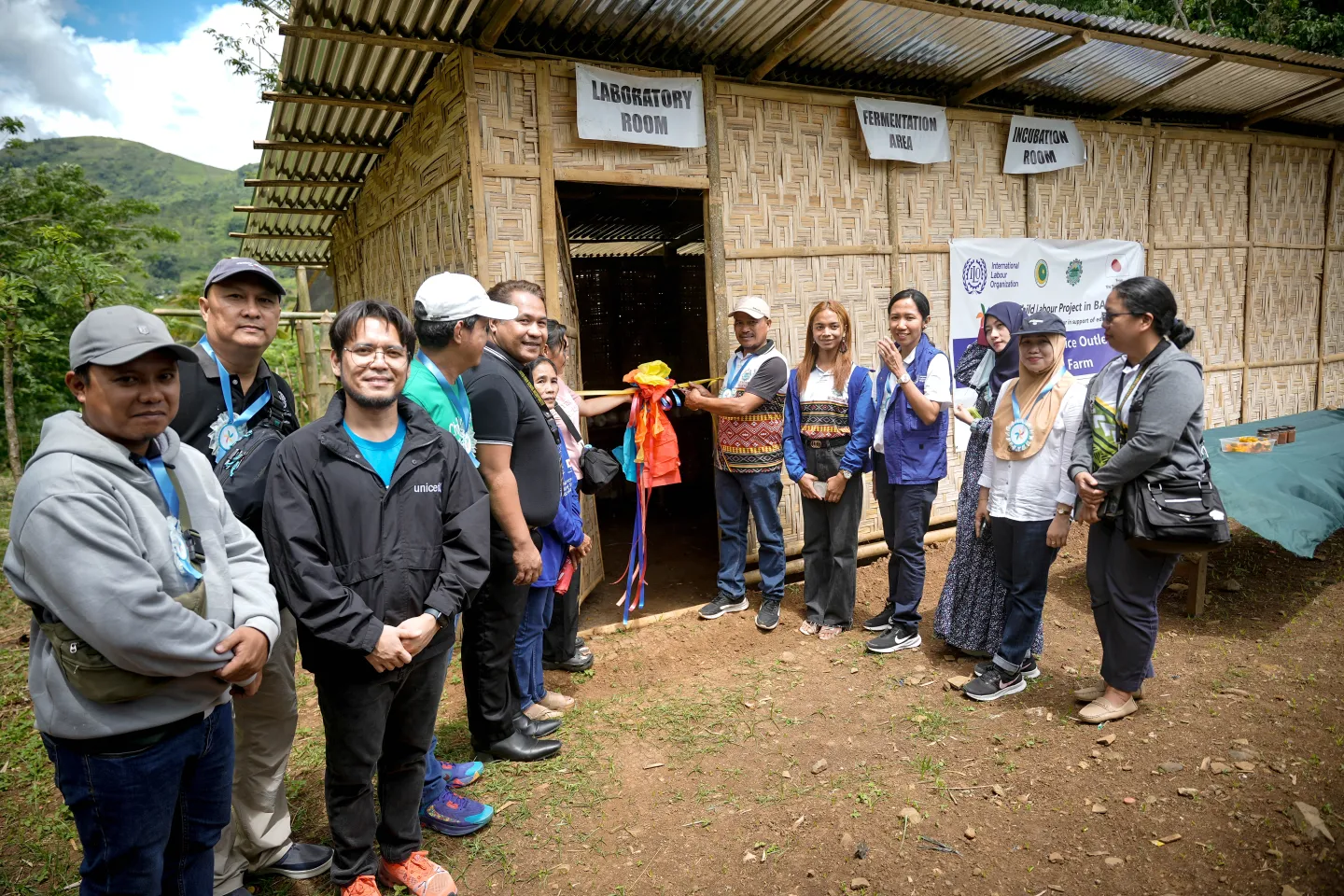
The community also witnessed the launch of the Community-Based Service Outlet (CBSO) Business Center and Mushroom Farm, a strategic move led by ILO and the Barangay Local Government Unit (BLGU) of Looy. These projects aim to sustain the barangay’s child labour monitoring system, implemented through the Sub-Committee on Child Labour under the Barangay Council for the Protection of Children (BCPC).
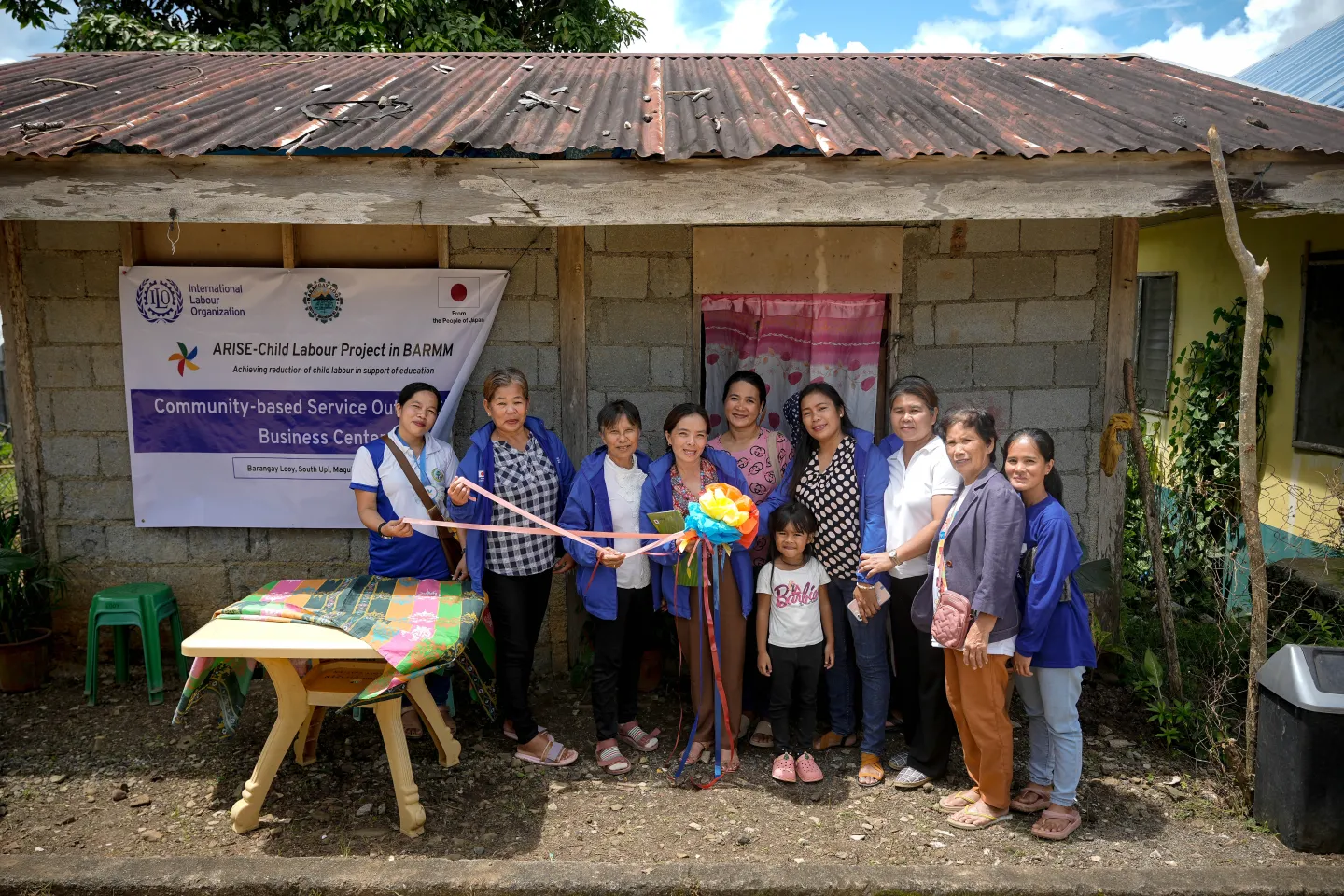
Government ministries including the Ministry of Labor and Employment (MOLE), Ministry of Agriculture, Fisheries and Agrarian Reform (MAFAR), Ministry of Trade, Investments and Tourism (MTIT), and the Ministry of Basic, Higher, and Technical Education (MBHTE), joined civil society groups such as ChildFund Philippines and Castromayor Integrated Farm School (CIFSI) in reaffirming their commitment to protect children and support inclusive rural development.
This convergence of efforts highlights a broader vision: that rural transformation is possible, and child labour has no place in it.
The mobilization coincided with the World Day Against Child Labour, observed globally every June 12. Under the theme, “Progress is clear, but there’s more to do: let’s speed up efforts.” The event served as a reminder that while gains have been made, the fight is far from over—and every child deserves a future free from exploitation.
Relevant projects

Reduction of child labour in Myanmar
Achieving Reduction of Child Labour in Support of Education (ARISE): Programme to reduce the worst forms of child labour in agriculture

Child labour
Achieving reduction of child labour in support of education