

Impact story
Bangladesh's Employment Injury Scheme: rebuilding a life after a workplace injury
A road accident on a work errand cost 24-year-old garment worker Fahim Hossain his leg. A monthly pension and free rehabilitation through Bangladesh's Employment Injury Scheme (EIS) Pilot helped him return to work and rebuild his life with dignity.
30 July 2026
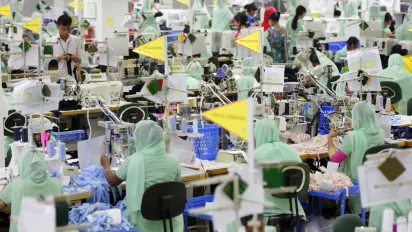
DHAKA (ILO News) – Fahim Hossain has worked as an assistant sample man in a Bangladesh garment factory since 2020. Life, he says, felt steady – a stable job, and a family who depended on him.
That changed in February 2024, when his factory sent him to complete a task at another factory in the same company. On his way back, he was hit by an auto-rickshaw. His injuries were so severe that doctors had no choice but to amputate his right leg above the knee.
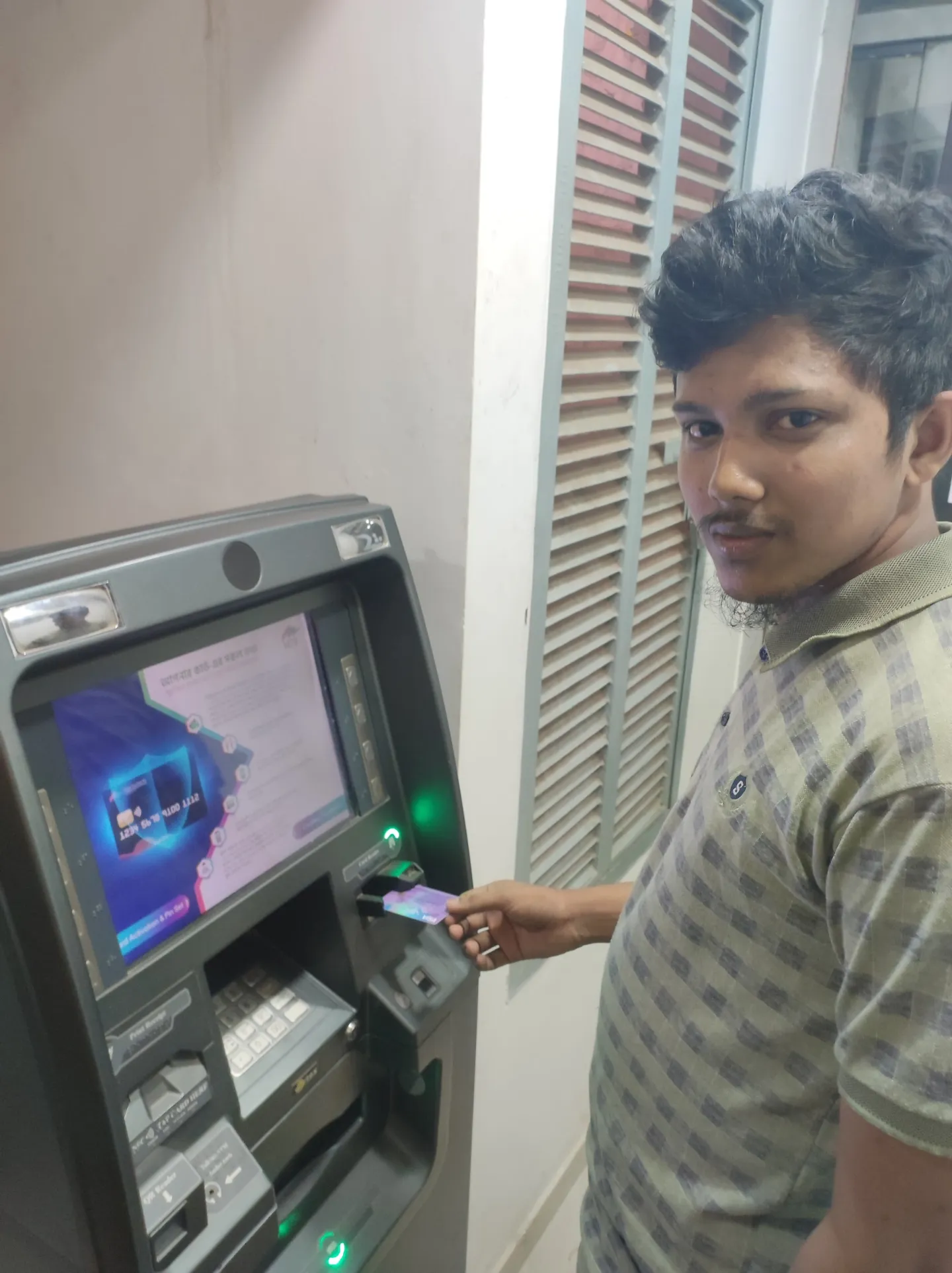
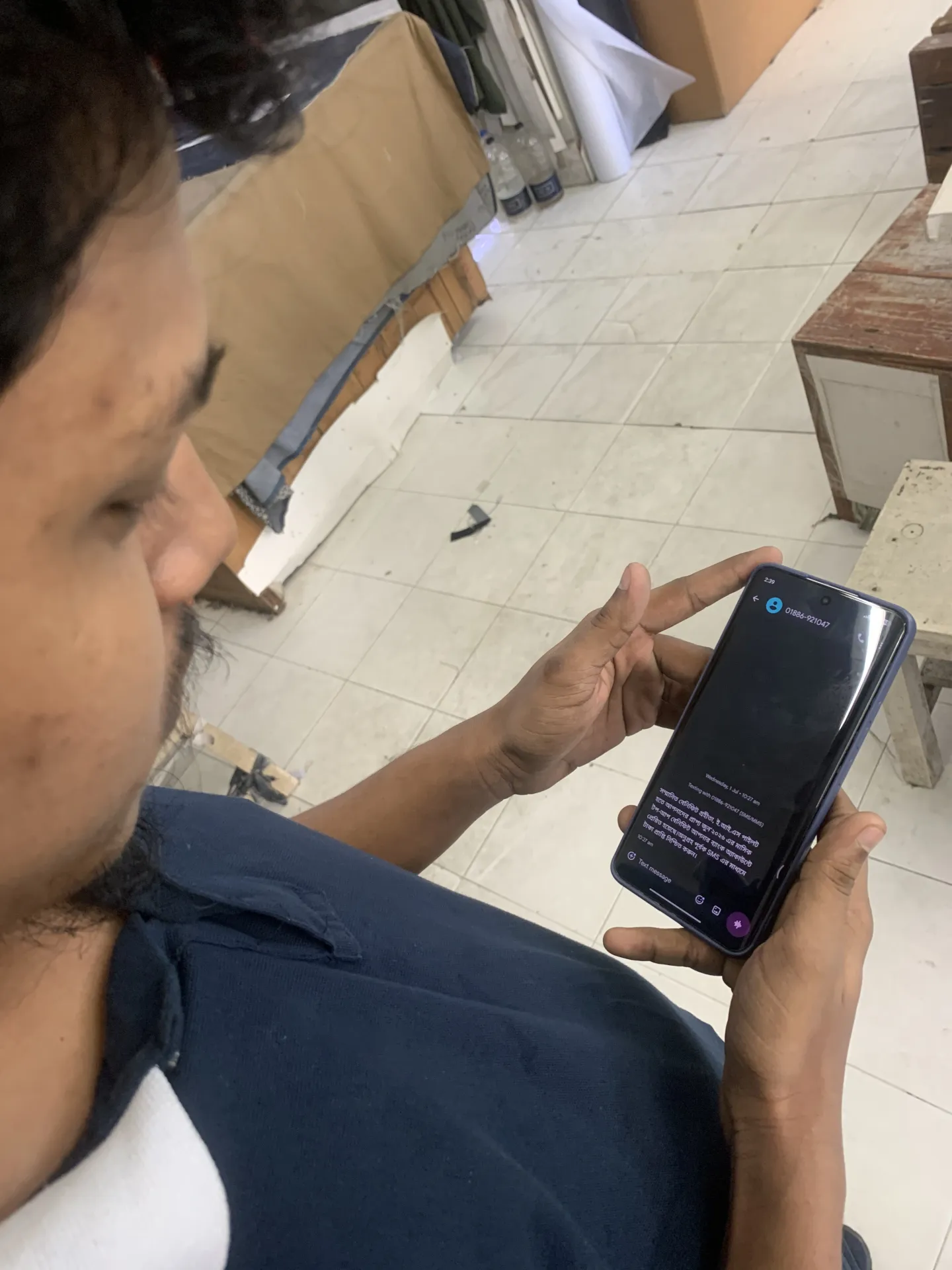
With his factory's support, Fahim received a one-time payment from the government's Central Fund. It brought brief relief, but no certainty about the future: how would he pay for further treatment? How would he keep earning a living for his family?
It was around this time that Fahim learned about the Employment Injury Scheme (EIS) Pilot. Because his injury had left him with a permanent disability, he became eligible for a monthly pension under the scheme. EIS also connected him with the Centre for the Rehabilitation of the Paralysed (CRP), which provided free rehabilitation, medical guidance and a prosthetic leg.
Once his treatment was complete, Fahim's factory gave him back his old job.
“There was a time when I believed I would never be able to live a normal life again after losing my leg,” he says. “Today, I have regained my confidence and found hope for the future. The Employment Injury Scheme did not just provide financial assistance—it gave me the opportunity to rebuild my life with dignity.”
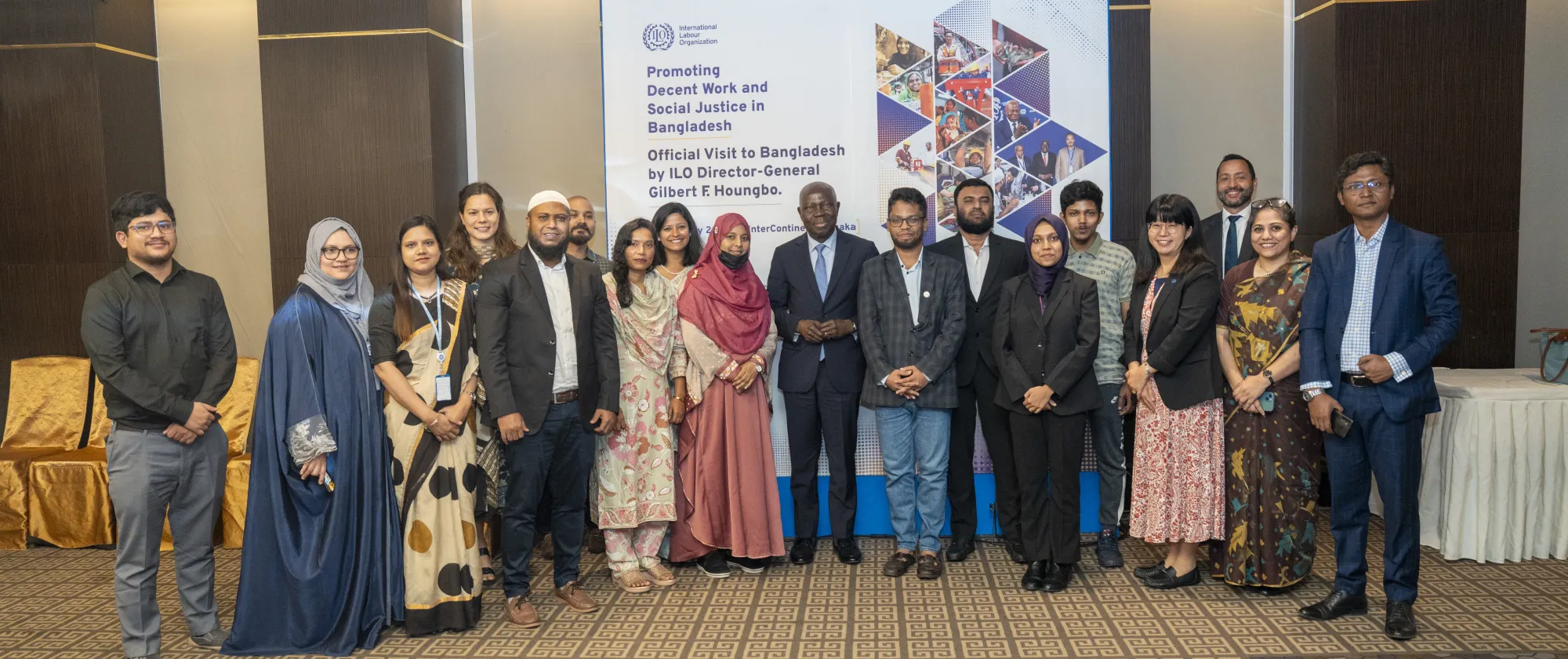
Fahim shared his story with ILO Director-General Gilbert F. Houngbo, who visited Bangladesh in July 2026. “For workers like me, a national Employment Injury Scheme is essential,” he told the Director-General. “It would help us protect our families, recover from workplace injuries, rebuild our lives and continue contributing to our country's development.”
That is the direction Bangladesh has already committed to. The EIS Pilot, launched in the ready-made garment sector in 2022, is set to become a mandatory, nationwide employment injury insurance scheme by 2027 – extending the same protection far beyond the garment sector.
Fahim's story shows what that protection can mean in practice: helping a worker recover from a life-changing injury, return to productive employment and live with dignity.
The EIS Pilot is funded by contributions from 92 RMG brands, with technical assistance from the ILO and GIZ. The ILO's support is funded by the Embassy of the Kingdom of the Netherlands and Global Affairs Canada; GIZ's support is funded by the Government of Germany and the European Union.
Relevant projects

Project: Decent work
Advancing Decent Work in Bangladesh
Project: Social security
Implementation of a pilot Employment Injury Scheme (EIS) in Bangladesh
Social security project
Developing a national employment injury insurance (EII) scheme for the Bangladesh ready-made garment sector