

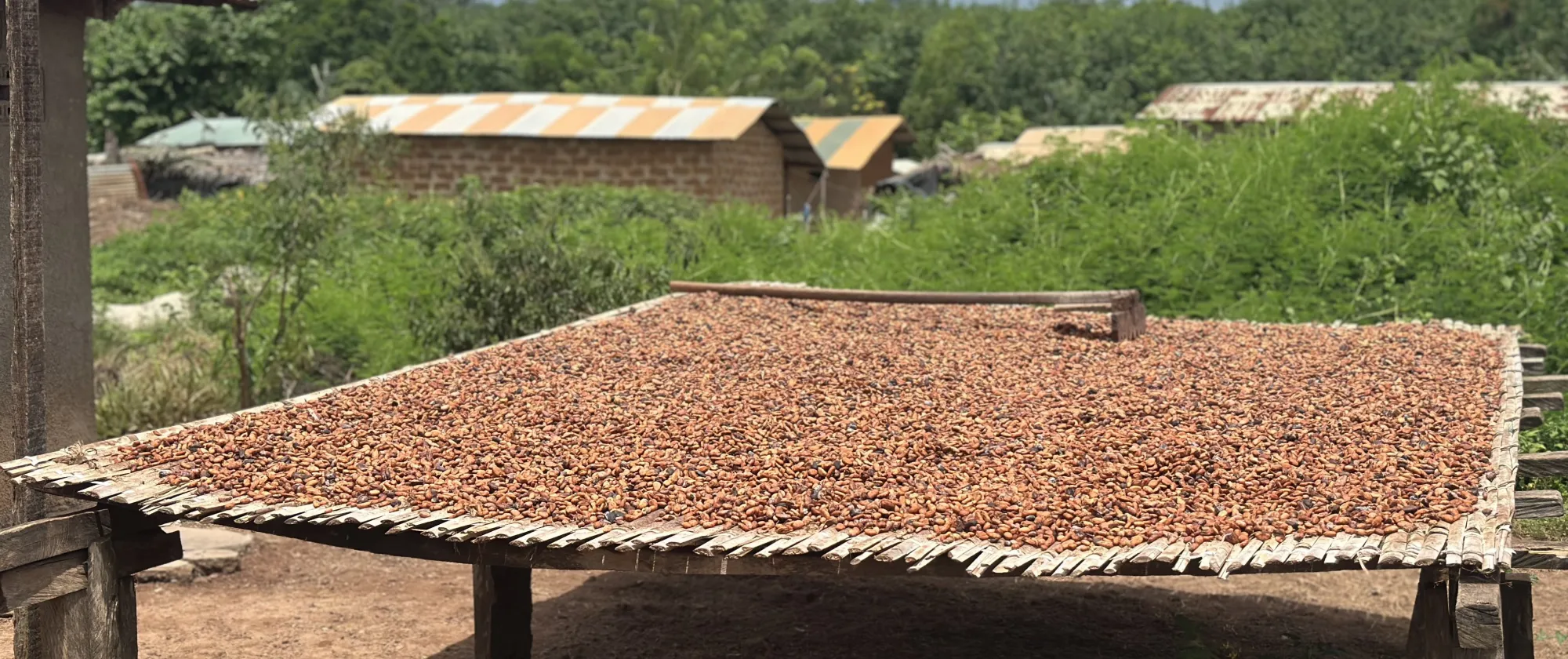
Apprenticeship training for young people in the sub-prefectures of Grand-Zatry and M’Batto in Côte d’Ivoire
In Côte d’Ivoire, the ILO’s ACCEL Africa project, financed by the Ministry of Foreign Affairs of the Netherlands, is supporting apprenticeship training for 57 young people in the sub-prefectures of Grand-Zatry and M’Batto. Through training in poultry farming and cassava production and processing, the initiative provides young people with concrete alternatives to early entry into work and strengthens their prospects for professional integration.
26 May 2026
Grand-Zatry and M’Batto (ILO News) – Worldwide, more than 138 million children are still in child labour. In Côte d’Ivoire, significant progress has been made in recent years. The national child labour rate decreased from 31 per cent in 2016 to 22 per cent in 2021.
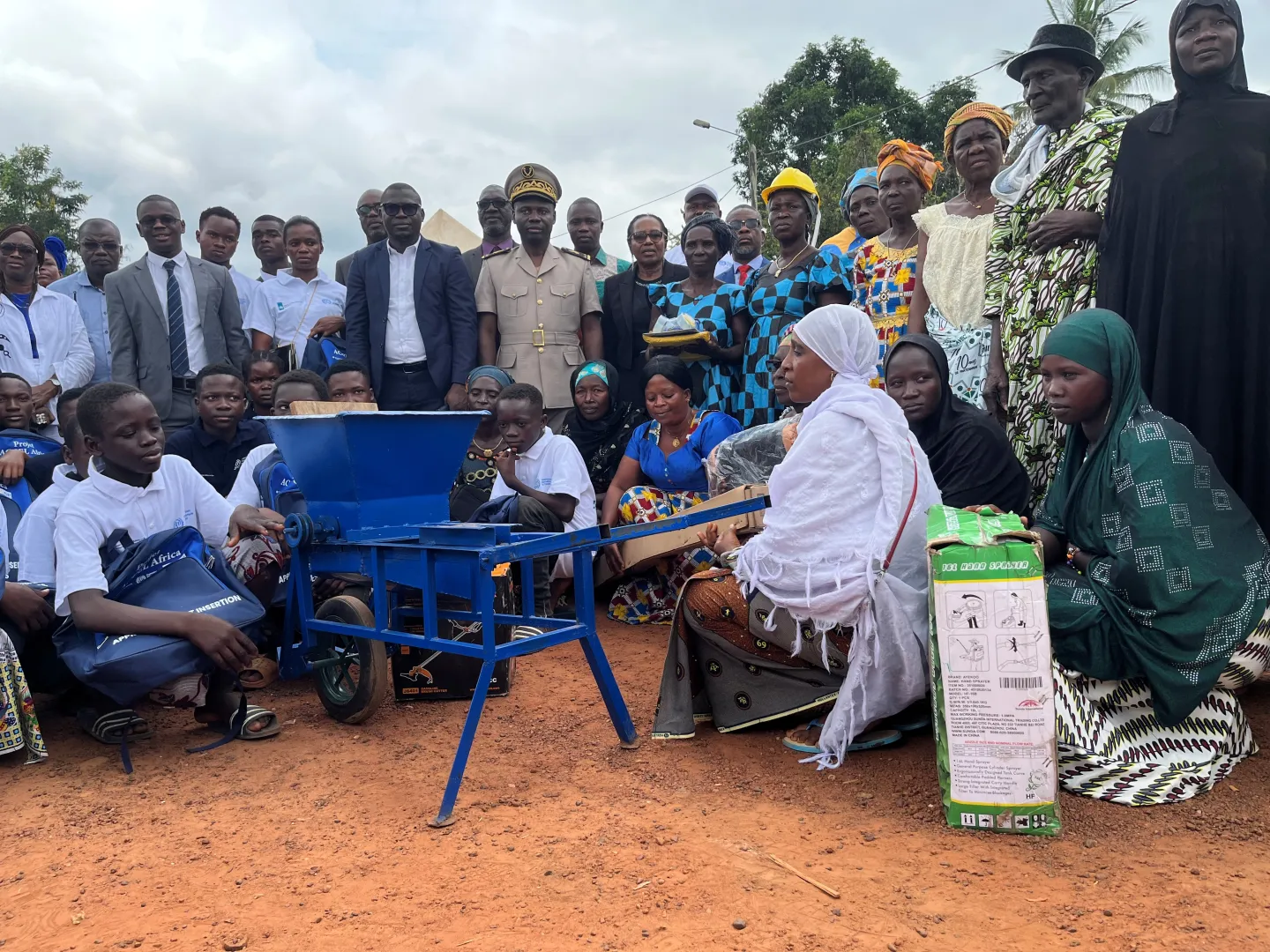
The ACCEL Africa project, implemented by the International Labour Organization (ILO) and funded by the Ministry of Foreign Affairs of the Netherlands, contributes to the elimination of child labour in the cocoa and gold supply chains. It supports Côte d’Ivoire in addressing child labour, particularly in cocoa farming and artisanal mining.
The overall objective of the ACCEL Africa project is to accelerate the elimination of child labour in Africa through targeted actions in selected supply chains. In its second phase, the project places emphasis on youth employment, because of the link between child labour, poverty and the lack of economic opportunities for families.
In this context, training centres were selected following a call for proposals in two key sectors: poultry farming, and cassava production and processing. In Agoua, in the sub-prefecture of M’Batto, in the Moronou region, the Nandoh Training Centre, accredited by the Ministry of Technical Education, was selected for the poultry farming stream. In Grand-Zatry, the NGO OPEIF, which specializes in cassava production and processing, provides supervision and support to the young people.
These two structures are now the reference points for the youth apprenticeship training programme initiated by the ACCEL Africa project. The programme combines theoretical training with practical learning. It is also an important lever for youth entrepreneurship and the diversification of production activities in rural areas.
In total, 57 children and young people aged 15 to 17 are being supported through this apprenticeship training. Among them, 29 learners, including 24 boys and 5 girls, are following the poultry farming training in M’Batto. In Grand-Zatry, 28 learners, including 22 boys and 6 girls, are being trained in cassava production and processing.
These training activities are implemented through the promotion of Work-Based Training Centres, or Pôles de Formation par Alternance (PFA), in rural communities, in support of the Directorate for Apprenticeship and Professional Integration (DAIP). They enable young people to acquire professional skills that can lead to a Professional Qualification Certificate (CQP). Upstream, the project also trained 63 apprenticeship masters, including 45 women, in the principles of work-based training.
The mobilization of rural communities around inclusive entrepreneurship and diversification projects has strengthened the social acceptance of vocational training as an alternative to early entry into work. This approach involves young people aged 15 to 17, adults, men and women, particularly through VSLA groups and other entrepreneur groups.
The innovative aspect of this approach lies in the fact that it combines theoretical and practical training through a six-month apprenticeship. It builds on local groups, young people to be integrated into the labour market and local master craftspersons in the fields of poultry farming and cassava.
In addition to technical training, the young people and their master trainers are sensitized on the importance of decent work. Their capacities are strengthened in several areas, including child labour, labour law, employment pathways, occupational safety and health, social protection and social dialogue.
The young people also benefited from a medical visit, a guidance interview conducted by DAIP career guidance inspectors, insurance for apprentices, registration under Universal Health Coverage where this had not yet been done, a study grant and access to a canteen. At the end of the apprenticeship training, they may obtain a Professional Qualification Certificate through Apprenticeship (CQP).
As part of continuing training and professional integration, the young people, with the support of their master craftsperson-trainers, benefited from post-apprenticeship support. In M’Batto, they undertook the rearing of a batch of chickens, which proved successful after commercialization. The master craftspersons at the Nandoh Centre plan to launch, on a cyclical basis, the rearing of a new batch of 500 chickens, within the period during which the centre is supporting the young people.
At the end of this apprenticeship and coaching phase, the project plans to categorize the young people in order to adapt post-training support to their age and capacities, in collaboration with the training centre.
The success of this programme is based on strengthened collaboration between the ILO and national stakeholders at both central and decentralized levels. These include the Ministry of Technical Education and Vocational Training, through DAIP, ANADER, local administrative authorities, traditional leaders, the Child Labour Observation Committee within the framework of SOSTECI, as well as agents of change.
The ILO’s collaboration with the Nandoh Centre, through a service contract, as well as with the NGO OPEIF, which helped establish an in situ training framework in two villages, is also an important factor in the programme’s success.
Relevant projects
Accelerating action for the elimination of child labour in supply chains in Africa (ACCEL Africa)