

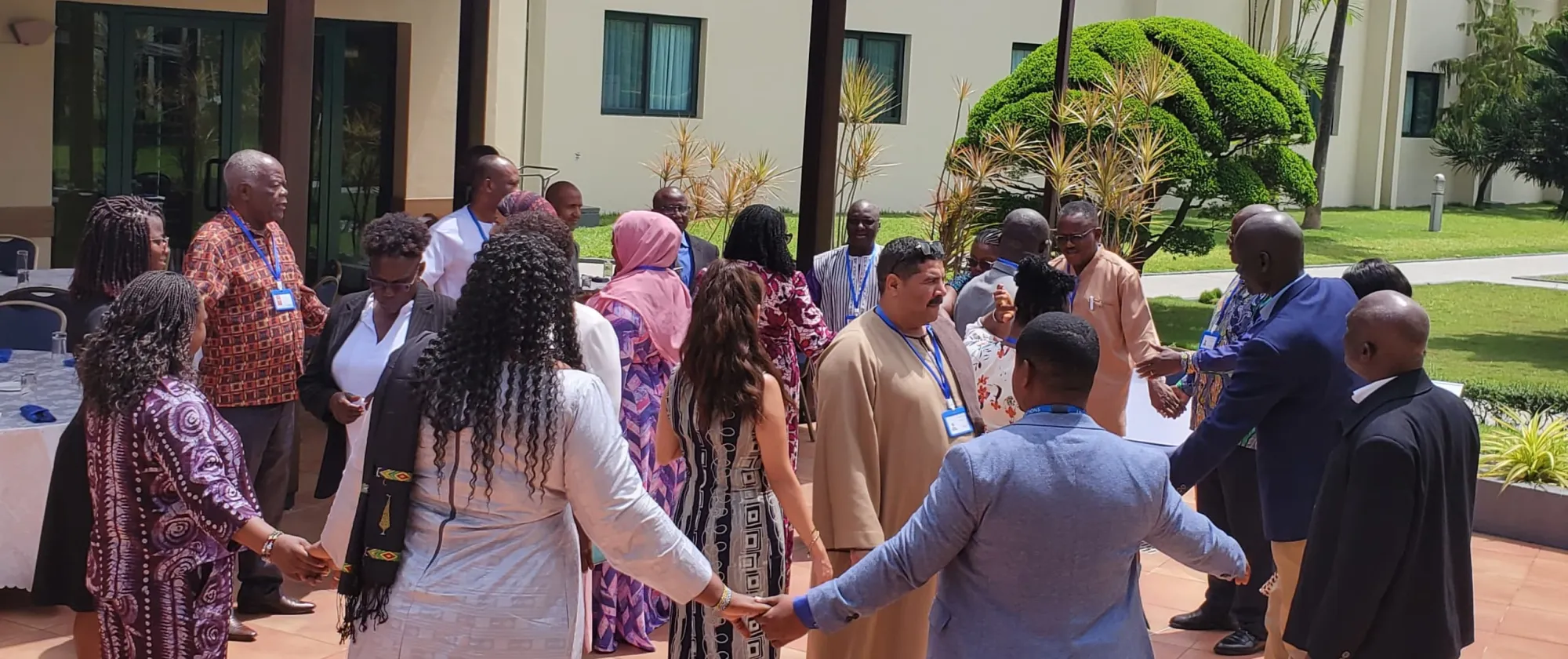
African trade unions strengthen collaboration to eliminate child labour in supply chains
The ILO Regional Forum in Accra gathered trade unions from eight African countries to exchange strategies and build partnerships aimed at eliminating child labour in agriculture and artisanal mining through a supply chain approach.
23 May 2025
Accra, Ghana (ILO News) — Trade unions from eight countries in Africa gathered in Accra from 20–23 May 2025 for a four-day regional forum organized by the International Labour Organization (ILO) under the ACCEL Africa project. With support from the Ministry of Foreign Affairs of the Netherlands, the forum focused on building meaningful trade union partnerships to eliminate child labour in agriculture and artisanal mining through a supply chain approach.
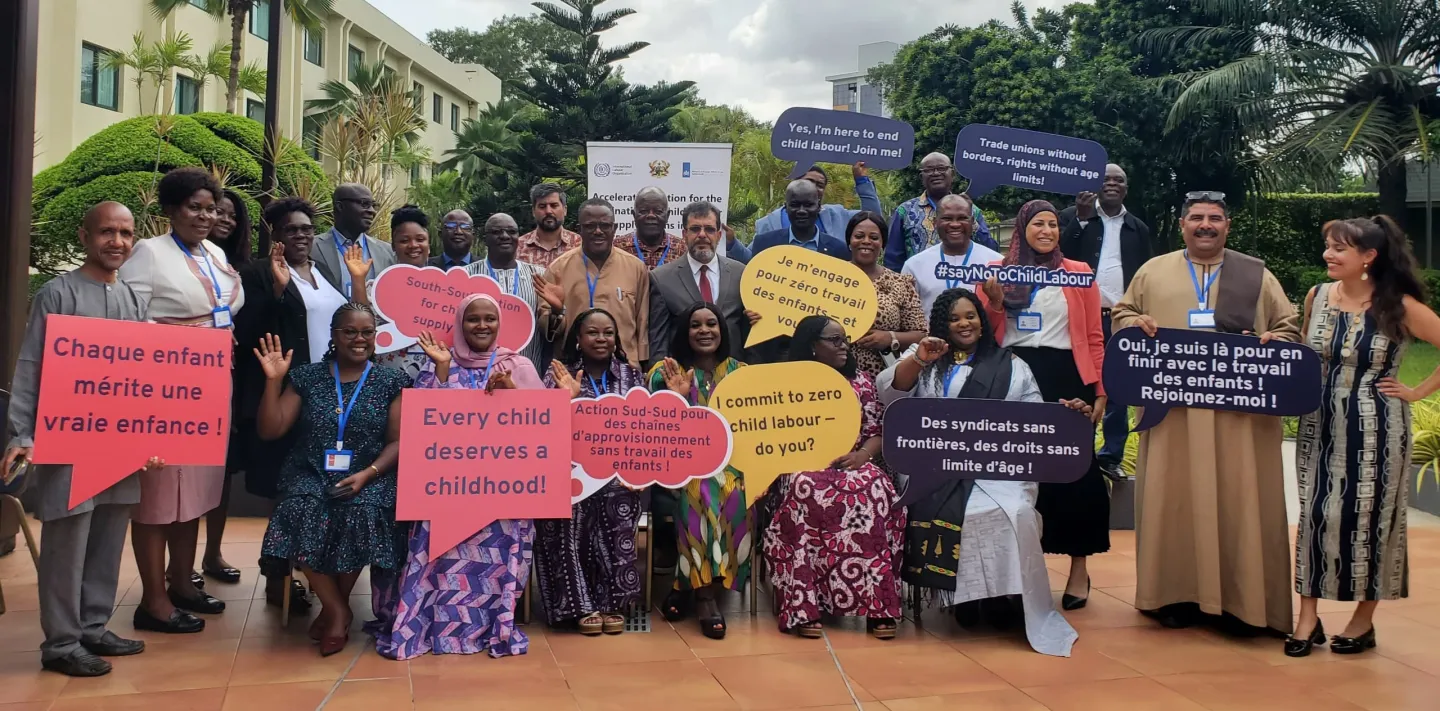
Held under the theme “Developing meaningful trade union partnerships to eliminate child labour with a supply chain approach,” the event brought together over 40 representatives from workers’ organizations in Côte d’Ivoire, Egypt, Ghana, Kenya, Malawi, Mali, Nigeria, and Uganda. Participants engaged in technical sessions, peer learning exchanges, and practical workshops aimed at defining trade union roles in the fight against child labour and identifying opportunities for cross-border collaboration.
In opening the forum, the Secretary General of Ghana’s General Agricultural Workers Union (GAWU) - Andrews Tagoe-, speaking on behalf of Secretary General Of Trades Union Congress of Ghana - Joshua Ansah, welcomed delegates to Accra and emphasized that child labour remains a widespread and urgent issue across Africa. He reflected on the silence surrounding the suffering of children in remote communities and underlined the unique role of trade unions in tackling child labour at the grassroots: “Everything testifies that where trade unions are present, child labour disappears.”
One of the forum’s core sessions focused on unpacking the strategic role of trade unions in eliminating child labour—drawing from their legal mandate to promote social justice and decent work. Framed within the ILO’s fundamental principles, the session emphasized that unions are not auxiliary actors but essential to addressing child labour.
Trade unions are uniquely positioned to:
- Represent and organize vulnerable workers in informal sectors;
- Advocate for decent jobs and living wages;
- Promote labour laws, collective bargaining, and non-discrimination;
- Break the intergenerational cycles of poverty that sustain child labour.
Grounded in practice: Trade union strategies shared across countries
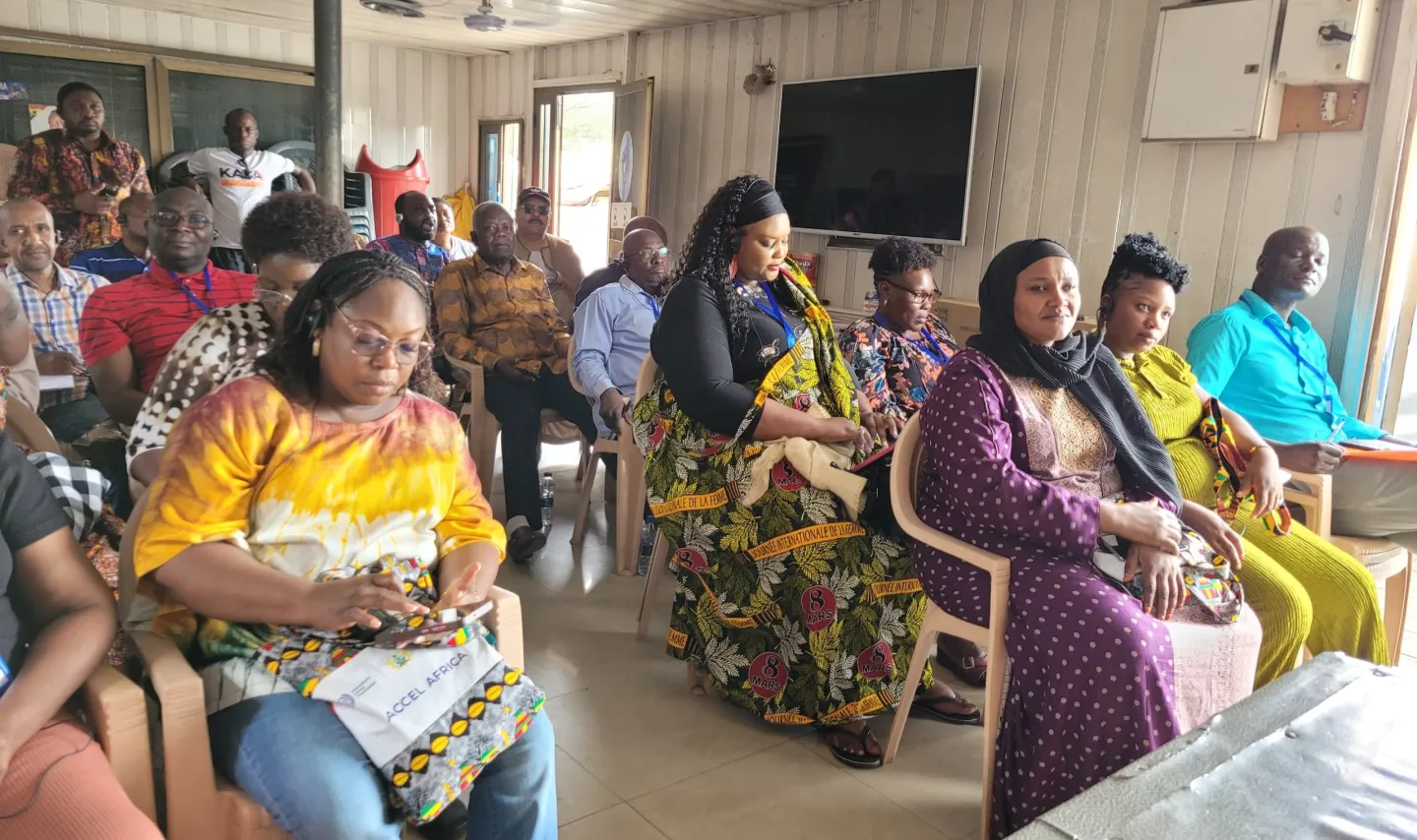
Throughout the forum, country delegations presented concrete initiatives and lessons learned from their national contexts:
- In Côte d’Ivoire, trade unions shared the experience of the Comité Intersyndical de Lutte contre le Travail des Enfants (CILTE), a platform uniting unions in the cocoa sector. The committee aims to improve outreach to rural workers who are often unaware of their rights or of union representation. The presentation highlighted gaps in agricultural workers’ knowledge of trade unionism and the importance of coordinated organizing efforts.
- In Ghana, trade unions outlined their work organizing informal workers in rural markets, plantations, and cooperatives. Delegates emphasized proximity to workers as a strategy, noting the importance of building trust with women vendors and rural producers. The unions also addressed issues such as menstrual hygiene and child care as part of their broader approach to decent work.
- Kenya’s delegation, led by COTU-K, presented a dual model combining community-based child labour monitoring with workplace-based education. Local Child Labour Committees (LCLCs) monitor school absenteeism and help reintegrate children into education. At the workplace level, unions conduct training for shop stewards and advocate for child labour-free zones in plantations and processing facilities.
- Malawi shared examples of rural outreach and unionization efforts in the tea sector. PAWU opened local offices near tea-growing communities to improve service delivery, while TUM partnered with a bank to secure educational materials for children removed from labour. These initiatives were presented as ways to formalize informal employment and enhance social protection.
- Mali presented a community-based approach that trains local focal points to monitor child labour, raise awareness, and support school reintegration. Delegates discussed how unions build trust with families and collaborate with teachers to prevent school dropout. The strategy aims to combine education, awareness, and proximity to rural households.
- Nigeria’s presentation led a session on unionizing young workers. Participants reflected on what support and information young people entering the labour market need—highlighting themes such as labour rights awareness, financial literacy, access to training, and social protection. The delegation also shared youth-led outreach tools such as mobile apps, peer-to-peer recruitment, and media engagement to attract and retain younger members within trade unions.
- In Uganda shared how CBAs negotiated with companies in the tea and coffee sectors include enforceable provisions against child labour. These agreements cover casual and seasonal workers, extend protections across the supply chain, and promote employer-sponsored awareness campaigns. Delegates emphasized that CBAs are a key tool for driving sustainable change.
- The delegation from Egypt, discussed efforts to influence national child labour policies through freedom of association and active engagement in public policy. Supported by the ILO Cairo office, the union is building capacity among rural members to advocate for children’s rights and worker protections in agriculture.
- ITUC-Africa emphasized that eliminating child labour is central to the trade union mission for social justice. The presentation connected child labour to low wages, underfunded education, and informality, urging unions to stay active in regional platforms like Alliance 8.7 and the Durban Call to Action to push for systemic change across Africa.
ILO ACTRAV Specialist Inviolata Chinyangarara led a session on social dialogue, emphasizing the need to involve not only ministries of labour but also those of education and child welfare. She noted that child labour is most persistent in contexts where labour rights and freedom of association are not respected.
Delegates agreed that effective dialogue requires strong, independent, and united unions. Inter-union collaboration models from Mali and Côte d’Ivoire were praised for enabling joint negotiation positions and increasing trade union credibility at national level. Discussions also emphasized the importance of well-drafted CBAs, evidence-based advocacy, and mutual respect in employer-union negotiations.
Shared commitments and way forward
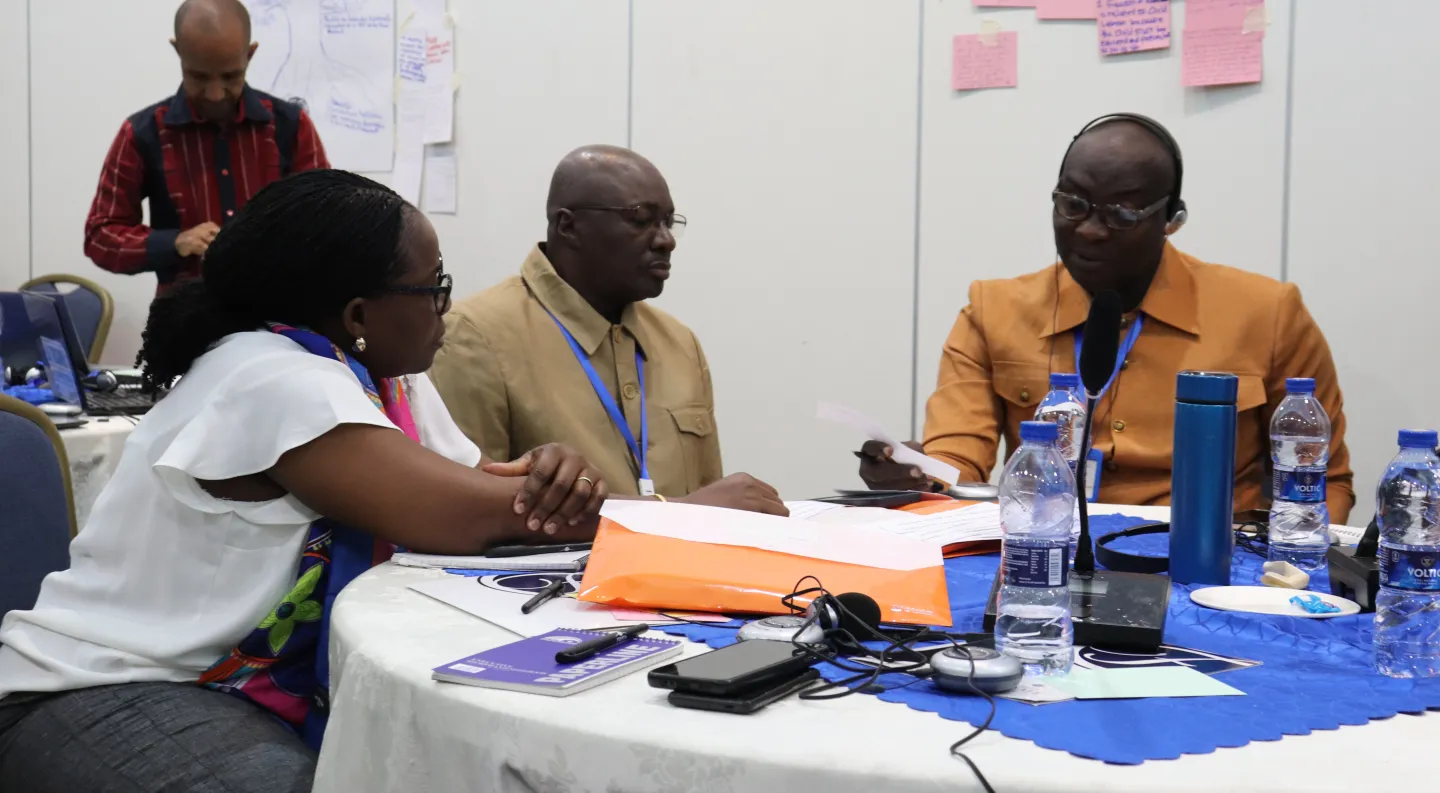
Throughout the forum, unions reaffirmed their commitment to the elimination of child labour through prevention, protection, and policy influence. They recognized that trade unions have a unique mandate to connect with rural workers, negotiate fair working conditions, and advocate for laws and systems that reduce families’ reliance on child labour.
Delegates emphasized that the fight against child labour cannot be tackled by unions alone. As ACTRAV noted, “Child labour is too complex for us to fight alone. It is not just a national issue—it is a continental one.”
The forum concluded with the development of initial country-level action plans, as well as ideas for South–South cooperation, including peer exchanges, joint advocacy, and follow-up coordination.
Relevant projects
Accelerating action for the elimination of child labour in supply chains in Africa (ACCEL Africa)