

Addressing the Income–Child Labour–Gender Nexus in Global Value Chains
Why higher income doesn’t always reduce child labour: key findings and solutions from global experts on tackling the income–gender–child labour nexus in supply chains.
27 February 2026
ABIDJAN (ILO News) - During the 6th Global Conference on the Elimination of Child Labour, an online side event convened research institutions, private sector actors, the United Nations, civil society, and government representatives to examine one of the most pressing and complex questions in global value chains:
Organized by the Netherlands Enterprise Agency (RVO) under its Subsidy Programme for Responsible Business and Fund Against Child Labour, the session presented new research conducted by KIT Royal Tropical Institute and shared field experiences from ETG/Beyond Beans, the International Labour Organization’s ACCEL Africa project, and Rainforest Alliance.
A recent study conducted by the KIT Royal Tropical Institute on the income–child labour–gender nexus in cocoa, coffee, and cashew value chains highlighted critical insights into what drives child labour outcomes. In Côte d’Ivoire’s cocoa sector, the study found that child labour prevalence was highest among households that had reached living income levels, challenging the assumption that increased income alone reduces child labour. The research identified four key factors shaping this relationship — income level, economic resilience, household labour distribution, and social norms — underscoring the importance of gender dynamics in how labour is allocated within households. It also showed that no single intervention is sufficient: while approaches such as cash transfers and savings groups can strengthen resilience, they do not address all dimensions of the issue. The findings point to the need for comprehensive, bundled interventions that address income, labour dynamics, and social norms simultaneously to achieve sustainable impact.
ETG / Beyond Beans: The VSLA+ Model
ETG presented its VSLA+ approach, a community-driven model addressing the structural drivers of child labour among cocoa farmers in West Africa by combining CHILD methodology for sensitization and participatory identification with GALS training to strengthen gender equality and household resource allocation. The approach has contributed to children returning to school, reduced absenteeism, and decreased exposure to hazardous work, while digitalization of savings processes has reduced women’s time burden by up to 70%. A key lesson is that introducing new income-generating activities can increase labour demands; instead, strengthening existing household businesses helps avoid creating pressures that may push children into work.
ILO ACCEL Africa: Embedding Solutions in Systems
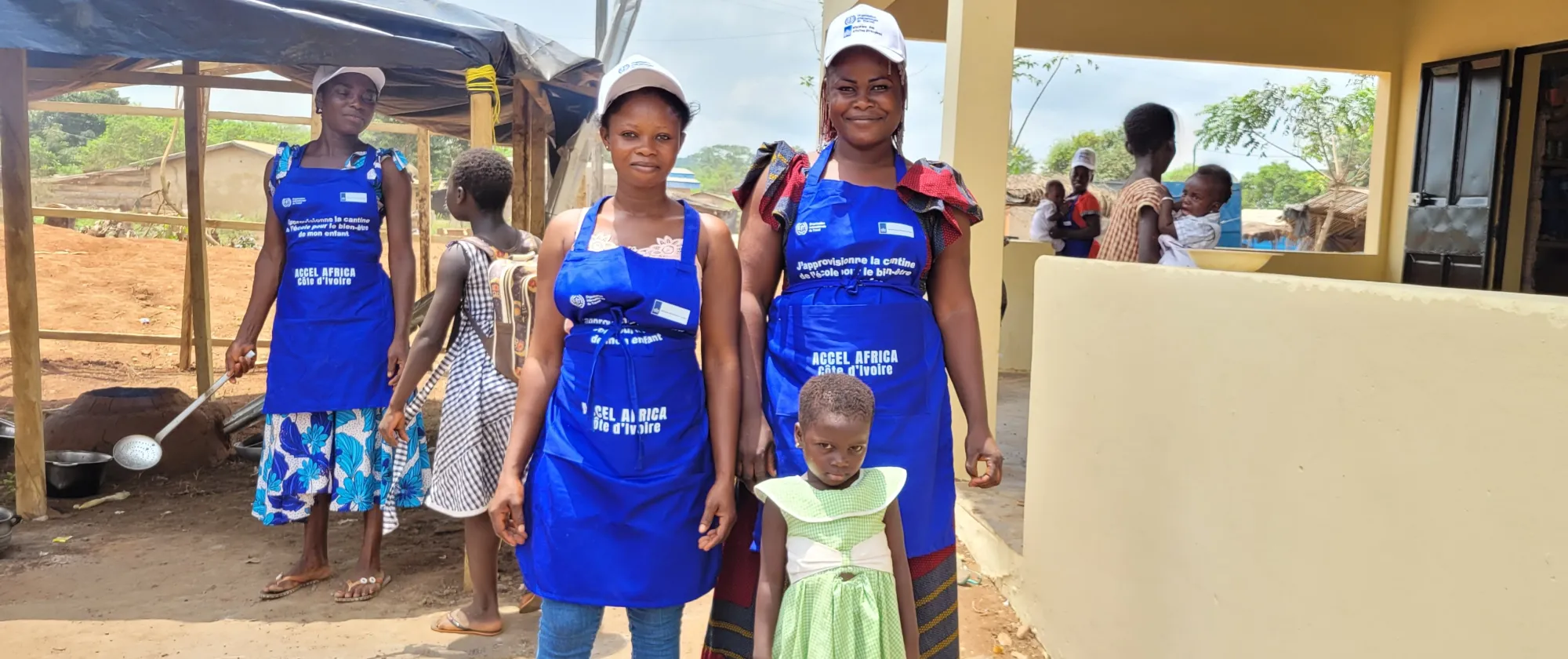
The ILO ACCEL Africa project focuses on institutionalizing sustainable solutions rather than implementing stand-alone interventions, working across supply chains to embed child labour prevention within broader systems. This includes supporting universal health coverage enrolment for cocoa farmers in Côte d’Ivoire, influencing the Conseil Café Cacao to cover insurance fees, promoting Occupational Safety and Health through the WIND methodology, supporting VSLA groups to establish early childhood care facilities, and encouraging biochar production to improve productivity and generate additional income. By linking government institutions, cooperatives, private sector actors, and communities, the project demonstrates how child labour strategies can be integrated into social protection, livelihoods, and environmental systems.
Rainforest Alliance: Child Labour Free Zones in Uganda
Rainforest Alliance presented its Child Labour Free Zone initiative in Uganda’s West Nile region, a multi-stakeholder approach involving companies, NGOs, teachers’ unions, local authorities, police, and cultural leaders. The programme combines interventions such as GALS to rebalance household labour roles, VSLAs linked to school enrolment, education funds for vulnerable children, youth labour teams to address seasonal labour gaps, and school-based support activities. The results have been significant, with child labour declining from over 10% to less than 2% and improvements in school enrolment and performance. Evidence also showed that sustainable change only occurred where interventions were implemented in a bundled, high-intensity manner, as isolated efforts did not achieve lasting results.
Gender: The Invisible Dimension
Across presentations, a powerful message emerged: Child labour is not gender neutral.
Key insights included:
- Girls are disproportionately affected by invisible domestic and care work
- Livelihood programmes can increase women’s time burdens, potentially shifting responsibilities onto daughters
- Early childhood care facilities can reduce unpaid care burdens and protect girls’ education
- Child Labour Free Zones monitor domestic work explicitly
- GALS supports renegotiation of unpaid care roles
- School-based interventions address gender-specific barriers such as sanitation and dignity issues
Engaging cultural leaders proved essential in addressing resistance and facilitating social norm transformation.
Participants acknowledged that many promising initiatives remain pilot-scale.
Sustainable scale requires long-term commitments of three to ten years, alignment with government child labour monitoring systems, strong multi-stakeholder partnerships, and robust evidence demonstrating the linkages between income, gender dynamics, and child labour outcomes, alongside private sector engagement that is closely aligned with sourcing strategies. The webinar concluded with clear messages for policymakers and practitioners: adopt bundled, comprehensive interventions; align labour action plans with education and social protection systems; address household labour dynamics alongside income; apply a strong gender lens, particularly around unpaid care work; commit beyond short-term pilots; and strengthen collective learning and coordination.
In closing, representatives from the Dutch Ministry of Foreign Affairs emphasized the role of governments in supporting responsible business conduct and enabling evidence-based programme design.
Relevant projects
Accelerating action for the elimination of child labour in supply chains in Africa (ACCEL Africa)