


ACCEL Uganda hosts technical workshop to combat child labour through social finance
8 July 2024
Kampala, Uganda - June 28, 2024 - The ACCEL Uganda project, dedicated to accelerating the elimination of child labour in Uganda’s coffee and tea supply chains, hosted a technical workshop from June 26th to 28th. Held in Kampala, this workshop brought together key livelihood and social finance stakeholders to discuss and devise strategies to tackle the root causes of child labour in Uganda.
Child labour remains a significant challenge in sub-Saharan Africa, with an alarming increase in the number of affected children from 72.1 million in 2016 to 92.2 million in 2020. In Uganda, despite the government’s efforts, including the launch of the second National Action Plan (NAP) on the elimination of the worst forms of child labour (2021-2025) and participation in Alliance 8.7, challenges persist.
Recent data shows discrepancies in child labour statistics, with the 2021-2022 Uganda National Labour Force Survey reporting 6.2 million children in child labour, while the UNHS 2019/2020 reported 2.7 million. Most of these children are engaged in the agricultural sector, particularly in coffee and tea production. The COVID-19 pandemic has exacerbated the situation, leading to increased child labour rates due to prolonged school closures and economic hardships.
Addressing these issues comprehensively is crucial to safeguarding the rights and well-being of children in Uganda. The ACCEL project aims to achieve this by focusing on financial inclusion and livelihood enhancement by promoting decent work opportunities for adults and young people of legal working age.
The workshop had several specific objectives. These included presenting the results of social finance activities during the first phase of the ACCEL project and introducing the work plan for the social finance component of the second phase. Participants engaged in co-designing prototypes of priority interventions to be implemented during the second phase, defining immediate next steps for implementation, and establishing a dedicated working group to monitor and steer the activities.
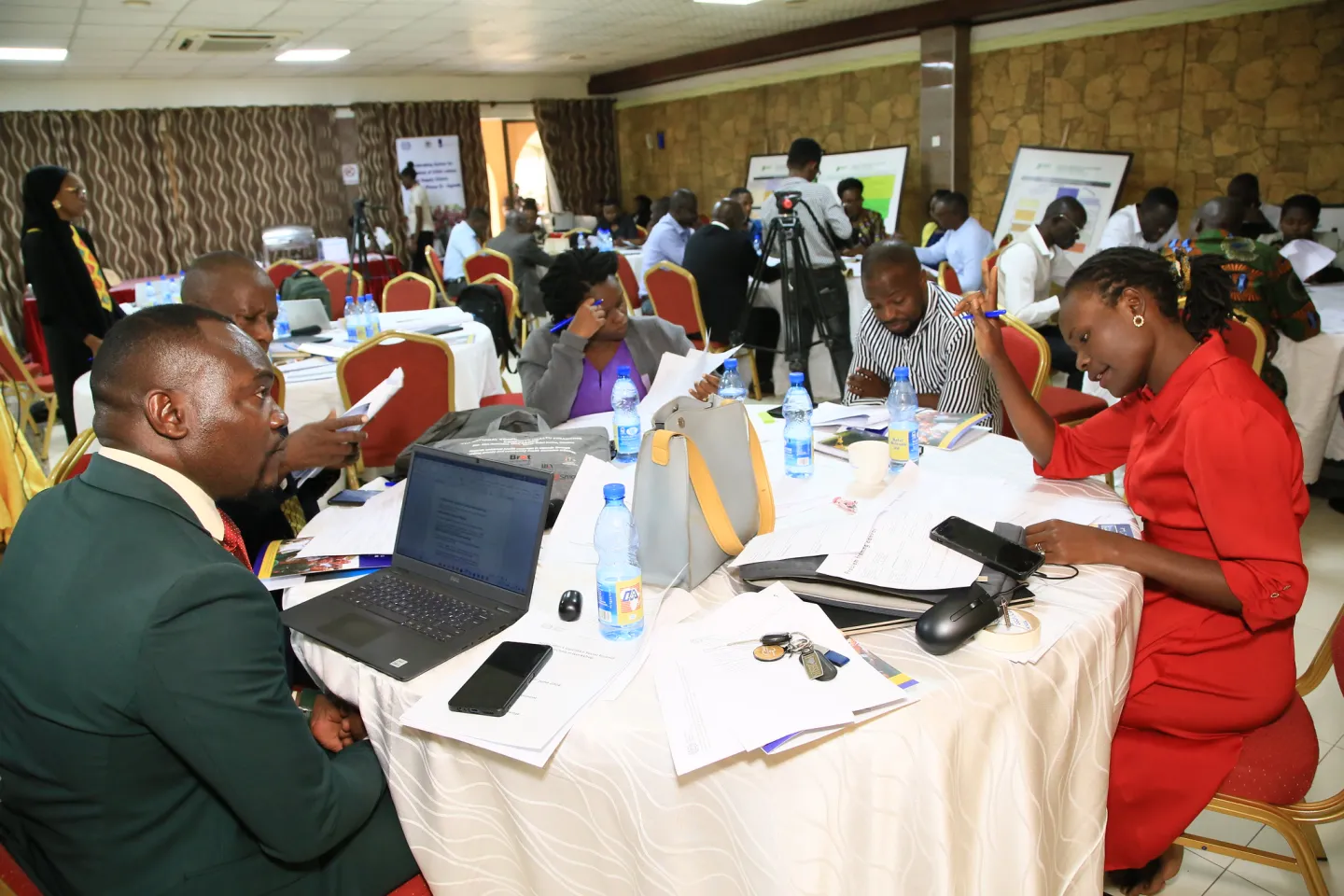
The workshop brought together representatives from relevant ministries and their local bodies, such as the Ministry of Finance Planning and Economic Development and the Ministry of Gender and labour, Professional associations of financial service providers and various financial institutions were also present, alongside players in the coffee and tea value chains, including labour unions, cooperatives. other relevant entities including trade unions, NGOs, and academic institutions participated.
The two-day workshop featured a mix of presentations, group work, and discussions. On the first day, participants were welcomed and introduced to the workshop objectives, followed by speeches from authorities and an assessment of social finance activities during the first phase of the ACCEL project, finally the participants works in groups to draft a collaboration value chain road map to contribute child labour. The second day focused on group work to finalise the value chain road mapping draft co-design and prototype interventions, while the final day was dedicated to refining these prototypes and agreeing on immediate next steps.
The workshop successfully fostered an integrated, value chain approach to combat child labour, revealing unique challenges and opportunities at each link. Participants proposed solutions focused on bolstering child labour policies, enhancing oversight of tea and coffee production, and improving access to affordable financing for producers. Capacity building emerged as a significant need, particularly in understanding and addressing child labour issues. Collaboration among stakeholders was also emphasized.
The co-design challenge generated innovative strategies to tackle child labour in Uganda. These included tailoring financial products and services to beneficiaries' needs, especially in credit and agricultural insurance. Financial and digital literacy programs were highlighted as essential for empowering individuals and communities. Additionally, developing local markets, particularly for tea, was identified as crucial for boosting producers' incomes. Strategic partnerships among stakeholders were recognized as key to mobilizing resources, strengthening local capacities, and ultimately eradicating child labour.
The ACCEL Uganda technical workshop was a significant step forward in the fight against child labour in Uganda’s coffee and tea supply chains. By bringing together a diverse group of stakeholders and focusing on financial inclusion and decent work opportunities, the workshop laid the groundwork for innovative solutions to eradicate the root causes of child labour..
About ACCEL Africa
The ACCEL Africa project, now in its second phase (2023-2028), aims to accelerate the elimination of child labour in selected supply chains across Africa, including Côte d'Ivoire, Ghana, Kenya, Mali, Nigeria, and Uganda. In Uganda, the project focuses on the coffee and tea supply chains, which are critical to the country's economy. The project's approach emphasizes strengthening existing systems to address the root causes of child labour, moving away from traditional project-based interventions.