

ACCEL Africa builds local capacity for safer and more productive coffee farming in Kenya
Kenya trains cooperative officers, extension workers, and OSH teams to improve safety on coffee farms in Kisii and Kericho, reduce workplace hazards, and prevent child labour through community-led action.
24 November 2025
NAIROBI (ILO News) - Every year, an estimated 2.9 million people die from work-related accidents and diseases worldwide. Alarmingly, one in three occupational injuries occurs in agriculture, a sector that sustains millions of livelihoods. Against this backdrop, from 17–21 November 2025, participants from Kisii and Kericho counties took part in Workplace in Neighbourhood Development (WIND) training under the ACCEL Africa project financed by the Ministry of Foreign Affairs of the Netherlands and implemented by the International Labour Organization (ILO).
The training brought together 25 participants, including cooperative officers, agricultural extension workers, labour officers, representatives from the Federation of Kenya Employers (FKE) and the Central Organization of Trade Unions (COTU), as well as occupational safety and health (OSH) officers. This diverse group reflected a shared commitment to strengthening safety, dignity, and wellbeing within Kenya’s coffee-farming communities.
The WIND methodology, developed by the ILO, is a hands-on and collaborative approach that helps communities identify workplace hazards, design practical solutions, and implement affordable safety improvements based on local conditions. Instead of applying externally imposed recommendations, WIND equips farmers, workers, and supporting institutions to jointly create solutions that are both feasible and sustainable. Beyond immediate safety gains, the approach also helps reduce child labour, boost productivity, and expand access to social protection. Ultimately, safer farms are more productive, more dignified workplaces, and more economically resilient.
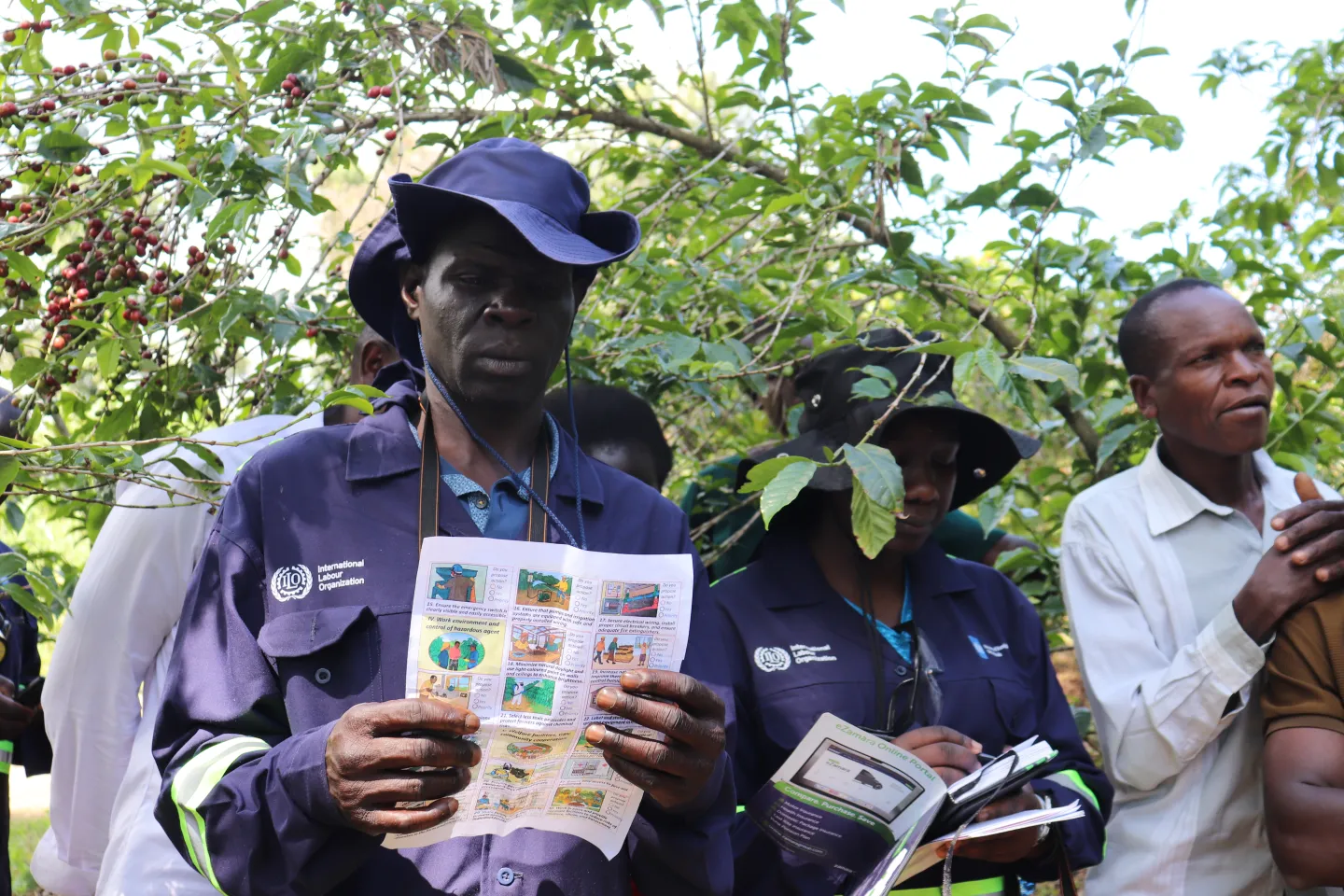
The Kisumu training specifically aimed to enhance the capabilities of those closest to farming communities; agricultural extension workers, OSH officers, and cooperative representatives equipping them with tools to champion practical OSH improvements. Using the Participatory Action-Oriented Training (PAOT) approach, participants engaged with visual tools, action checklists, and case examples that illustrate OSH improvements in accessible and relatable ways.
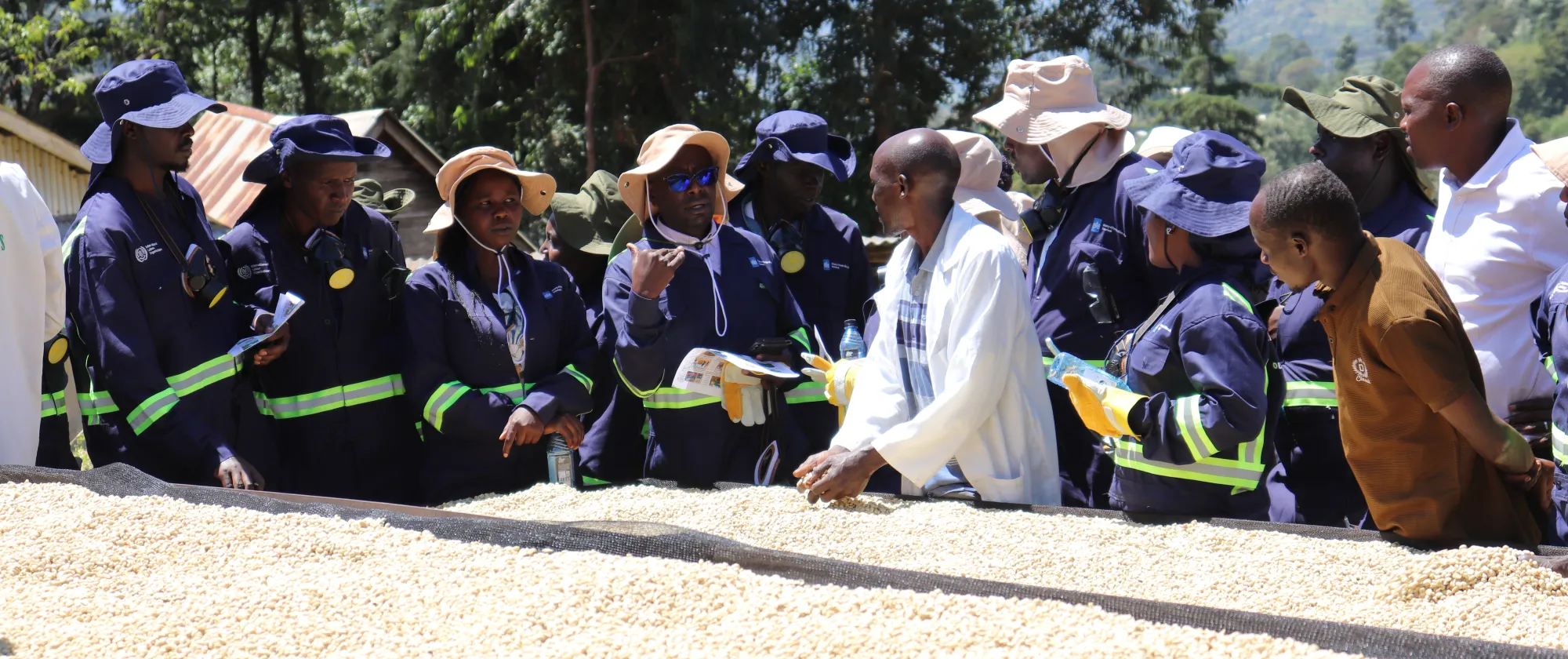
A highlight of the workshop was the field-based learning component. Participants visited a Coffee Cooperative Society facility and two local farms, where they observed real working conditions and held interactive discussions with farmers and cooperative leaders. These visits enabled first-hand identification of hazards from chemical exposure and unsafe storage of inputs to the risk of musculoskeletal strain caused by manual handling and bad postures. The fieldwork also encouraged honest conversations and on-the-spot demonstrations of safer alternatives.
“...safety doesn’t always require large investments often it’s about awareness, commitment, and simple changes... behind production figures are real people whose wellbeing must be protected. I also saw how children can be exposed to dangerous tasks, reinforcing the need for responsible, ethical, and safer farming practices.” — Lameck Nyabuto, Cooperative Officer, Kisii County
Participants also conducted micro-training demonstrations as part of their facilitator development. These exercises helped refine their instructional skills and build confidence ahead of their upcoming roles as community trainers. Each county successfully developed a six-month rollout plan to begin farmer-level trainings starting January 2026. This timeline ensures continuity beyond the workshop and positions participants as catalysts for lasting behavioural change.
“This training has changed how I approach farmer engagement. I now understand that the best solutions come from listening to farmers and guiding them to lead the change themselves.” Lily Kipkemoi -Agricultural Extension Officer-Kericho County
The collaborative spirit of the training was one of its greatest strengths. By bringing together government representatives, employers’ and workers’ organizations, cooperatives, and technical officers, the training promoted cross-sector synergy recognizing that OSH challenges require collective action rather than isolated efforts. These partnerships will be essential for scaling OSH improvements and embedding them into counties’ broader agricultural ecosystem.
As implementation begins across Kisii and Kericho, the focus will remain on monitoring progress, documenting tangible OSH improvements, and fostering a strong culture of prevention among farmers, helping them understand the importance of risk prevention and guiding them to carefully select light tasks where children can assist adults, thereby avoiding any involvement in hazardous work that could harm their development. Ultimately, this WIND training stands as a powerful reminder that change begins at the community level. With empowered trainers, engaged farmers, and aligned stakeholders, Kenya’s agricultural value chains are moving steadily toward a safer and healthier future.
Relevant projects

Accelerating action for the elimination of child labour in supply chains in Africa (ACCEL Africa)