

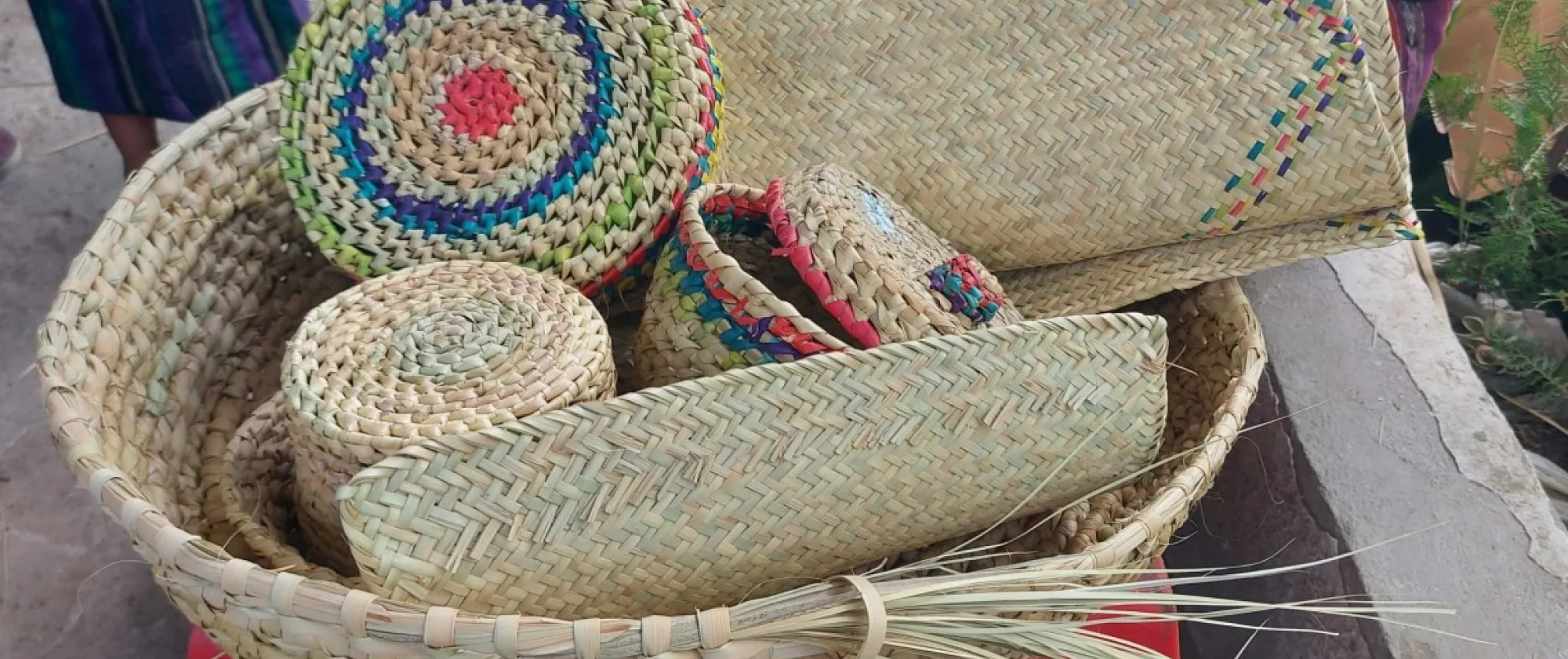
Value Chain of Natural Fibers in Guatemala: Towards Green Initiatives Driven by Women Artisans
“The production of handicrafts made with natural fibres can require between six and twelve hours of work per piece, not including prior activities such as harvesting, dyeing or spinning; an effort that reflects the dedication and ancestral knowledge of women artisans in Guatemala.”
The study “Value Chain of Natural Fibers in Guatemala: Towards Green Initiatives Driven by Women Artisans”, developed within the framework of PAGE – the Partnership for Action on Green Economy and implemented by the International Labour Organization (ILO), analyses the economic, social and cultural role of crafts made with maguey, tule, palm, reed and other natural fibers from the eastern region of the country. Through fieldwork, interviews, and sectoral analysis, the study identifies the main links of the value chain and the challenges faced by women artisans, including informality, limited access to finance, scarce technical assistance, and a heavy burden of unpaid care and domestic work.
The report highlights that, despite these constraints, there is strong potential to strengthen the value chain through sustainable practices, craft innovation, productive coordination and linkages with tourism and specialised markets. It also emphasises that environmental sustainability and the green economy can serve as key drivers of improved working conditions and incomes for women artisans, while protecting natural resources in the eastern region and contributing to inclusive local development.
Additional details
Author(s)
- Juliana Skaggs Nanne, consultora Pablo Alarcón, consultor
- Orientación técnica y edición: Rodrigo Mogrovejo, Especialista en Empresas Sostenibles, Transición Justa y Habilidades OIT
References
- DOI: https://doi.org/10.54394/USZW6001
- ISBN Web PDF: 9789220427569 (PDF)