

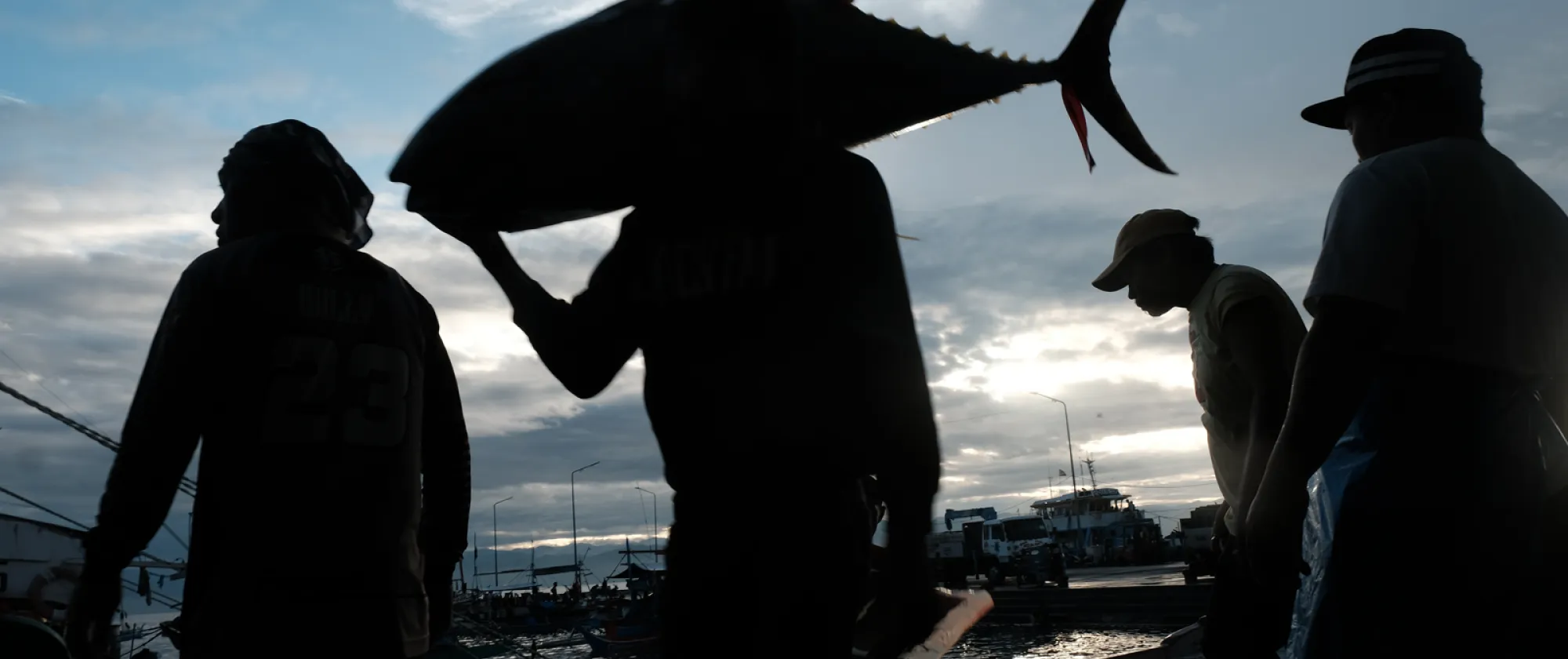
Lost in transit: Philippines migrant fishers in the United Kingdom fishing industry
The report highlights how Filipino migrant fishers in the UK face legal and social vulnerabilities due to the reliance on transit visas. These visa arrangements leave workers isolated, underprotected, and at risk of exploitation. It calls for urgent reforms to ensure fair recruitment, better working conditions, and real settlement pathways as the industry grows more dependent on migrant labour.
The International Labour Organization (ILO) has long been committed to promoting decent work and protecting rights at work worldwide. This working paper looks into the critical issues, which Filipino migrant fishers face in the UK fishing sector. It is a comprehensive examination of their contributions, challenges, and the regulatory landscape that impacts their working conditions produced under the Ship to Shore Rights South-East Asia.
This paper highlights the importance of bilateral discussions between the United Kingdom and the Philippines to ensure a rights-based approach to labour migration governance throughout the migration cycle of migrant fishers. It calls for the harmonization of model work contracts and proactive communication of policy changes to relevant stakeholders. Extending labour protections to all migrant fishers, irrespective of visa status, and ensuring compliance with international labour standards are crucial steps towards safeguarding their rights.
The recommendations provided in this paper aim to address the current challenges and vulnerabilities in the UK fishing industry. They emphasize the importance of ratifying and implementing international labour standards, improving data collection, and developing sector-specific work visas to address barriers to eligibility. For the Philippine Government, strengthening bilateral discussions and revising standard work contracts are essential to guarantee the highest level of labour protections for Filipino migrant fishers.
Additional details
Author(s)
- Co-authored by Jessica Sparks, ILO Consultant, and Mi Zhou, the Chief Technical Adviser of the Ship to Shore Rights South-East Asia programme. The report benefited from technical contributions from Hussein Macarambon, National Project Coordinator
References
- DOI: https://doi.org/10.54394/DRWV2454
- ISBN Web PDF: 9789220421246 (web PDF)
Related content
Labour migration
Philippines steps up decent work in blue economy under EU-funded ‘Ship to Shore’ programme
Brief
Fair recruitment of Lao migrant workers: A comparative review with international labour standards and guidelines
Labour migration
EU supports Indonesia to advance decent work in fishing and seafood under new phase of Ship to Shore Rights Project

Ship to Shore
List of contractors and grant beneficiaries – Ship to Shore Rights South-East Asia programme (2020–2024)
Relevant projects

Labour migration
Ship to Shore Rights South-East Asia: Safe migration for decent work in the blue economy