

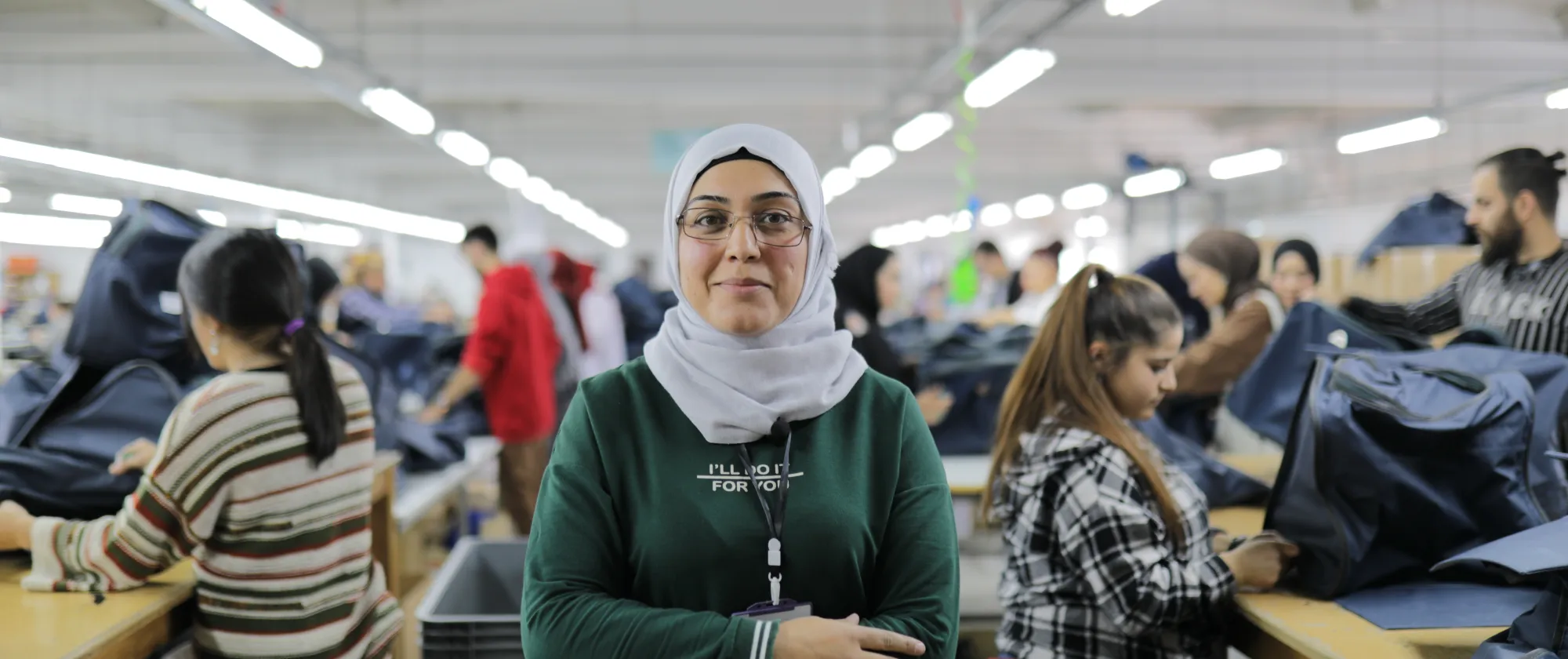
Women’s employment
Decent Work for Turkish and Syrian Women in Türkiye’s Labour Market: A Focus Group Study
New ILO report explores the barriers and opportunities shaping women’s work in Türkiye.
The International Labour Organization (ILO) has released a new report titled Decent Work for Turkish and Syrian Women in Türkiye’s Labour Market: A Focus Group Study, examining how gender, migration status, and social norms influence women’s access to decent work, and offers policy recommendations to promote equality, inclusion, and decent work for all.
“The study shows the importance of addressing the barriers to women’s participation in work. When women are empowered economically, societies benefit, generating sustainable growth, stronger communities, and a more equitable future of work” highlighted Yasser Hassan, Director of the ILO Office for Türkiye.
Insights from women’s experiences
Through in-depth focus group discussions held with women in Bursa, Istanbul and Gaziantep, the study captures their perspectives on the realities of work, from the challenges they face to the conditions that define what “decent work” means to them. 126 women, Turkish and Syrian, all beneficiaries of ILO's Work-Based Learning Programme, took part in these discussions.
The findings highlight that decent work goes far beyond employment. It encompasses fair wages, equality, safety, respect, and opportunity, forming the foundation of dignity in the workplace.
Key insights from the study:
- Multiple and intersecting barriers persist.
A wide range of factors continue to shape women’s labour force participation in Türkiye and contribute to decent work deficits. These include educational attainment, marital and family responsibilities, cultural and structural barriers, discrimination, poor working conditions, and workplace violence and harassment.
For Syrian women under Temporary Protection, intersectional discrimination, based on both gender and refugee status, further deepens these challenges. - Women define decent work as safe, fair, and fulfilling.
Participants consistently emphasized that decent work means a safe working environment — one where women receive fair pay that reflects their skills and education, is free from discrimination and bullying, amongst supportive and respectful colleagues. - International labour standards must guide the path forward.
The ILO’s normative framework, built through extensive social dialogue, provides essential guidance for advancing gender equality and ensuring decent work for all. Conventions and Recommendations including C100 (Equal Remuneration), C111 (Discrimination), C156 (Workers with Family Responsibilities), C190 (Violence and Harassment), R205 (Employment and Decent Work for Peace and Resilience), R143 (Migrant Workers), and R165 (Workers with Family Responsibilities) are central to this agenda.
The report identifies several priority areas for policy intervention:
- Expanding access to affordable childcare services and supportive family policies
- Strengthening legal protection against discrimination and ensuring equal pay for work of equal value
- Making workplaces safe and free from violence and harassment
- Developing high-quality, job-oriented training programmes for women
- Promoting formal employment opportunities that guarantee rights and protections
The study reaffirms that achieving decent work for women requires coordinated action from policymakers, employers, workers’ organizations, and communities.
About the project
This study was carried out within the scope of the Promoting Decent Work for Syrians under Temporary Protection and Turkish Citizens Project. The project is financed by the Federal Republic of Germany through the KfW Development Bank and implemented by the International Labour Organization (ILO) Office for Türkiye, in coordination with the Ministry of Labour and Social Security.
Additional details
References
- DOI: https://doi.org/10.54394/KPLG4662
- ISBN Web PDF: 9789220429266