

Evaluation Office
Decent work results and effectiveness of ILO operations in 2025
What is this report about?
This annual report brings together findings of 45 independent final project evaluations that were conducted in 2025 to understand the extent to which the ILO is advancing decent work and effectiveness of its operations around the world.
It examines what is working well, where improvements are needed, how effectively and efficiently resources are being used, and how results vary across policy areas and regions. The report identifies key trends, lessons learned, good practices and recommendations to strengthen the design and implementation of projects, improve the use of resources, and help the ILO achieve better results through its development cooperation work.
For more than ten years, the ILO's Evaluation Office has carried out these annual assessments to better capture the ILO’s effectiveness in achieving short and medium-term objectives and advancing decent work.
How did the ILO's development cooperation interventions perform in 2025?
- Strong performance was observed in the strategic relevance, coherence, sustainability, and likelihood of impact of ILO development Cooperation operations.
- While effectiveness was generally positive, efficiency showed significant variability, indicating uneven success across key assessed performance areas.
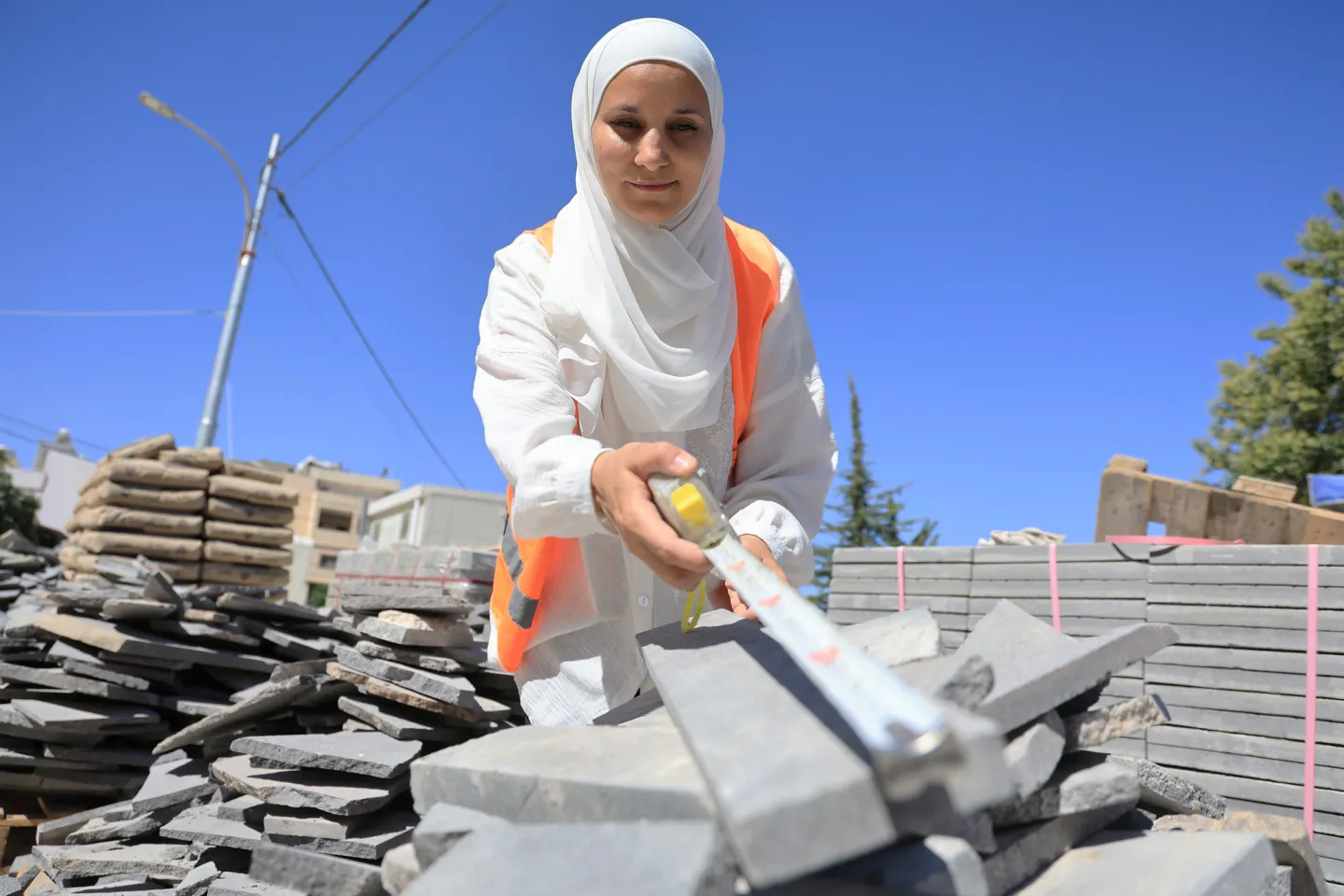
- 66% of interventions demonstrated a clear orientation towards improving the living standards of poor and vulnerable populations through decent work pathways, with nearly one-quarter obtaining highly successful ratings. Pro-poor performance was strongest when projects combined direct support for vulnerable groups with sustainable livelihoods, social protection, labour rights and institutional reform.
- The extent to which ILO interventions were gender-responsive varied across the 2025 portfolio, with positive results in 53% of cases, and no unsuccessful performance. The most successful interventions combined explicit gender strategies, operational measures addressing structural barriers, gender-sensitive monitoring and implementation tools, and institutional partnerships capable of sustaining reforms beyond the project cycle.
- 20% of interventions had a disability inclusion perspective or specific components targeting beneficiary groups with disabilities, with 45% of cases obtaining unsuccessful ratings. The most successful projects embedded disability responsive approaches directly into their design, delivery systems, and institutional reforms,with concrete operational measures to address barriers faced by persons with disabilities. Evidence showed that even relatively modest operational adjustments could help reduce participation barriers when disability inclusion was intentionally addressed.
- Environmental sustainability was integrated unevenly and to a limited extent across the 2025 portfolio of ILO development cooperation interventions, with just 35% of positive cases. Successful performance was associated with interventions that positioned the just transition, green jobs, climate resilience, or environmental sustainability as central components of programme design, linking environmental objectives to concrete economic and institutional mechanisms.
Read chapter 3 for more information
How to optimize resource efficiencies?
Six key insights provide practical information on how to make the most of resource efficiencies in ILO's development cooperation interventions.

Key highlights of effectiveness results by P&B policy outcomes from 2022-25
The report assess how well ILO interventions performed during the 2022–2023 and 2024–2025 biennia by looking at their effectiveness, sustainability and emerging impact. Due to the uneven distribution of reports across the different ILO policy outcomes, and limited sample size, it is structured by degree of representativeness, and results should be interpreted with this in mind.
High representativeness
- Policy Outcome 3: Full and productive employment for just transitions
- Policy Outcome 4: Sustainable enterprises for inclusive growth and decent work
- Policy Outcome 6: Protection at work for all
Moderate representativeness
- Policy Outcome 1: Strong, modernized normative action for social justice
- Policy Outcome 2: Strong tripartite constituents and influential and inclusive social dialogue
- Policy Outcome 7: Universal social protection
Low representativeness
- Policy Outcome 5: Gender equality and equality of treatment and opportunities for all
- Policy Outcome 8: Integrated policy and institutional responses for social justice through decent work
- Enabler A: Enhanced knowledge, innovation, cooperation and communication to advance social justice
Read chapter 5 for more information.
Key conclusions
Pointers for the way forward
Related resources
Quick facts
Full report
Additional details
References
- DOI: https://doi.org/10.54394/00035220
- ISBN Print: 9789220438848
- ISBN Web PDF: 9789220438855
See also
Decent work results and effectiveness of ILO operations: An ex-post meta-analysis of development cooperation evaluations, 2024

Meta-analysis
Decent work results and effectiveness of ILO operations: An ex-post meta-analysis of development cooperation evaluations, 2023