

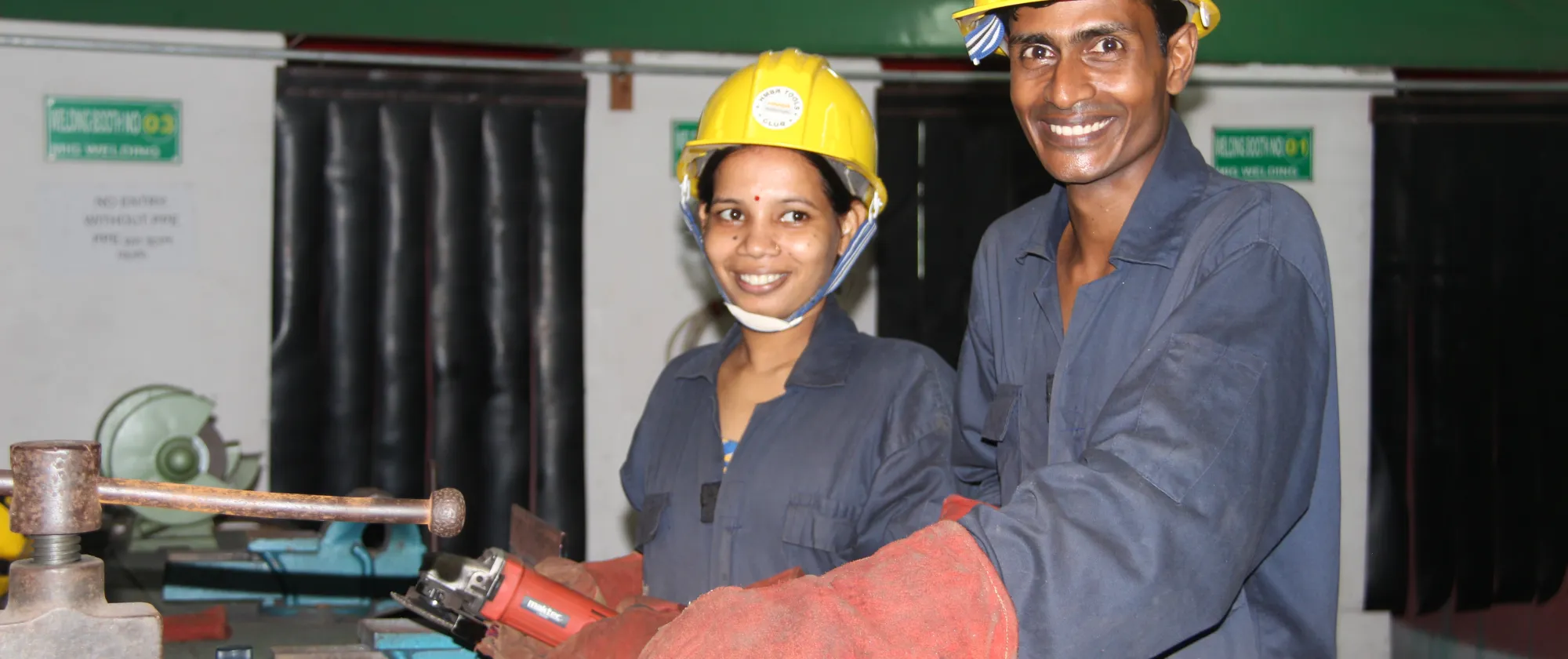
Technical and Vocational Education and Training (TVET) Reform in Bangladesh
The TVET Reform Project is an initiative of the Government of Bangladesh, assisted by the International Labour Organisation and funded by the European Union. The goal is to ensure Bangladesh’s competitiveness in the global market and reduce poverty by improving the quality of vocational educational and training.
Duration
11 December 2007 - 11 December 2015
Development partner(s)
European Union
Reference
BGD/06/01/EEC
See here for more Videos and audio stories
News:
ILO Technical and Vocational Education and Training (TVET) Reform Project Comes to a CloseILO's TVET Reform Project has come to a close after making a significant contribution to the development of a stronger skills development system for Bangladesh.
The TVET Reform Project has five key target areas which together will ensure a TVET system which is coordinated, flexible, responsive and able to meet industry needs. These areas are outlined below, click on each area to view progress made and current/future activities:
POLICY:
TVET Reform is not just about new ways of doing things; it is about changing the mindset of the TVET sector. If the sector is to meet the increasing demands of the global labour market, it needs to focus quickly on becoming flexible, inclusive, efficient and collaborative.
RELEVANCE:
In order to meet labour demands in Bangladesh, TVET must be delivering quality skills that employers want, and these needs are constantly changing. Through improving the responsiveness and flexibility of TVET institutions, reform will enable institutions to better meet industry needs.
STRENGTHENING:
In order for quality training to be delivered and assessed in Bangladesh, TVET practitioners need to move away from lecturing and towards practical, competency-based methods. Reform will encourage this by building the capacity of managers to understand the need for it and by improving TVET teacher training methods.
LINKAGES:
Stronger relationships between training institutions and industry will ensure that graduates have the skills needed by employers, so that they can together meet the increasing needs of the labour market. Reform will encourage these partnerships through Industry Skills Councils and encourage best practice through Centres of Excellence.
ACCESS:
One of the key reform objectives is to make TVET accessible to all, including youth with low literacy and numeracy, child workers, women and rural communities and persons with disabilities. To do this, reform is concentrating on removing policy-related barriers, such as minimum education levels, and also physical barriers, such as transport systems which are not gender-friendly.
Constituents and Partners
The TVET Reform Project extends technical assistance to the Government of Bangladesh primarily through the following skills-related government agencies:- Ministry of Education (MoE)
- Ministry of Labour and Employment (MoLE)
- Bangladesh Technical Education Board (BTEB)
- Directorate of Technical Education (DTE)
- Bureau of Manpower Employment and Training (BMET)
Contact Us
If you would like printed copies of any of the materials on the website, or any further information, please contact us:ILO Skills Programme Office
Road 127, House A-9, Central Gulshan 1, Dhaka 1212, Bangladesh
Email us here
Related content

Centre of Excellence
First Competency Based Training for RMG Enterprise Trainers/Assessors held in Bangladesh
Bangladeshis study mutual skills recognition
Reaching out to industry
Centre of Excellence for Leather (COEL) trained nearly 12000 people
49 Government Polytechnics and 64 TSCs in Bangladesh to become Registered Training and Assessment Centres
64 Technical Schools and Colleges get approval to start delivering contract training to industry
Eight UN agencies in Bangladesh to work together on skills development
TVET Project receives six month extension
Sharing skills development expertise from Bangladesh with Myanmar
First public private partnership in technical education in Bangladesh
Amir starts work in first year of training through public private partnership
The National Skills Development System in Bangladesh (2015)
Achievements of TVET Reform Project