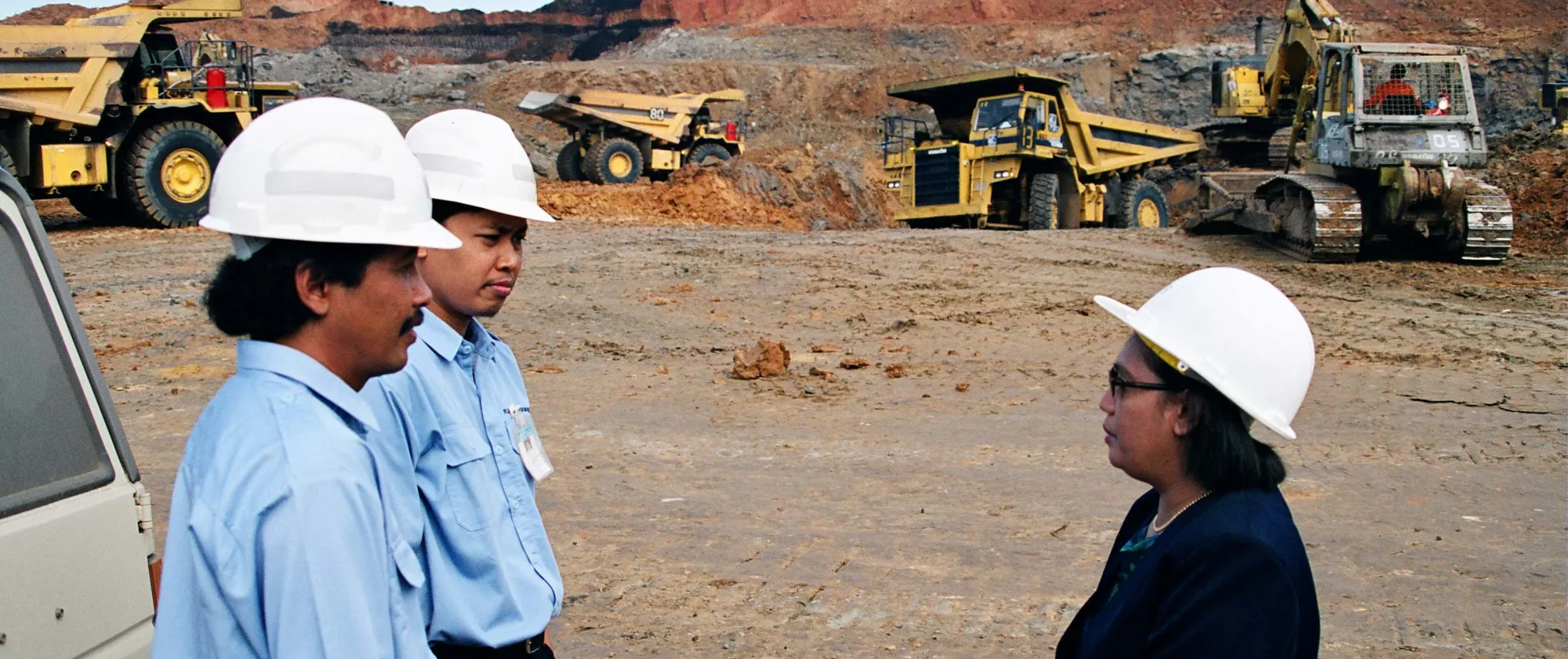
Funded by the Government of Japan, the RISSC-Nickel project aims to advance decent work and respect for fundamental principles and rights at work in nickel supply chains by strengthening labour governance, catalysing enterprise-level improvement pathways, and aligning supply-chain actors around responsible business conduct.
Indonesia is the largest global nickel producer (accounting for half of mined output and 55% of global reserves).
In recent years, the government’s ‘downstreaming’ policy has led to a boom in domestic refining and processing
Important source of jobs and livelihoods: government sources indicate around 150,000 people are employed across nickel mining and refining operations
Key nickel production hotspots include Sulawesi, North Maluku, and West Papua
Employers and workers in the nickel sector and its supply chain
Policymakers, government agencies and other state authorities
Other key industry stakeholders, both national and international
Decent Work and Responsible Business Conduct are more consistently enabled and reinforced in nickel supply chains, supporting stronger respect for fundamental principles and rights at work and more inclusive and sustainable national development.
Change should be visible in several key areas:
Improved sectoral labour governance and compliance frameworks
Growing industry uptake of new RBC models and approaches
A coherent national policy vision for industry development
Greater stakeholder alignment and collaboration for a more responsible nickel supply chain
Government: The Ministry of Labour, The Coordinating Ministry of Economic Affairs, The Ministry of Energy and Natural Resources, and key relevant ministries/agencies
Employers and Business Membership Organizations (EMBOs): APINDO, KADIN, APNI, other industry associations.