

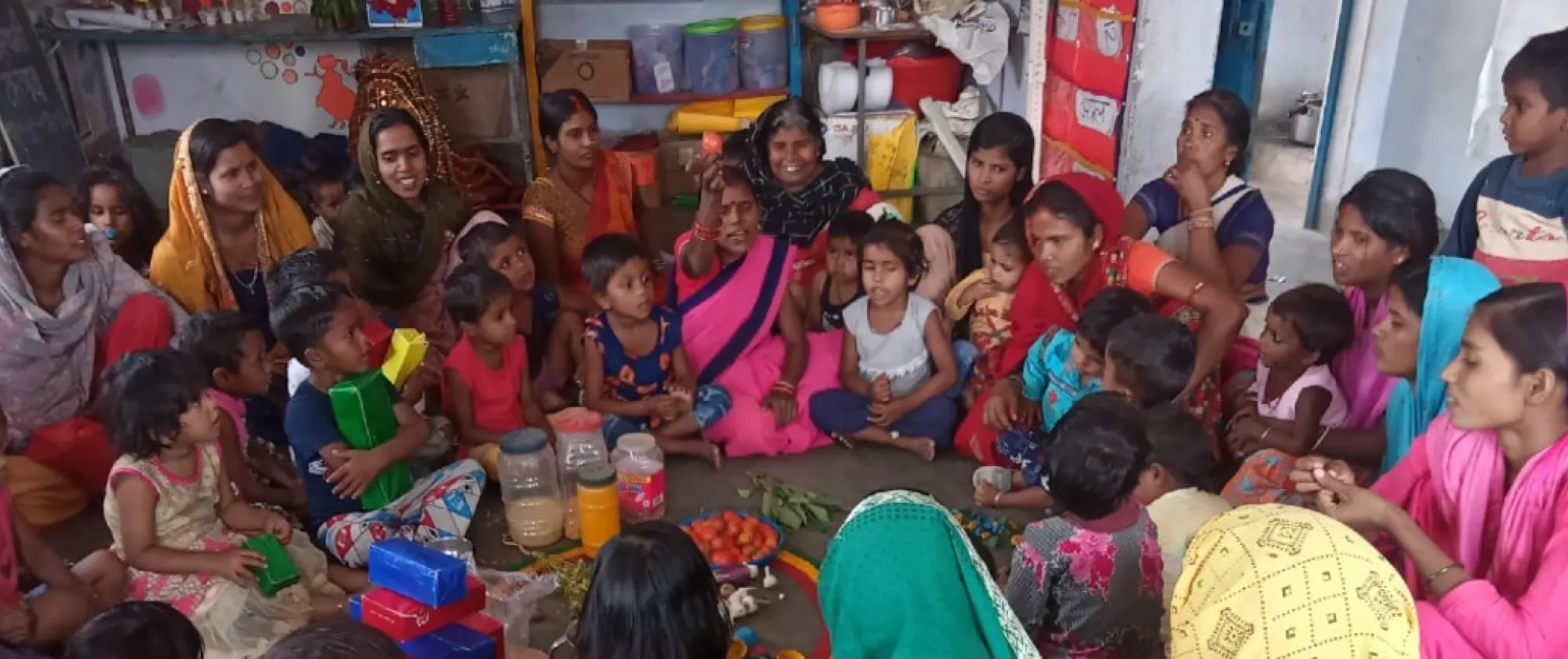
Promoting and Building Social Protection in South Asia
Duration
20 March 2025 - 19 March 2028
Development partner(s)
Ministry of Health, Labour and Welfare, Government of Japan
Reference
RAS/25/02/JPN
Background and Rationale
Social protection is a fundamental human right, yet the effective coverage of social protection of population covered by at least one benefit in South Asia remains critically low at 35.4 per cent, with informal employment at 86.6 per cent, far exceeding the global average of 57.8 per cent.[1] This exacerbates the vulnerability of informal workers, particularly platform, and care workers, who lack access to adequate social security benefits.
In India, there has been commendable progress in expanding social protection in recent years, with effective coverage – measured by the population covered by at least one social protection benefit – rising from 24 per cent to 64.3 per cent.[2] This significant improvement reflects the government’s growing commitment to strengthening social protection system. However, important gaps persist, particularly among informal workers, who comprise 88.4 per cent [3] of the country’s workforce. The existing social protection system in India is a combination of contributory and non-contributory schemes, and the opportunity of extending social protection to informal workers is still limited.
With India’s platform economy rapidly expanding—projected to encompass over 23.5 million workers by 2030[4]—platform workers engaged in ride-hailing, delivery, and online freelancing are becoming a vital part of the modern workforce. While many of these workers operate outside traditional employment arrangements, there is growing recognition of the importance of extending social protection to this dynamic segment. Recent policy discussions have begun to explore ways to extend essential protections—such as health coverage and support in case of work-related injuries—to platform workers. This presents a promising opportunity to enhance the inclusiveness and resilience of India’s social protection system.
Additionally, India is a major country of origin for labour migrant workers, many of whom engage in various forms of care work, including childcare, elderly care, and family care, both domestically and the abroad. These workers, predominantly women, face multiple layers of vulnerability, particularly due to the absence of portable and inclusive social protection mechanisms.
The Social Protection in South Asia project will focus on India and Sri Lanka, as key country interventions, which face distinct but overlapping challenges, including the limited or no coverage of social insurance schemes and the absence of targeted social protection mechanisms for specific occupational groups, such as platform workers and migrant workers. This project seeks to address and take actions to these gaps by building sustainable and gender-transformative social protection systems in India and Sri Lanka.
Project Outcomes
The ultimate objective is to achieve decent work where all workers, particularly those having limited access to social protection will benefit from more advanced social protection systems in South Asia.
Outcome 1: Social protection system with a particular focus on pension scheme and maternity protection is improved by introducing and strengthening social insurance systems extended to all workers, with a particular focus on informal workers including new forms of work and unregistered workers with established employment relationship.
Outcome 2: Gender-transformative social protection system is elaborated to extend social protection coverage to care workers including migrant workers engaging into care works.
Partner Countries: India and Sri Lanka
Key Partners:
- Tripartite constituents
- Public social security institutions
- Platform aggregators
Target Beneficiaries:
Direct Beneficiaries
- Government institutions
- Social Partners
Ultimate Beneficiaries
- Platform workers
- Workers nearing or at retirement age, those on maternity leave, and their families
- Domestic and care workers, including migrant workers
For further information, please contact
Karun Gopinath, National Project Coordinator [email protected]
_______________________________________________________________________________________________________________________________________
[1] ILO | Social Protection Platform and World Social Protection Report 2024-26, ILO
[2] World Social Protection Data Dashboards (India), ILO
[3] ILOSTAT, LFS – Periodic Labour Force Survey 2024
[4] NITI Aayog. (2022). India’s Booming Gig and Platform Economy: Perspectives and Recommendations on the Future of Work. June, 2022
Related content

Factsheet
Key information - Promoting and building social protection in South Asia
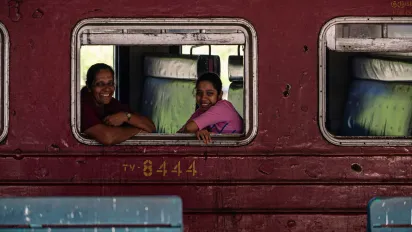
Promoting and building social protection in South Asia: Sri Lanka component
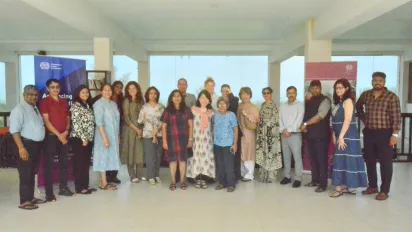
Building Capacity, Advancing Rights: ILO strengthens regional capacity on policy advocacy for maternity protection
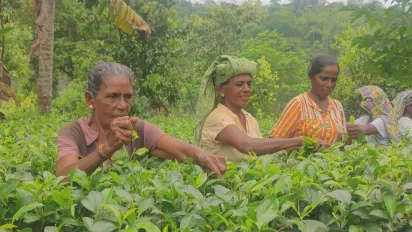
ILO/Japan Multi-bilateral Programme

Indian trade unions take united step toward advancing maternity protection
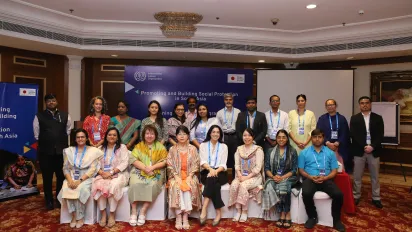
Training of trainers
Strengthening maternity protection capacity in India through national training programme

Research report
A gap analysis of the compliance of national legislation, policies and practice with ILO Maternity Protection Convention, 2000 (No.183)
Policy brief
Aligning Sri Lanka’s maternity protection framework with the ILO Convention No. 183

Technical workshop strengthens social protection statistics in India