

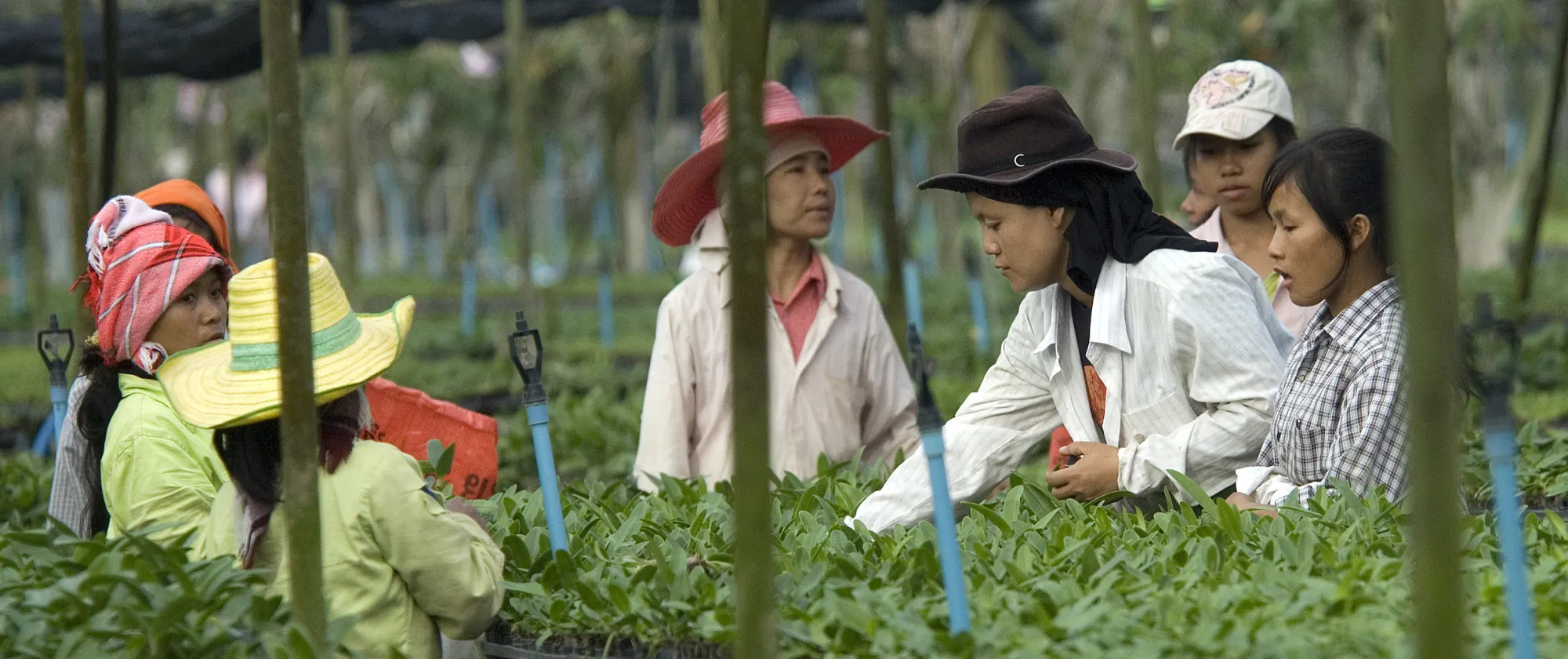
Migrant workers
Migrant Advocacy for Rights
The project aims to improve the rights realization of migrant workers in informal agriculture and manufacturing in, and beyond, special economic zones in Thailand.
Duration
26 September 2023 - 29 September 2026
Development partner(s)
United States Department of State
Reference
THA/23/01/USA
Location
Bangkok, Thailand
Background
Thailand is the main country of destination for migrant workers in South-East Asia, with 2.5 million documented migrant workers from Cambodia, Lao People's Democratic Republic (Lao PDR) and Myanmar, in addition to a large number of undocumented migrant workers. Many migrants have positive migration experiences, yet situations of rights abuses abound. Among the sectors migrants work in, agriculture and manufacturing employ over 1 million documented migrant workers in Thailand. Feeding into major global supply chains, informal agriculture and manufacturing are particularly characterized by decent work deficits.
Migrants in the informal economy are largely excluded from labour and social protection and have very few opportunities to join workers’ organizations, bargain collectively and advocate for their rights. Those working informally particularly face low wages, passport confiscation, impairments due to unsafe workplaces, and excessive hours.
Migrant worker organizing and advocacy is crucial to evidence-based legal reform in Thailand’s informal economy. ILO studies continue to show benefits of enhancing organizing to amplify migrant workers’ voices as part of tripartism and advocacy efforts to effect change in laws and in workplaces.
Outcomes
The project “Migrant Advocacy for Rights” aims to improve the rights realization of migrant workers in informal agriculture and manufacturing in, and beyond, special economic zones in Thailand.
The project will contribute to the following outcomes:
- Workers are aware of their rights to organize and an increased number of migrant workers join workers’ organizations and migrant groups.
- Labour and social protection law and policy reforms increasingly formalize currently informal, migrant-reliant sectors, giving migrant workers access to formalized payments, paid overtime, better occupational health and safety conditions, social protections, including maternity and disability related protections, and effective dispute resolution.
- The government of Thailand has more effective admission policies and practices in place and coordinates with Cambodia and Lao PDR, to improve safe migration patterns and fair recruitment.
- Workers and allied groups advocate for diligent enforcement of labour law within migrant workplaces, including in SEZs, via labour inspection or other methods such as complaints mechanisms and wage protection mechanisms.
This project’s approach is one of inclusive migrant worker organizing and advocacy, backed by provision of ILO’s rights-based technical advice on legal reform.
Partners
Government, workers’ and employers’ organizations, civil society organizations and migrant worker groups
Target beneficiaries
Women and men migrant workers in informal agriculture and manufacturing work
For further information please contact:
Rebecca Napier-Moore
Email: [email protected]
Related content
ILO Brief
ILO’s work on migration in Asia and the Pacific
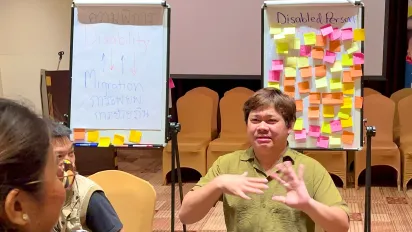
Labour migration and disability inclusion
Migration and disability rights groups unite to tackle barriers in labour migration
Leaflet
Know your rights at work in Thailand

Language training helps migrant workers improve communication and access to services
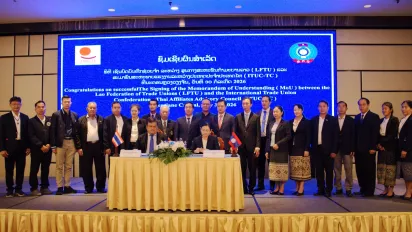
Cross-border cooperation for better migrant workers protection
Trade unions from Lao People's Democratic Republic and Thailand strengthen cooperation to protect migrant workers' rights