

Child labour
Sustainable mushroom farming to address child labour
Community members and parents of child labourers learn sustainable mushroom farming to earn more and help end child labour.
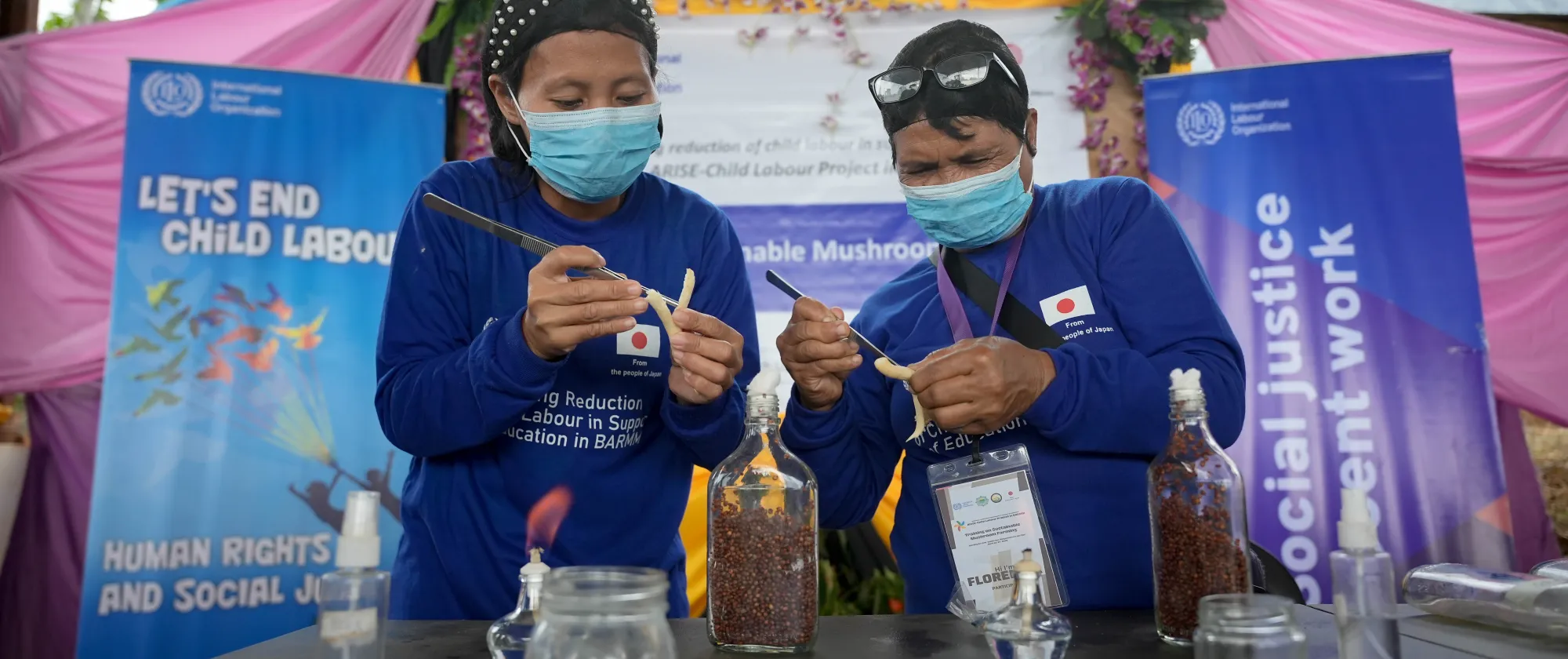
Community members and parents of child labourers are turning to sustainable mushroom farming to generate income and address child labour.
Under the ILO's Achieving Reduction of Child Labour in Support of Education (ARISE) Project, funded by the Government of Japan, 45 community members—including 30 parents of child labourers and 15 working youth aged 15–17—have completed training on sustainable mushroom farming in Barangay Looy. The majority of participants belong to the indigenous Teduray tribe.
Barangay Looy's rich environment and abundant agricultural waste, such as rice straws and corn cobs, make it ideal for mushroom cultivation. This initiative offers families the opportunity to generate income, reduce waste, and improve their livelihoods, thereby helping to break the cycle of child labour.
Through hands-on training in mushroom farming and processing, along with starter kits, business development support, and coaching, families are now equipped to grow, harvest, add value, and market mushrooms. This transformation turns waste into wealth and builds brighter futures for their children.
By empowering communities with sustainable livelihoods, the initiative aims to address the root causes of child labour, ensuring that education, not exploitation, defines the lives of children in Barangay Looy.
Relevant projects

Reduction of child labour in Myanmar
Achieving Reduction of Child Labour in Support of Education (ARISE): Programme to reduce the worst forms of child labour in agriculture

Child labour
Achieving reduction of child labour in support of education