


Arab Social Protection Compass Webinar series: Part XIII
Bridging social protection, humanitarian, and labour market policies
In this final episode of the Arab Social Protection Compass webinar second season, the audience will be sharing concrete cases, or “challenges”, with a team of experts to seek guidance and practical solutions. This Clinic session is an opportunity for participants to ask practical questions on specific topics shortlisted by ILO ROAS and ISSA and pre-selected through a participant vote, ensuring they reflect the region’s current debates on social protection.
Two topics (“Socio-economic inclusion of social assistance beneficiaries through Active Labour Market Policies” and “Identifying entry points for linking humanitarian assistance and social protection”) were selected based on a public survey that was disseminated through the Arab Compass mailing list by sociaprotection.org. The audience have also proposed questions for each selected topic. Two experts on each selected topic have been invited to join the session and answer the pre-selected questions live. The audience will also be encouraged to post their feedback on the challenges, or to pose new questions during the sessions, while also sharing their experience with similar social protection challenges.
Selected themes:
- Socio-economic inclusion of social assistance beneficiaries through Active Labour Market Policies (ALMPs): This topic is particularly relevant for the region, given the significant reduction of donor funding as well as for the political and socio-economic implications of massive youth unemployment and women’s underemployment. A case in point is Lebanon, where both the Government and the donor community are undertaking studies and consolidating strategic plans for the economic inclusion of beneficiaries of noncontributory transfers. To date there is a lack of evidence on the impact of ALMPs in the region, largely due to their limited scope and coverage, which in turn impedes their potential to address issues related to skills mismatch and limited job creation. Moreover, existing programmes often fail to take into account the particular needs and circumstances of women, rural populations, people with disabilities and informally employed workers. This theme is closely linked to the episode Managing transitions: a system wide perspective on social assistance and social insurance and reference to the cases presented (Jordan, Tunisia) is to be considered.
- Moderator: Irene Selwaness
- Experts:
- Celine Peyron Bista
- Amal Mowafy
- Identifying entry points for linking humanitarian assistance and social protection: Despite regular commitments by govenrments and donors to enhance the coherence between humanitarian cash transfers and state-led social protection, operationalizing the so-called “Nexus” remains challenging. Often, in contexts of acute and/or protracted crisis, humanitarian and government-led systems operate in parallel, leading to duplication and inefficiencies. In recent years, conflict-affected countries in the region -- including the State of Palestine, Jordan, Yemen, and Lebanon -- have actively explored opportunities for greater programmatic alignment and system coordination. These initiatives have focused on establishing viable mechanisms for data-sharing between state agencies and international partners and harmonizing key design features of relevant programmes, such as targeting criteria and transfer values. As humanitarian and development funding contracts, ensuring smooth collaboration amongst “Nexus” actors will be crucial to ensure assistance is effectively and equitably delivered.
- Moderator: Michele Scala
- Experts:
- Rim Nour
- Valentina Barca
****
This episode is part of the webinar series "Arab Social Protection Compass: Towards Integrated Approaches for Universal Social Protection", organised by the International Labour Organization (ILO) and the International Social Security Association (ISSA) with technical support of socialprotection.org. The initiative intends to put a spotlight on reforms and programmes geared towards fostering integration within social protection across the region and beyond, while contributing to stir discussion at the national level. Throughout the series, speakers will delve into both the theoretical underpinnings and practical implementations of specific reforms, aiming to inspire a broad audience of practitioners to replicate or scale up similar interventions.

Agenda
13:00 – 13:10| Introduction and welcome
13:10 – 13:15| Interaction moment 1
13:15 – 13:45| Experts Q&A (Topic 1)
- Celine Peyron Bista
- Amal Mowafy
13:45– 13:50| Interaction moment 2
13:50 – 14:20| Experts Q&A (Topic 2)
- Valentina Barca
- Rim Nour
14:20 – 14.30| Closing
Speakers
-
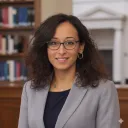 Irene SelwanessAssociate Professor, Faculty of Economics and Political Science, Cairo University, and a Strategic Economics Alliance Research fellow at the UCL Institute for Innovation and Public Purpose, London
Moderator
-
 Michele ScalaKnowledge Management Coordinator, ILO STREAM programme
Moderator
-
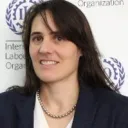 Celine Peyron BistaSenior Social Protection and Employment Policies Specialist, ILO
 -
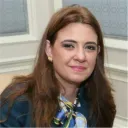 Amal MowafyILO Jordan Country Coordinator & Senior Regional Employment Policy Specialist for Arab States
 -
 Valentina BarcaIndependent social protection expert and technical lead for the High-Level Panel on Social Protection in Fragile and Conflict Settings
 -
 Rim NourTechnical Expert in Social Protection
Session recording
This episode is part of the webinar series

Arab Social Protection Compass “Towards Integrated Approaches for Universal Social Protection”
This episode is part of the webinar series "Arab Social Protection Compass: Towards Integrated Approaches for Universal Social Protection", organised by the International Labour Organization (ILO) in collaboration with the International Social Security Association (ISSA) and technical support of socialprotection.org. The initiative intends to put a spotlight on reforms and programmes geared towards fostering integration within social protection across the region and beyond, while contributing to stir discussion at the national level. Throughout the series, speakers will delve into both the theoretical underpinnings and practical implementations of specific reforms, aiming to inspire a broad audience of practitioners to replicate or scale up similar interventions.


Resource links
Topic 1: Socio-economic inclusion of social assistance beneficiaries through Active Labour Market Policies
- ILO Arab States Employment and Social Outlook - Trends 2024
- WB Built to Include: Reimagining Social Protection in MENA
- ESCWA Regional Report: Active Labour Market Policies in Arab Countries
- ANDD Regional Review: Active Labour Market Policies Targeting Youth in the Region
Topic 2: Identifying entry points for linking humanitarian assistance and social protection
- DRC|ARI Conference: Improving Linkages between Social Protection and the HDP Nexus in the Arab Region | Conference Recording link here
- CALP Network: Discussion Paper on Linking Humanitarian CVA with Social Protection in MENA
- ODI: Linking humanitarian assistance and social protection. Guidance to assess the factors and actors that determine an optimal approach in a displacement setting.
- IDS Bulletin: Realigning Social Protection Across the Nexus: Reflections from Protracted Crises in the Arab Region
- SPIAC-B (2023) Common Principles for Linking Humanitarian Assistance and Social Protection and accompanying (2025) Tipsheets for applying the common principles
- SPIAC-B (2025) Statement on Coordinated Assessments to Identify Entry Points for Linking Humanitarian Assistance and Social Protection
- SPACE (2021) Deciding when and how to link humanitarian assistance and social protection: guidance and tools for response analysis
Relevant projects
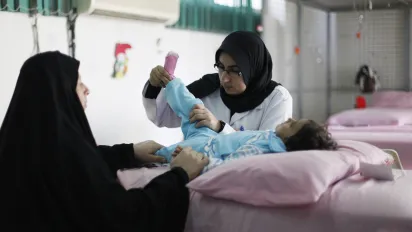
Social Protection Programme for Iraq: Leveraging Effective Response and Accelerating Reform

Estidama++ Fund – Extension of Coverage and Formalization in Jordan

Project
STREAM - Extending Social Protection to migrant workers and their families in the South Asia-Gulf Corridor