

GALAB project strengthens trade union collaboration to combat child labour and forced labour in Nigeria's cocoa sector
24 September 2024
The GALAB Project, funded by the U.S. Department of Labor, has successfully strengthened collaboration between trade unions and informal workers in Nigeria's cocoa sector. Through capacity-building workshops, the project has facilitated improved access to health insurance and addressed critical issues like child labour and forced labour.
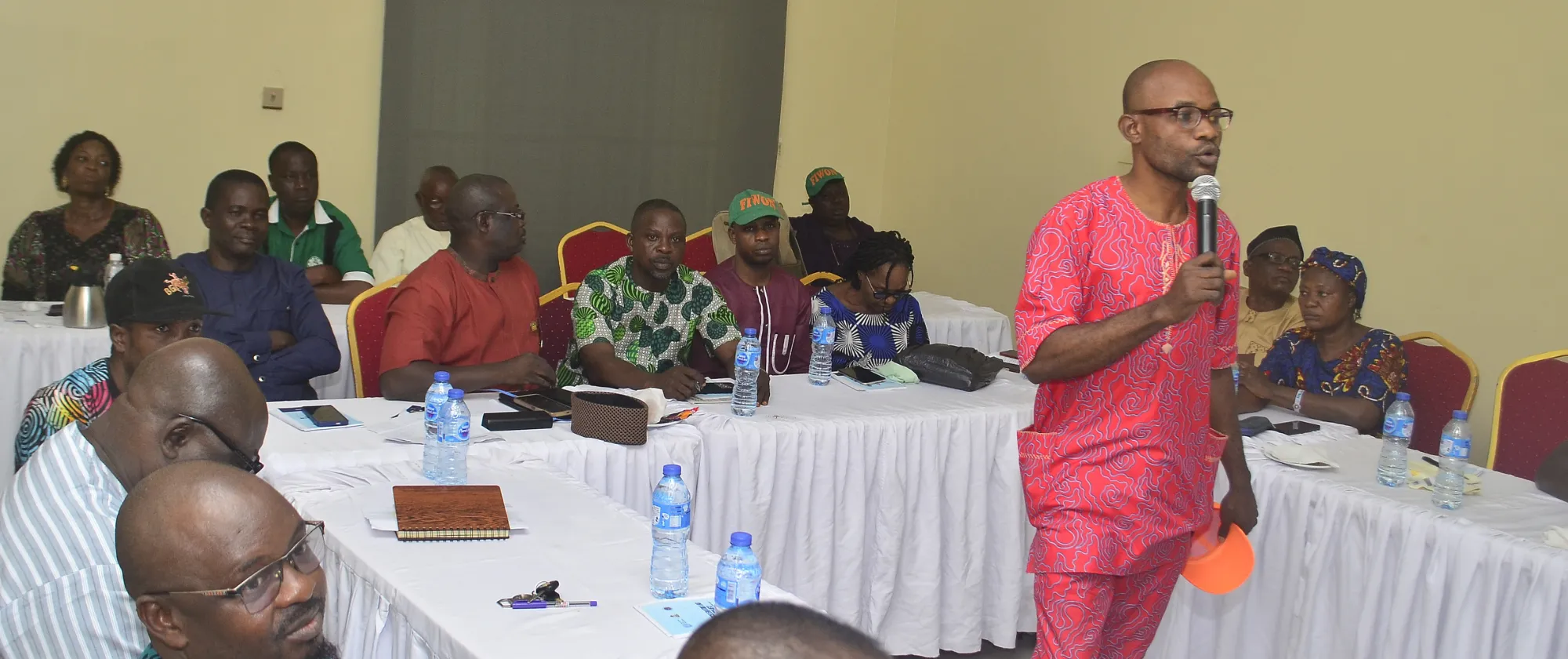
ABUJA (ILO NEWS) – In a significant step towards reinforcing social protection and combating child labour in Nigeria's cocoa sector, the Global Accelerator Lab (GALAB) project, funded by the U.S. Department of Labor (USDOL), recently held a series of impactful capacity-building workshops. These workshops focused on strengthening collaboration between trade unions and informal workers, particularly those in the cocoa sector, to improve access to health insurance and address child labour and forced labour issues.
The trainings brought together key stakeholders, including representatives from the Trade Union Congress, Nigeria Labour Congress, Federation of Informal Workers in Nigeria, Cocoa Farmers Association of Nigeria (CFAN), Ondo State Contributory Health Commission, State Operations Coordinating Unit, Federal Ministry of Labour and Employment, and community-based organizations. The workshops focused on strengthening collaboration among trade unions, informal workers' representatives, and social protection agencies, particularly the Ondo State Contributory Health Commission and State Operations Coordinating Office. Participants discussed strategies for trade unions to effectively collaborate with informal workers in the cocoa sector, addressing issues related to child labour and forced labour. Additionally, the workshops aimed to train state-level stakeholders on implementing solutions to mitigate barriers to accessing social protection programs, including health insurance, in collaboration with the National Health Insurance Authority (NHIA) and Ondo State Contributory Health Commission.
Background: The Role of Trade Unions in Protecting Vulnerable Workers in Nigeria's Informal Economy
Trade unions play a critical role in providing a voice and protection to informal economy workers and in building inclusive societies. Organizing workers in the informal economy allows workers’ organizations to expand their membership. Increasing union density by tapping into the vast pool of informal economy workers contributes to the collective voice of the workers’ movement. A 2018 ILO estimate shows that 93% of all employment in Nigeria is informal. The overwhelming majority of informal economy workers work in vulnerable working conditions, with little to no access to occupational safety and health or social protection and are dependent on a daily income to feed their families. The lack of social protection constitutes a significant source of vulnerability for workers in the informal economy. If they do not have access to healthcare and at least a basic level of income security, they are likely to be trapped in a vicious cycle of vulnerability, poverty, and social exclusion. This constitutes an enormous challenge not only to their individual welfare and enjoyment of human rights (in particular, the right to social security). The National Health Insurance Act, 2022, highlights the opportunity for informal sectors to make contributions at a rate that will be determined by the council.

Impact: Strengthened Collaboration Leads to Improved Access to Health Insurance
The capacity-building workshops have fostered stronger partnerships between trade unions and informal workers in the cocoa sector, leading to improved access to health insurance. These initiatives not only address the specific challenges faced by informal workers but also bolster the overall strength of the workers' movement.
The Director, ILO Country Office for Nigeria, Ghana, Sierra Leone, Liberia and Liaison Office for ECOWAS, Dr. Vanessa Phala emphasized the importance of these workshops: “Our focus on strengthening collaboration between trade unions and informal worker organizations is crucial in addressing the vulnerabilities faced by informal workers and ensuring their access to essential health services.” She was represented by Emmanuel Danjuma, National Programme Coordinator for the GALAB Project.
Adeola Adegoke, President of Cocoa Farmers Association of Nigeria and a participant from the workshops shared his perspective: “The methodology adopted by the project by making sure that the workers in the informal sector are in the social register to have access to health insurance is commendable and one of the best models. The sessions were incredibly insightful and have provided us with practical tools to advocate for better health insurance coverage for the cocoa workers. I appreciate the ILO, the Ondo State Government and Federal Ministry of Labour and Employment for the GALAB project, it is the best in re-engineering of our cocoa communities to social security.”
By fostering stronger partnerships between trade unions and informal workers, the GALAB project is paving the way for a more just and sustainable future for Nigeria's cocoa sector. The project's initiatives have already demonstrated a significant impact on improving working conditions, protecting the rights of vulnerable workers, and promoting social justice.
Related content
Child labour and forced labour
Global Accelerator Lab (GALAB)
Relevant projects
Child labour and forced labour
Global Accelerator Lab (GALAB)

Towards the first generation free of child labour
Regional Initiative Latin America and the Caribbean Free of Child Labour