


Skills for migrant workers
22 April 2024
The relationship between migration and skills development proves to be a complex one.
Migration can be a means to respond timely and effectively to labour supply and demand needs, to stimulate innovation and development in countries of origin and destination, as well as to transfer or up-date skills. Migrants, at all skills levels, broaden the pool of available skills, thereby improving the international flow of talent and economy wide skills matching. Nevertheless, migrant workers face various challenges in accessing quality training and decent jobs, such as under-utilization of skills, lack of training and employment opportunities, lack of information and exploitation of low-skilled workers. To reap the benefits of migration, countries thus need to ensure that migration is demand-oriented, that migrant workers’ rights are protected, and must enable migrants to integrate into the labour market and society through access to education and training, as well as to employment opportunities.
Important avenues of intervention comprise: designing and implementing sound labour market information systems, including accurate labour market needs assessment and skills anticipation that inform migration policies; increasing migrants’ access to education and training; establishing systems for the recognition of formally certified qualifications as well as informally acquired skills, ensuring coherence between skills, employment and migration policies; and fostering skills partnerships between countries of origin and destination.
Migrants are a heterogeneous population. Besides differing in age, gender, cultural background, education and skill level, the challenges that migrants face vary by migration corridors. To address these challenges, the ILO’s complementary research and technical assistance on Skills and Migration focusses on the most promising policy options to improve the employment outlook for migrants:
- Skills needs anticipation
- Migrants’ access to skills and lifelong learning and engagement of social partners
- Recognition of skills, qualifications and prior learning
- Skills partnerships on migration
- International labour standards on labour migration
Key Resources
Migrant Workers' Skills Portability in Africa at Regional Economic Community and Continental Level
Skills for Employment Policy brief
Skills for Migration and Employment
Information Note
Global Skills Partnership on Migration
Skills Partnerships on migration in West Africa - Summary of ILO role and activities
Employment Working Group
Skills harmonization and partnerships
Workshop report
The Use of Skills Logbooks, Skills Passports, and other Mechanisms to Improve the Portability of Skills and Qualifications
Area of work
Recognition of prior learning
Seven country cases review
Skills needs intelligence to inform migration policy and governance
Projects
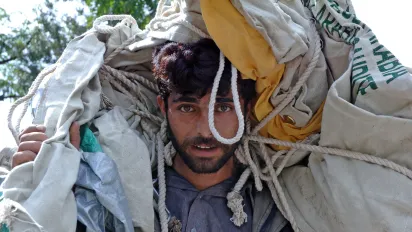
Project
Governance of Labour Migration in South and South-East Asia (GOALS)
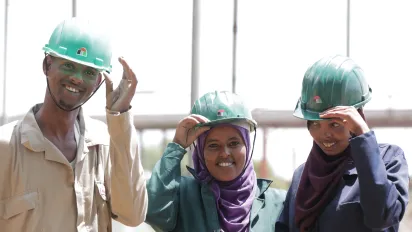
Programme
Partnership for improving prospects for forcibly displaced persons and host communities (PROSPECTS)
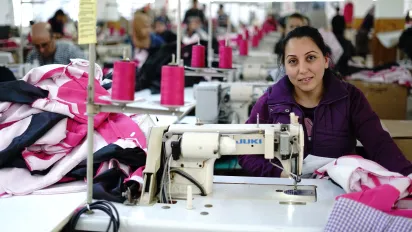
Project
Formalizing access to the legal labour market through Recognition of Prior Learning (RPL) and certification for Syrians and Jordanians...
Impact stories

Video
PROSPECTS - Trainee William Looro

Our impact, their voices
Stemming the brain drain: Improving skills for migrants and refugees