

Skills for rural employment
18 February 2019
Content also available in:
français
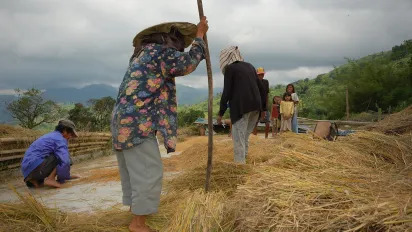
Three quarters of the world’s poor reside in rural areas where decent work deficits are particularly severe. This is further exacerbated by the lack of access to social protection, low incomes, absence of labour law coverage and a high degree of informality. Additional barriers include weak labour market institutions, inadequate infrastructure, fewer educational opportunities and underinvestment. Formal wage employment is scarce and self-employment, microenterprises, and informal work dominate.
Skills development and training is a key factor in tackling the challenges of rural poverty. By promoting employability and enhancing income earning opportunities, skills training can lift women and men out of poverty and promote sustainable rural livelihood. The ILO’s Training for Rural Economic Empowerment (TREE) Programme provides an example of a proven approach that assists those working in poor rural communities to build the relevant skills and abilities for employment and income generation.
Skills development and training is a key factor in tackling the challenges of rural poverty. By promoting employability and enhancing income earning opportunities, skills training can lift women and men out of poverty and promote sustainable rural livelihood. The ILO’s Training for Rural Economic Empowerment (TREE) Programme provides an example of a proven approach that assists those working in poor rural communities to build the relevant skills and abilities for employment and income generation.
Related content
TREEpedia: Training for Rural Economic Empowerment

Digital Tool
TREEpedia: Training for Rural Economic Empowerment
Skills for Youth Employment and Rural Development in Western and Southern Africa

Skills for Youth Employment and Rural Development in Western and Southern Africa
Skills for Employment and Productivity in Low-Income Countries
Skills for Employment and Productivity in Low-Income Countries
Generic Manual on Training for Rural Economic Empowerment (TREE)
Rural Skills Training
Generic Manual on Training for Rural Economic Empowerment (TREE)
Information Note: Training for Rural Economic Empowerment (TREE)
Skills for Employment Policy Brief
Information Note: Training for Rural Economic Empowerment (TREE)
Training for Rural Economic Empowerment (TREE)
Training for Rural Economic Empowerment (TREE)