

Sectoral focus on tourism and fish processing drives efforts to foster responsible business practices for decent work in Cabo Verde
Cabo Verde has advanced responsible business conduct by appointing tripartite national focal points—bringing together government, employers, workers, and the investment promotion agency—to promote and apply the ILO MNE Declaration. The focal points developed a national action plan and led sectoral initiatives in tourism and fish processing, establishing dialogue platforms and roadmaps to support decent work and sustainable growth. The country also strengthened regional cooperation among Portuguese-speaking countries and is actively aiming at building synergies between the promotion of the MNE Declaration and the Business and Human Rights agenda.
8 January 2026
Cabo Verde has taken a significant step in promoting responsible business conduct by officially designating tripartite focal points to promote the ILO Declaration of Principles concerning Multinational Enterprises and Social Policy (MNE Declaration) and the application of its principles.
The appointed focal points bring together diverse representatives, ensuring an inclusive approach to advancing the principles of the MNE Declaration. They include:
- The Ministry of Labour, acting as the central coordinating body and linking government policy with on-the-ground efforts by focal points to promote and advance responsible business conduct;
- Employers' Representatives, from the Sotavento and Barlavento Chambers of Commerce, working together under the umbrella of the Superior Council of Chambers;
- Workers' Representatives, from the Cabo Verdean Confederation of Free Trade Unions (CCSL) and the National Union of Workers of Cabo Verde – Trade Union Centre (UNTC-CS);
- Cabo Verde Trade Invest, the national foreign investment promotion agency, tasked with promoting responsible business conduct by integrating the MNE Declaration principles into investment promotion strategies.
A Ministerial order issued in 2024, formalized the roles of key stakeholders following a series of capacity building activities.
Building national capacity of the government, employers and workers to use the MNE Declaration and promote the application of its principles
The Trade for Decent Work project financed by the European Union and Finland contributed to build a common understanding of the MNE Declaration and how it can be used. In March 2022 an awareness-raising workshop on the MNE Declaration aimed to enhance the capacity of the government, employers' and workers' organizations and social dialogue institutions on mobilizing the business contribution to decent work. The participants developed a roadmap in which they expressed interest in promoting the MNE Declaration in Cabo Verde and in appointing national focal points for the promotion of the MNE Declaration. The hybrid format of the event allowed to connect participants attending a national workshop in Cabo Verde and in Mozambique (also benefiting from the same project) as well as observers from other African Portuguese-speaking countries. As part of a home-host country dialogue and experience-sharing, the national focal point for the promotion of the MNE Declaration for Portugal addressed the participants, which indicated their interest in continuing the dialogue and experience-sharing among Portuguese-speaking countries with ILO support.
Sharing experience among members of the Community of Portuguese-Speaking Countries (CPLP)
As a result, the ILO organized a transnational dialogue in 2024 with support from the project. Tripartite delegates from the 9 Portuguese-Speaking Countries attended the event organized in collaboration with the CPLP, the Portuguese Institute of Employment and Professional Training (IEFP) and the government of Portugal. The event allowed the participants to share their experience in using the MNE Declaration as a framework to drive inclusive economic growth and decent work for all. Out of the 9 CPLP Member States 4 have appointed national focal points for the promotion of the MNE Declaration (Brazil, Cabo Verde, Mozambique and Portugal).
For a sustainable tourism sector and the realization of decent work in the fish-processing industry
The ILO continued providing technical assistance to Cabo Verde in the context of Trade for Decent Work project and support the country’s efforts to put in place national and sectoral approaches to promote the MNE Declaration. The national focal points have developed a comprehensive national action plan to coordinate efforts effectively and promote the principles of the MNE Declaration at the national level. They focused on two sectors of critical importance for the country to encourage the uptake of its principles.
Using the MNE Declaration as an umbrella for collective action, a dialogue took place in October 2022 to discuss opportunities and challenges for the realization of decent work in the tourism sector. The dialogue event was organized on the Island of Sal well known for its white sandy beaches and for being a popular destination for kite surfers. The dialogue was officially opened by the Minister of Tourism and attended by 37 participants including officials from the Ministry of Labour, representatives of employers’ and workers’ organizations, enterprises operating in the sector, and the European Union.
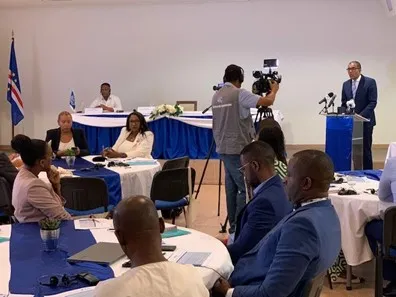
The dialogue resulted in the decision to establish a Tourism Sector Platform to discuss the implementation of key identified follow-up actions to promote the MNE Declaration, and the adoption of a consolidated roadmap for the sector in December 2023. The national focal points for the promotion of MNE Declaration are active members of the Tourism Sector Platform and are joined by key stakeholders from the sector. In follow-up consultations held in 2024, members of the Tourism Sector Platform agreed on a governance mechanism for the roadmap, appointing the Cape Verde Chamber of Tourism as the lead body to ensure its effective implementation.
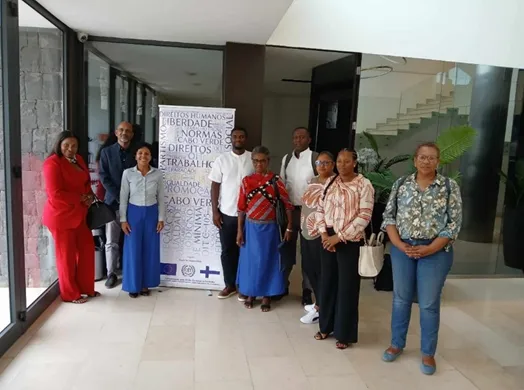
Industrial fishery is of paramount importance for the country, not only because of the number of Cape Verdeans involved directly in the production, marketing and processing of fishing products but mainly for its important contribution in reducing the balance of payments, through exports of derivate goods. Major fish processing and canning industries are based in São Vicente and benefit from foreign capital. To support national efforts and stimulate dialogue on the role of multinational enterprises in promoting decent work in the fish-processing sector, a sensitization session on the MNE Declaration was held in September 2022 in São Vicente. The activity culminated in the creation of an indicative roadmap to guide fish-processing companies towards implementing decent work practices. The roadmap has been finalized and is currently undergoing validation through ongoing consultations with ILO tripartite constituents and sectoral stakeholders, while a dedicated platform is being established to further promote decent work within the sector.
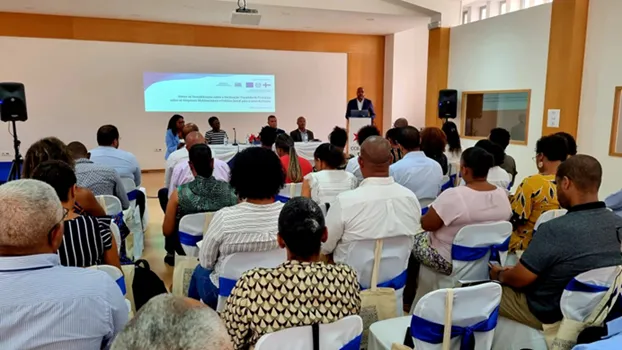
In October 2025, a national dialogue on responsible business conduct was organized under the Trade for Decent Work project. The event brought together tripartite constituents and key stakeholders to strengthen understanding of the MNE Declaration and identify priority actions to advance sustainable and responsible business practices in Cabo Verde. These priorities directly informed the update of the national focal points’ action plan, ensuring its continued relevance and alignment with national objectives. The national focal points are also working to integrate decent work clauses related to the MNE Declaration into foreign investment contracts to foster an enabling environment that supports the effective implementation of the MNE Declaration, ultimately creating jobs, improving workers' rights and welfare by encouraging responsible business practices in Cabo Verde.
Building synergies between decent work and the Business and Human Rights Agenda
Efforts to strengthen synergies between Decent Work and the Business and Human Rights Agenda are advancing in Cabo Verde, with active engagement from national stakeholders. In the context of the development of National Action Plans (NAPs) on Business and Human Rights, a working meeting held in 2024 between the National Human Rights Commission (CNDHC), the ILO and the national focal points explored the linkages between international labour standards, the UN Guiding Principles on Business and Human Rights (UNGPs), and the ILO MNE Declaration. Building on this collaboration, a workshop on the Labour Dimension of Business-Related Human Rights Policies and National Action Plans was held in October 2025 with support from the Trade for Decent Work project. The workshop brought together key national stakeholders to deepen their understanding of the ILO’s approach to responsible business conduct, highlight the complementarities between the MNE Declaration and the UNGPs, promote the integration of labour rights into business-related human rights policies and NAPs and identify follow-up actions and monitoring mechanisms to support a coherent and coordinated promotion of responsible business conduct in Cabo Verde.