

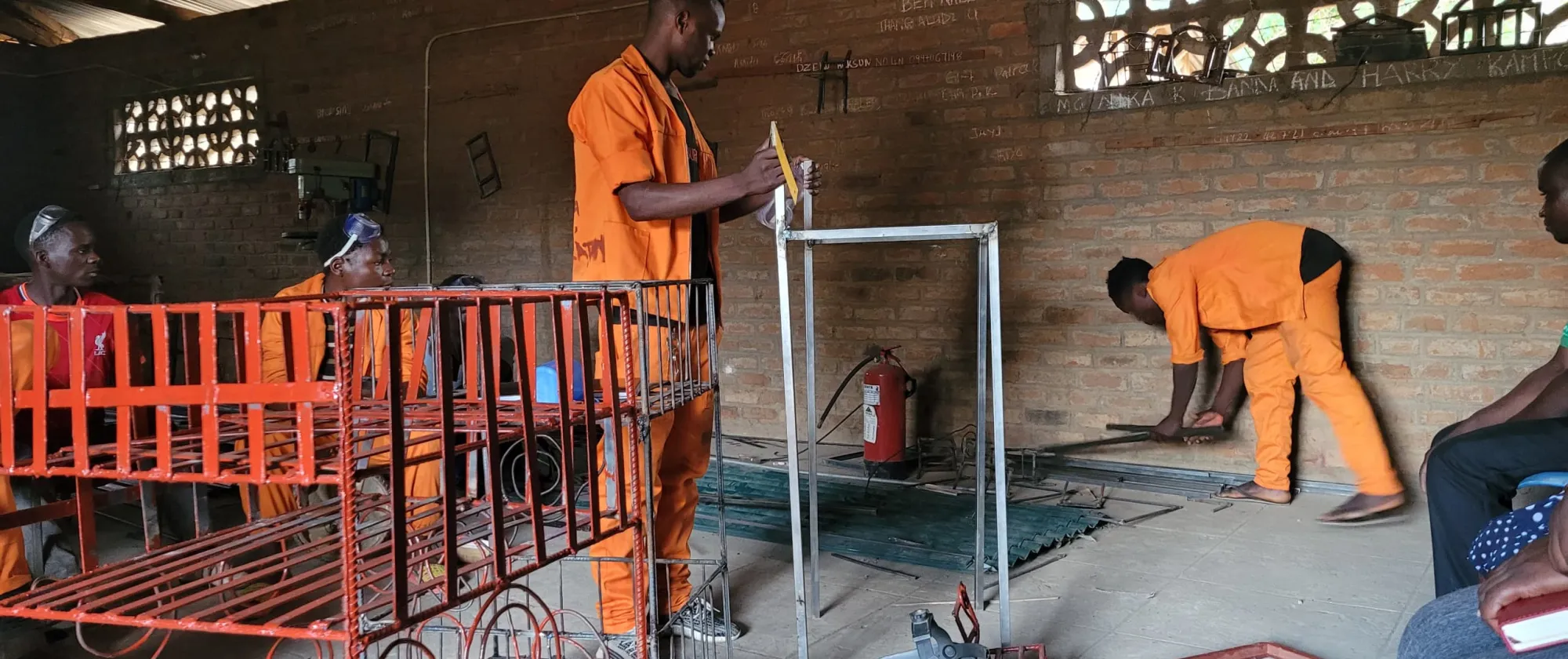
Promoting vocational skills development in Malawi’s informal tea sector
One of the most crucial ways to combat child labour is by extending access to quality education and providing children with the skills and knowledge needed to access decent work opportunities and end the cycle of exploitation and poverty (ILO, 2006). Specifically, the provision of vocational skills development could help promote income generating activities among youth, help them gain the necessary income at the household level, and prevent resorting to child labour.
To this end, ACCEL Africa provided vocational skills development opportunities to vulnerable children aged between 14 and 17 years old in Malawi’s tea supply chain, with a focus on smallholder tea-growing families in the informal sector. The vocational skills development intervention, which was done under the ACCEL Project, involved training the youth in five trades, namely: (1) welding and fabrication; (2) tailoring and fashion design; (3) carpentry and joinery; (4) motorcycle mechanics; and (5) bricklaying.