

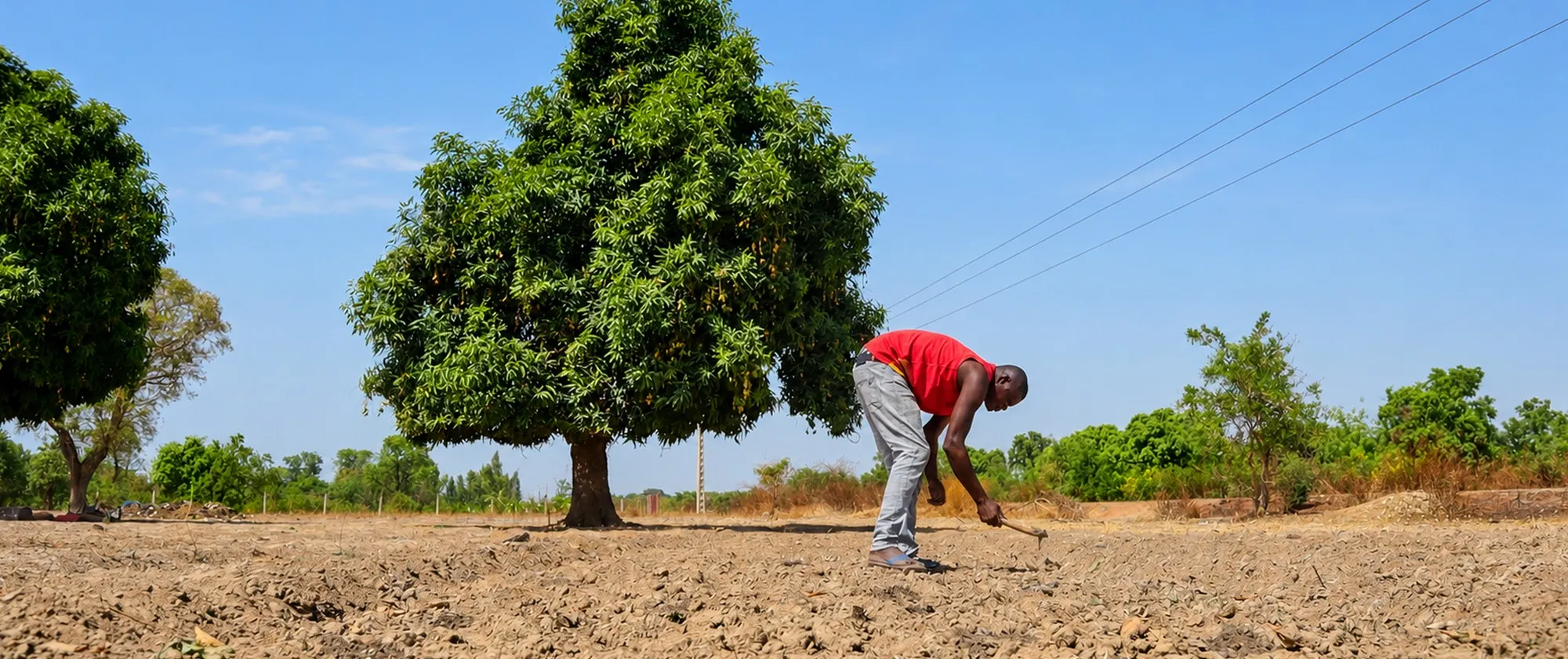
Video
An Ka Baara: Solutions that are improving producers’ incomes in Mali
From agricultural advice available by telephone to new market opportunities, this video shows how the ILO’s An ka Baara (‘our work’) project is helping producers in Mali to boost their incomes and create sustainable opportunities.
8 October 2026
In Mali, the mango and horticulture sectors have significant potential to create jobs and improve incomes, particularly for young people and women. But for many producers, access to quality inputs, knowledge, services and markets remains a challenge.
Implemented by the International Labour Organization (ILO) with support from Italian Cooperation, An Ka Baara aims to turn this potential into concrete opportunities. By working with businesses, producers and other local actors, the project is helping improve available services, strengthen economic activity and create more opportunities for jobs and income, particularly for young people.
One of these solutions is a phone-based agricultural advisory service that gives farmers free access to nearly 200 audio messages to help them improve their practices and better manage their activities. More than 380,000 people have used the service, generating more than 3 million listens. Project monitoring data also estimate that more than 28,000 users have increased their incomes by at least 25 per cent.
But behind the numbers are people. In this video, Malian producers explain how access to better seeds, practical advice and new services has changed the way they work, their production and their prospects for the future.
By bringing together local actors and the private sector, An Ka Baara is also working to develop commercially viable solutions that can continue creating opportunities for young people, women and communities beyond the project’s direct support.
Additional details
References
- DOI: N/A