


Supply chains
Workers secure jobs in aquaculture, help double shrimp production
Workers trained, certified and hired in aquaculture under a new joint government-industry initiative with the ILO and the Government of Japan help increase shrimp production and improve supply chains towards decent work and sustainable aquaculture in the Philippines.
16 September 2025
GENERAL SANTOS, Philippines (ILO News) - Workers have transitioned into longer-term employment in aquaculture, contributing to a significant boost in shrimp production.
Under a new joint government-industry initiative of the Department of Labor and Employment (DOLE) with the International Labour Organization (ILO), 58 individuals including 38 women, successfully completed the 90-day paid skills training and employment programme with social protection and certification.
As a result of their direct contribution to doubling shrimp production from 50 to 100 tons, 24 of these 58 trainees will be hired as regular employees by the ECA Cold Store.
“It did not just help me and my family, we also gained valuable knowledge and experience,” said Mary Joy Bustamante. “As a fisheries student, this is a big help for me. I now have both background knowledge and hands-on experience.”
She was one of the 100 job applicants hired on the spot under the Tulong Panghanapbuhay para sa Ating Disadvantaged Workers (TUPAD) in May 2025. These workers completed a 90-day training and employability programme, giving them paid employment and certified skills for a career in aquaculture.
The programme, implemented in partnership with the Technical Education and Skills Development Authority (TESDA) and the newly formed Industry Tripartite Council (ITC) for Aquaculture in Region 12, aims to improve the lives and working conditions of vulnerable workers while also strengthening the region’s aquaculture sector.
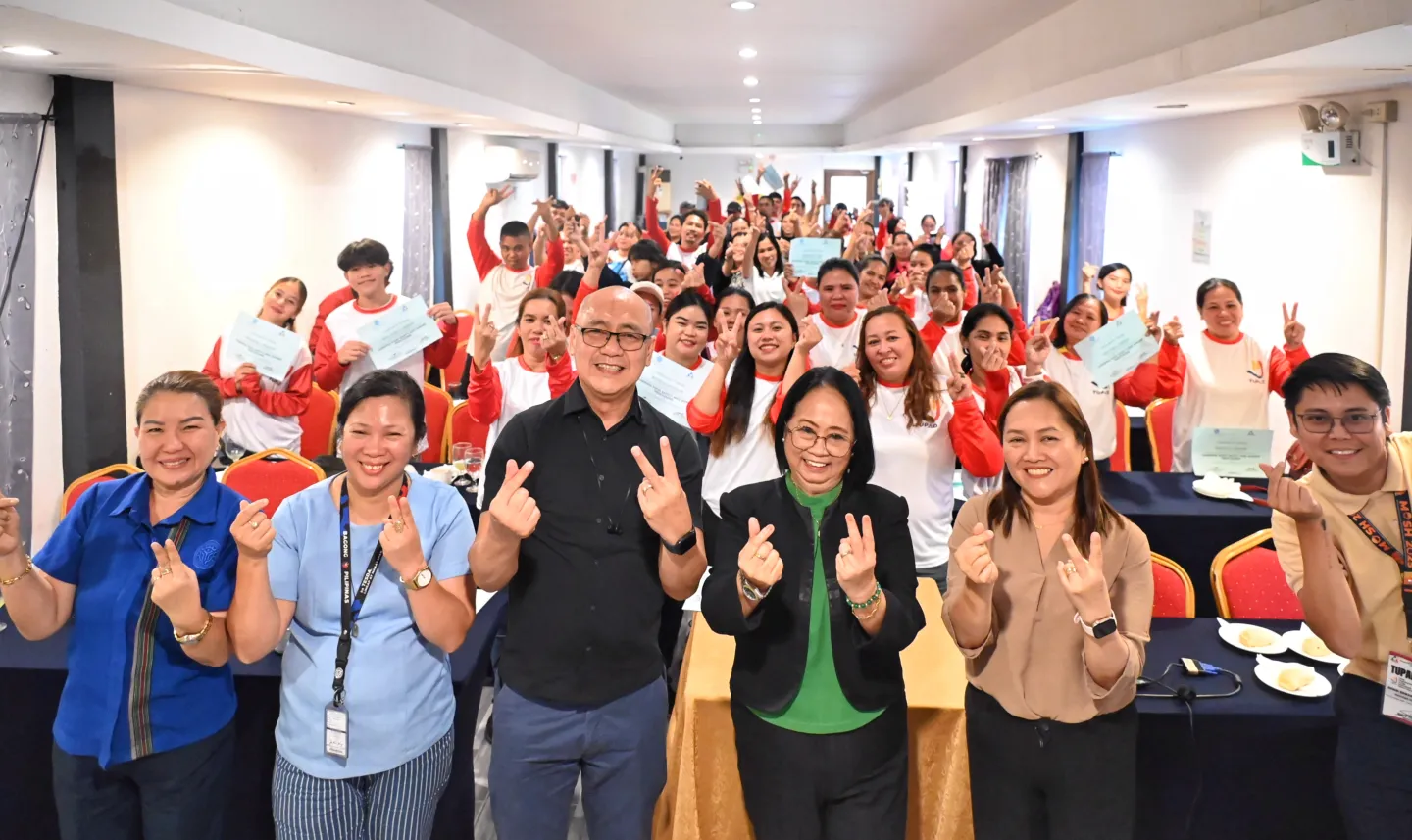
At a culmination ceremony held on 9 September 2025, in General Santos City, partners from government, industry, and labour highlighted the impact of the programme and the promise it holds for sustainable aquaculture.
Cecil Loquias, Vice President of ECA Cold Store and Vice-Chairperson for Management of the Aquaculture ITC, said TUPAD graduates have already contributed significantly to operations.
“We were able to double our shrimp production from 50 to 100 tons with the help pf the TUPAD trainees,” she noted. “That success gave us the confidence to hire 24 of them as regular employees.”
DOLE Region 12 Director Joel Gonzales emphasized the role of the ITC in promoting inclusive growth while tackling employment challenges.
“With a shared vision and coordinated action, the ITC is committed to strengthening and elevating the aquaculture industry, while also addressing and eliminating concerns such as child labour,” Gonzales said.
He also acknowledged the support of the ILO’s Resilient, Inclusive and Sustainable Supply Chains (RISSC) Project, which helped make the initiative possible.
Established with support from the ILO-Japan funded RISSC Project, the ITC now serves as a key platform for collaboration among government, industry, and workers to upgrade the aquaculture sector.
ILO Philippines Director Khalid Hassan recognized the council’s swift progress in promoting decent work and responsible business conduct.
“The ITC is rapidly turning its vision into concrete results, enhancing competitiveness while advancing decent work,” Hassan said.
As part of the ceremony, participating TUPAD workers received certificates under TESDA’s Enterprise-Based Training Programme, recognizing their new skills in areas such as food safety, shrimp processing, and hatch-to-harvest shrimp farming.
TESDA Region 12 Supervising Specialist Joylen Labanon confirmed that graduates have been added to TESDA’s official database and assigned unique learner identifications, facilitating access to future training and scholarship opportunities.
This milestone underscores the potential of tripartite collaboration—government, employers, and workers—to drive industry upgrading focused on productivity, sustainability, and quality employment.
The initiative is backed by leading aquaculture enterprises, including DG Shrimp Farm, ECA Cold Store Plus Inc., Damalerio Farms Corporation, and Malalag Bay Aquaculture & Processing Corp. All partners have aligned under the Aquaculture ITC’s 10-year strategic plan, developed with assistance from the ILO RISSC Project.
With Region 12 emerging as a model for sustainable aquaculture, stakeholders say the initiative is unlocking growth opportunities both locally and internationally.
Relevant projects

Tripartism and social dialogue
Resilient, Inclusive and Sustainable Supply Chains (RISSC) in the Philippines

ILO-Japan Partnership
Automotive Supply Chain Programme in Thailand

Tripartism and social dialogue
Resilient, Inclusive and Sustainable Supply Chains Asia (RISSC) in Thailand

Tripartism and social dialogue
Resilient, Inclusive and Sustainable Supply Chains Asia (RISSC)