

Forced labour
What is it like to work as a food delivery person in Lima?
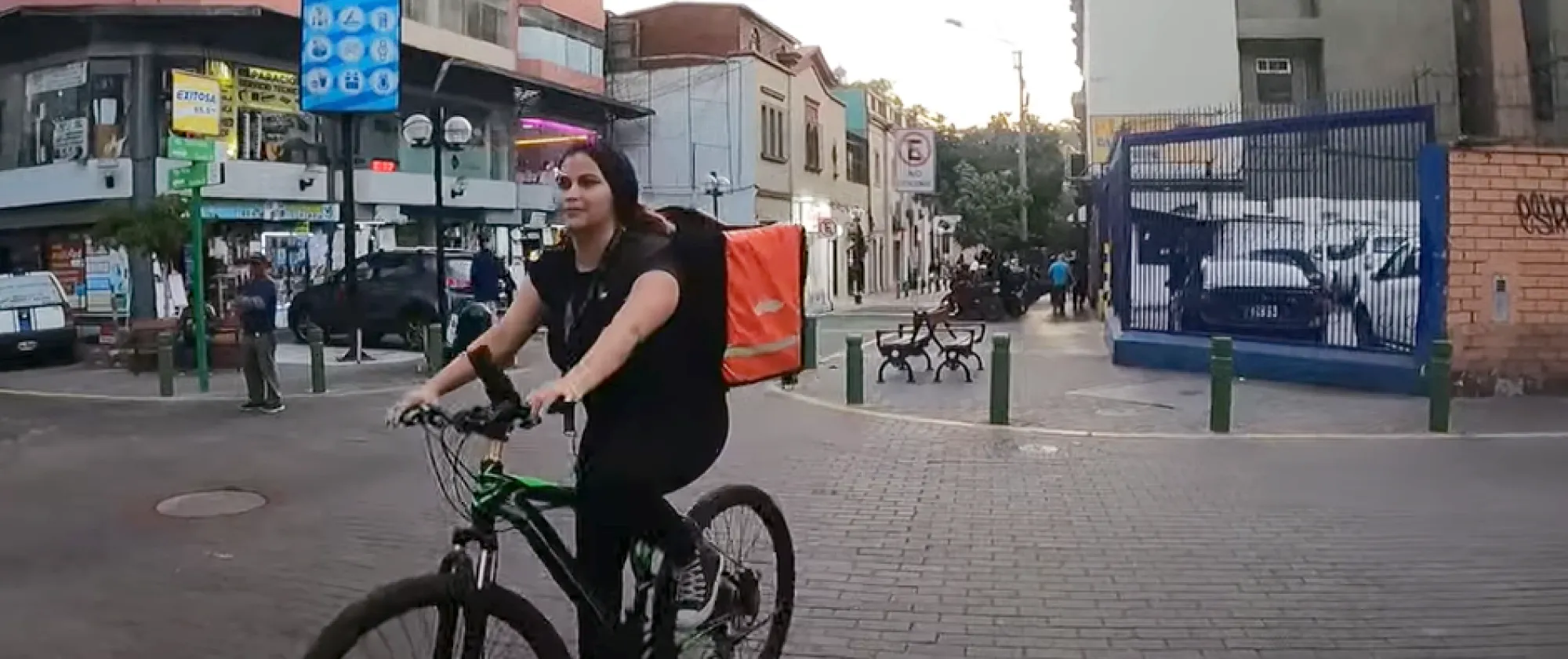
This report exposes the reality faced by food delivery workers like Karoline Gómez and Harvey Buitriago, who are not only exposed to sexual harassment and xenophobia but also have to survive in informal conditions, with excessively low wages, no social protection, no health insurance, and inadequate safety and health conditions at work.
17 June 2024
This report was produced by Pierina Sora as part of the 2nd edition of the practical workshop 'Reporting on Forced Labour and Other Forms of Slavery', organized by the ILO through the BRIDGE Project in Peru. The report was published on Cápsula Migrante platform. The ILO was not involved in the creation, development, fact-checking, or evaluation of this journalistic piece. The opinions, conclusions, and statements expressed are the sole responsibility of the authors and do not necessarily reflect the views, positions, or policies of the ILO.
From Cápsula Migrante we wanted to learn more about the work of food delivery people in Peru, as it is a precarious job. We interviewed three migrant delivery people to learn about their experiences first-hand. We also spoke with Paúl Veliz, representative of the National Union of Digital Platform Workers of Peru.