

West Africa strengthens migration governance through landmark regional training on data harmonisation
Regional actors unite in Cabo Verde to enhance migration data systems, empowering evidence-based policies, protecting migrant workers, and advancing free movement across ECOWAS Member States and Mauritania.
8 May 2026
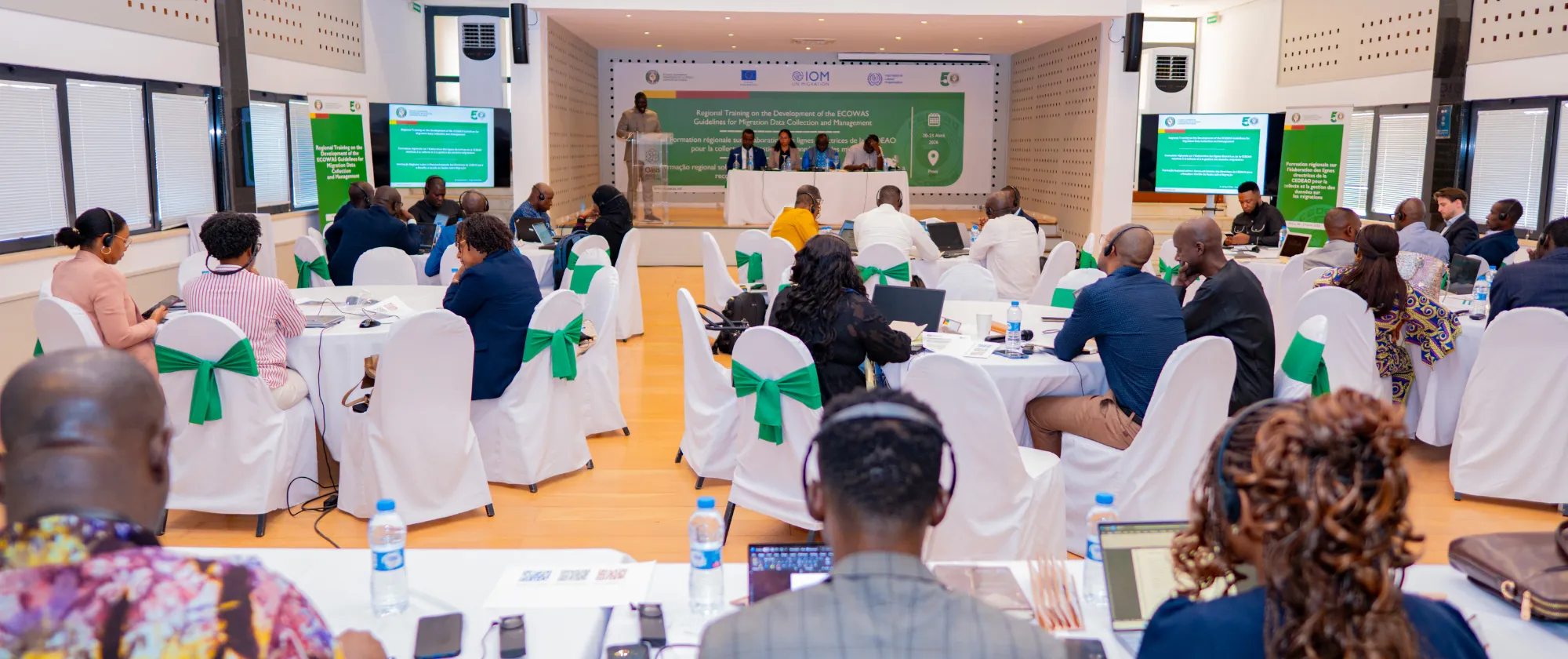
Praia, Cabo Verde - A four-day regional training workshop in Praia has marked a major step forward in strengthening migration governance across West Africa, equipping ECOWAS Member States and Mauritania with enhanced tools and capacity to collect, manage and harmonise migration data.
Organised by the ECOWAS Commission in collaboration with the International Labour Organization (ILO), the International Organization for Migration (IOM), with support from the EU-funded FMM (West Africa) II Project, the training brought together representatives from national statistical offices, ministries of labour and migration, national observatories, and regional institutions.
With 90 per cent of migration in West Africa occurring within the region, driven by labour mobility, participants underscored the urgent need for reliable, harmonised, and policy-responsive data systems to support evidence-based decision-making and effective migration governance.
Over the course of the training, participants deepened their understanding of labour migration data sources and international standards, strengthened their ability to integrate data from surveys and administrative systems, and worked collectively to harmonise indicators across countries. They also developed country-specific recommendations and agreed on a core set of regional migration indicators to guide future data collection efforts. The initiative directly contributes to the revision and modernisation of the ECOWAS Regional Guidelines on Migration Data Collection and Management—an essential framework for improving the comparability, quality, and use of migration statistics across the region.
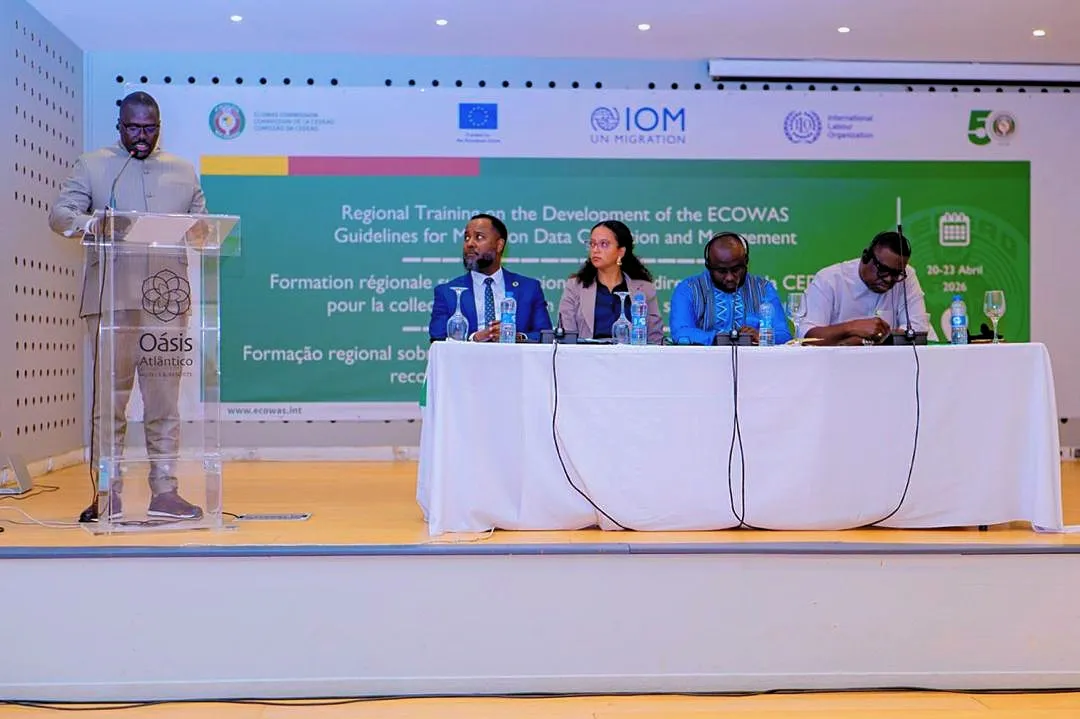
In his opening remarks, Mr. Guité Diop, ILO FMM II Project Manager representing the ILO CO Director Mr Dengo, Juvenal Arcanjo for Portuguese-speaking African countries (PALOP)—Angola, Cabo Verde, Guinea-Bissau, Mozambique, and São Tomé and Príncipe, emphasised that “reliable and harmonised labour migration data is central to promoting decent work, improving policy coherence, and ensuring fair recruitment and equal treatment for migrant workers.” ECOWAS leadership highlighted that migration was a cornerstone of regional integration and economic development, stressing that policies must be grounded in accurate and timely data to effectively respond to evolving labour market and mobility dynamics.
Partners, including IOM, reaffirmed their commitment to supporting Member States in building robust migration data ecosystems, strengthening institutional coordination, and enhancing regional comparability of statistics. Participants—drawn from 12 ECOWAS Member States and Mauritania—benefited from hands-on technical training, peer learning, and exposure to innovative practices such as Cabo Verde’s Migration Observatory, which demonstrated how integrated data systems can support policymaking and governance.
The training enhanced the capacity of the participant to produce and analyse high-quality migration data, integrate multiple data sources, including surveys, administrative and emerging datasets, strengthen national coordination mechanisms, and contribute to regional harmonisation efforts and shared policy frameworks
Participants highlighted the practical value of the training: “This workshop has strengthened our ability to align national data systems with regional standards. We now have clearer tools to produce data that truly informs policy,” said a statistician from Nigeria.
“Seeing Cabo Verde’s migration observatory in action showed us what is possible when institutions work together. It has inspired us to improve coordination at home,” noted both participants from Sierra Leone and Senegal.
The training concluded with concrete recommendations for Member States, ECOWAS, and partners, including strengthening data-sharing mechanisms, improving integration of multiple data sources, and institutionalising a core set of migration indicators.
A technical taskforce will now take forward the consolidation and finalisation of the revised ECOWAS Guidelines, ensuring that they reflect current migration trends and support the region’s shared objective of promoting decent work and inclusive development.
Relevant projects

Support to Free Movement of persons and Migration in West Africa, Phase II (FMM West Africa II)