

Welders Improve Their Skills for Producing Equipment for Shea Butter Extraction
10 September 2024
The International Labour Organization (ILO) assisted the Welders and Fabricators Association in Tamale to build the capacity of their members in techniques and skills needed to produce equipment that meet the standards of the shea industry.
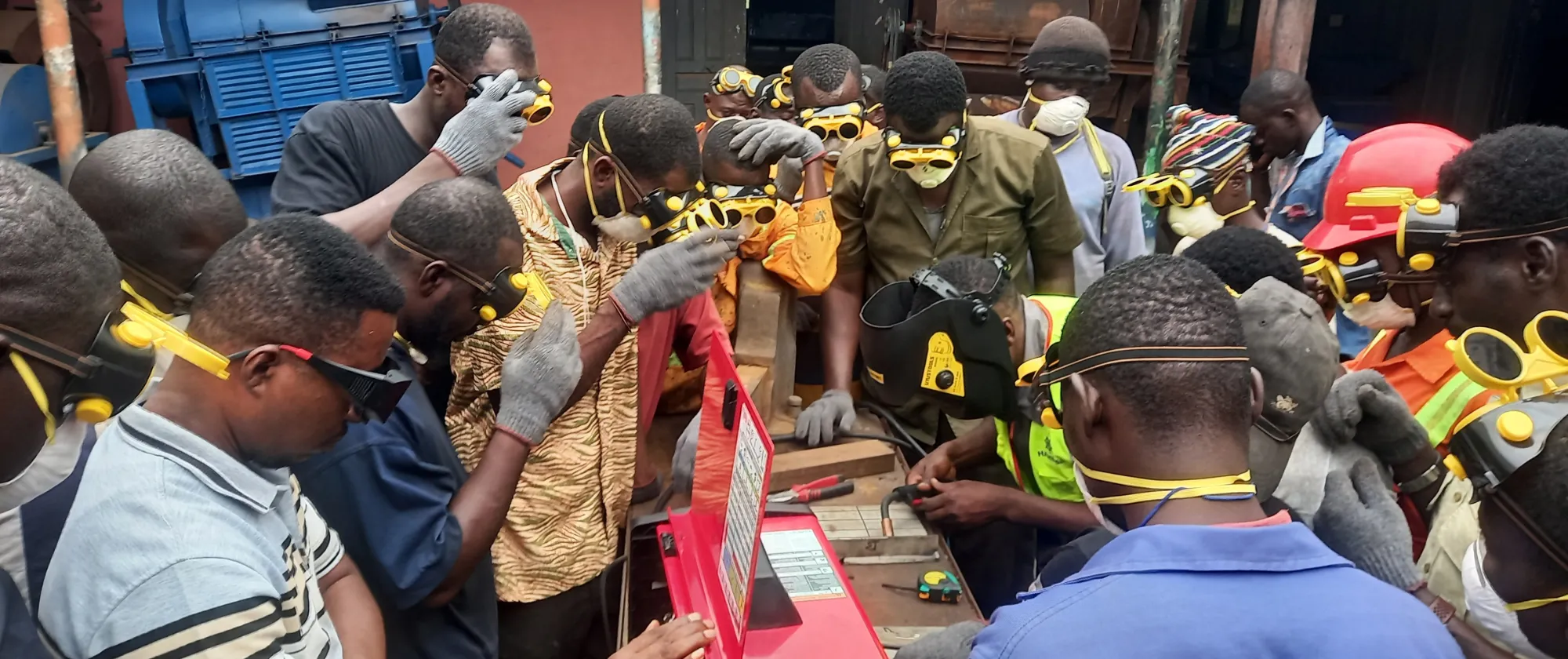
The ILO has improved the capacities of thirty (30) welders and fabricators who are into the production of equipment for shea butter extraction. This was the outcome of a 10-day training programme in Tamale from 5-15 August 2024 at the Gratis Foundation, a technology development centre. Mc Hammah Engineering Ltd and the Gratis Foundation designed and delivered the programme.
The beneficiaries were artisanal welders who fabricate and repair equipment for agro processing including crushers, roasters, millers, and kneaders. Welders are important actors in the shea value chain and the quality of equipment fabricated has direct effect on shea butter produced. Small shea processing businesses depend heavily on them for machines to process shea into butter. However, there is a lot of shortfalls in their services and finished products. The ILO therefore designed the training programme to address these shortfalls and improve their performance in the shea value chain.

The trainers took the welders through diverse topics aimed at achieving the goals of the programme. These topics included: Marking and Setting Out Techniques, Reading and Interpretation of Engineering Drawings, Techniques for MIG and Stick Welding, and Safety at the Workshop. Traditionally, the artisans used the Stick Welding approach in their operations. This training programme however, introduced the Metal Inert Gas (MIG) approach to the participants. In addition, they also received training on how to improve the quality of welding and finishing of the equipment. The lead facilitator of the programme was Ing. Dr. Ebenezer Kakrah Hammah. He led his team and coordinated their activities to conduct the training. A key component of the training was practical demonstration sessions that took the welders through firsthand exercises to practice the topics learnt in class.
At the closing ceremony of the programme, Mr. Kaleem Harunah, the Regional Manager of the Gratis Foundation commended the ILO and its sponsors for supporting the programme. He advised the welders not see one another as competitors but collaborators. He encouraged them to take the lessons on ‘estimation of cost’ and ‘finishing of equipment’ seriously and practice them effectively. These, he emphasized, would enhance the growth of their businesses.
Speaking on behalf of the ILO Country Director – Abuja Country Office, Ms. Vanessa Phala, the National Project Officer of the ILO Productivity Ecosystems for Decent Work Project, Mr. Onoma Asiedu, congratulated the welders for their active participation and high interest in the programme. He encouraged them to put the lessons into practice and work assiduously to improve the quality of the equipment produced and their working conditions.
On their part, the welders expressed their happiness and excitement about the programme and thanked the organizers for the opportunity for them to learn new things. Mr. Alhaji Iddrisu Abukari, one of the participants and the President of the Welders and Fabricators Association of Tamale said, ‘’this training has shown us the way to improve our welding techniques and to have properly finished products. My members are happy for this support, and we promise to put these ideas into practice.’’
Another participant Mr. Yakubu Baba remarked ‘’this training has introduced me to many techniques that will enhance my competencies to produce for my customers. I am now more confident in doing some operations in welding than I used to do.’’
The welding capacity building programme is one the interventions of the ILO Productivity Ecosystems for Decent Work project. The governments of Switzerland and Norway provided funds for the project and seek to promote productivity growth for decent work, combining different approaches that strengthen productivity drivers across policy, sector, and enterprise levels.