

Labour migration
Voices at the table: CARICOM and ILO engage social partners in blueprint for regional labour migration
The ILO–CARICOM Bi-partite consultation of Caribbean workers’ and employers’ organizations produced actionable recommendations and affirmed the importance of tripartite dialogue in advancing fair, rights-based labour migration across the region.
18 July 2025
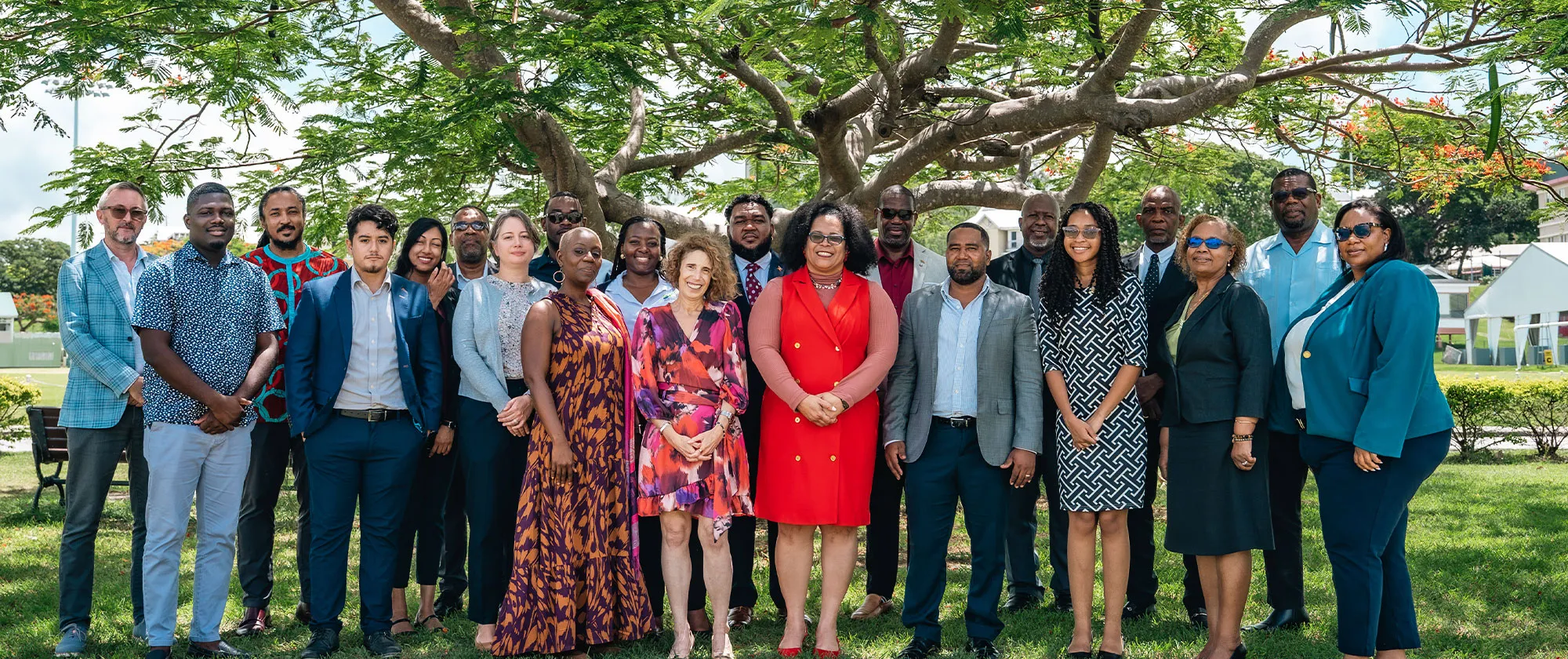
BRIDGETOWN, Barbados (ILO News) - Representatives from workers’ and employers’ organizations across the Caribbean gathered in Barbados for the ILO–CARICOM Bi-partite Consultation of Caribbean workers’ and employers’ organizations, held on 14–15 July 2025, to shape the future of labour migration governance in the region. Hosted at The University of the West Indies, Cave Hill Campus, the consultation evidenced the whole-of-society approach that the regional integration movement is taking in crafting a CARICOM Regional Labour Migration Policy Framework and Action Programme (RLMPF-AP), expected to be finalized in 2026.
Held under the auspices of the International Labour Organization (ILO) and the Caribbean Community (CARICOM) Secretariat, the two-day consultation facilitated structured, high-level dialogue on regional labour mobility, labour market characteristics and needs, and policy coherence. The development of a regional labour migration policy framework is closely tied to the 2019 CARICOM Heads of Government mandate to develop a regional migration policy. It reflects the joint commitment of the ILO and CARICOM to decent work, fair recruitment, and sustainable regional integration.
The consultation was also an important opportunity for social partners in the region to review and validate findings from a CARICOM Labour Market Analysis conducted with the ILO’s support in early 2025. The study had among its key objectives to ‘assess economic, employment, labour, and migration dynamics in CARICOM Member States’ and to ‘identify key challenges and opportunities to enhance productive employment and regular labour mobility.’
Richard Horne, Lead Consultant of EMPSTAT Ltd., presented insights into regional labour force characteristics, observed trends, and key issues and challenges affecting free movement in the Community such as informality, variable skills levels, and climate risks. The data revealed wide disparities among Member States, with Haiti’s large population and economic context heavily influencing regional averages. Notably, available estimates indicate that over 50 per cent of employment across the region is informal, with lower levels of paid employment and high unemployment in some countries. His presentation underscored the need for stronger labour market information systems, better data on labour demand and skills gaps, and targeted policies to support a climate-resilient and inclusive workforce among other recommendations. Participating workers’ and employer’s representatives were given the opportunity to unpack this information further, offering their experiences and suggestions in breakout discussions focused on youth unemployment, informality, and regional cooperation on skills development and data sharing.
The labour market analysis also provided an initial assessment of labour migration governance in the region, on the basis of existing data and key informant contributions. Emmerentia Erasmus, Lead Consultant at EMFLOW (Pty) Ltd., presented the findings, noting gaps in policy coordination, skills recognition, and in the protections for migrant workers. These pointed to the need for stronger institutional frameworks and coherent national policies to ensure fair and well-managed migration that supports decent work and sustainable development.
Discussions were structured around five thematic pillars aligned with the ILO Regional Strategy on Labour Migration and Human Mobility in Latin America and the Caribbean (2023–2030). These included labour migration governance and policy coherence; fair recruitment; access to employment and improved working conditions; labour mobility, training, certification, and recognition of skills; and social protection and social cohesion. Each theme aimed to provide a foundation for building rights-based, evidence-informed, and future-ready labour migration policies tailored to Caribbean realities.
Key sessions examined the status of free movement under the CSME, the effectiveness of the CARICOM Skills Certificate, the implementation of labour migration conventions, and the realities facing migrant workers from recruitment and employment to rights protection and integration. “This process must be evidence-based, inclusive and regional in approach,” said Ms. Alison Drayton, Assistant Secretary General, Human and Social Development, CARICOM Secretariat. “We are building not just a framework, but a foundation for decent work and human dignity.”
“Social partners must be at the centre of labour migration policy. This consultation gives workers and employers a voice in shaping practical, people-first solutions for the Caribbean,” said Joni Musabayana, Director of the ILO Decent Work Team and Office for the Caribbean.
Participants provided concrete recommendations to enhance labour migration governance, promote fair recruitment practices, and harmonize regional standards. They emphasized the need for accessible labour market information systems, stronger enforcement of labour rights, and targeted support for migrant workers, youth, and women.
“If we are to truly harness the potential of our people, we must invest in systems that recognize qualifications across borders, remove barriers to free movement, and encourage fair, transparent migration pathways,” stressed Ms. Sheena Mayers-Granville, Executive Director of the Barbados Employers’ Confederation. “By doing so, we do not merely fill labour gap, we strengthen the Caribbean as a collective economic and social force.”
Breakout groups tackled real challenges such as brain drain, informality, and inconsistencies in the application of CARICOM agreements and proposed actions to align national policies with regional objectives.
The final session presented a proposed timeline for the RLMPF-AP, with a focus on continued tripartite collaboration, peer learning, and policy harmonization. The RLMPF-AP will reflect the shared priorities of Caribbean workers and employers and draw from international labour standards, including ILO Conventions Nos. 97 and 143, and the Global Compact for Safe, Orderly and Regular Migration.
Participants agreed on several forward-looking actions:
- to strengthen labour market information systems with an emphasis on labour demand and skills gaps;
- to promote coordinated, fair recruitment practices across Member States; and
- to incorporate climate-related migration considerations into national and regional development strategies.
There was also consensus on the need for regular bipartite and tripartite dialogue, greater involvement of education and training institutions in labour migration planning, and the development of tools to support skills recognition and mobility within the CARICOM Single Market and Economy (CSME).
By the end of the consultation, social partners had outlined a vision for a fairer, more coherent regional labour migration system, one that facilitates mobility, protects rights, and strengthens Caribbean development.
🔗 Learn more: https://www.ilo.org/meetings-and-events/development-regional-labour-migration-policy-framework-and-action-programme
Related content

ILO-CARICOM bi-partite consultation of Caribbean workers’ and employers’ organizations
Development of Regional labour Migration Policy Framework and Action Programme for CARICOM