

Trade for Decent Work
Viet Nam explores resilient and inclusive path for jobs in trade and global supply chains
Amid rising global trade uncertainties, Viet Nam is experiencing a growing need to enhance the resilience and inclusiveness of its global supply chains while ensuring that workers and enterprises can navigate future transitions.
4 December 2025
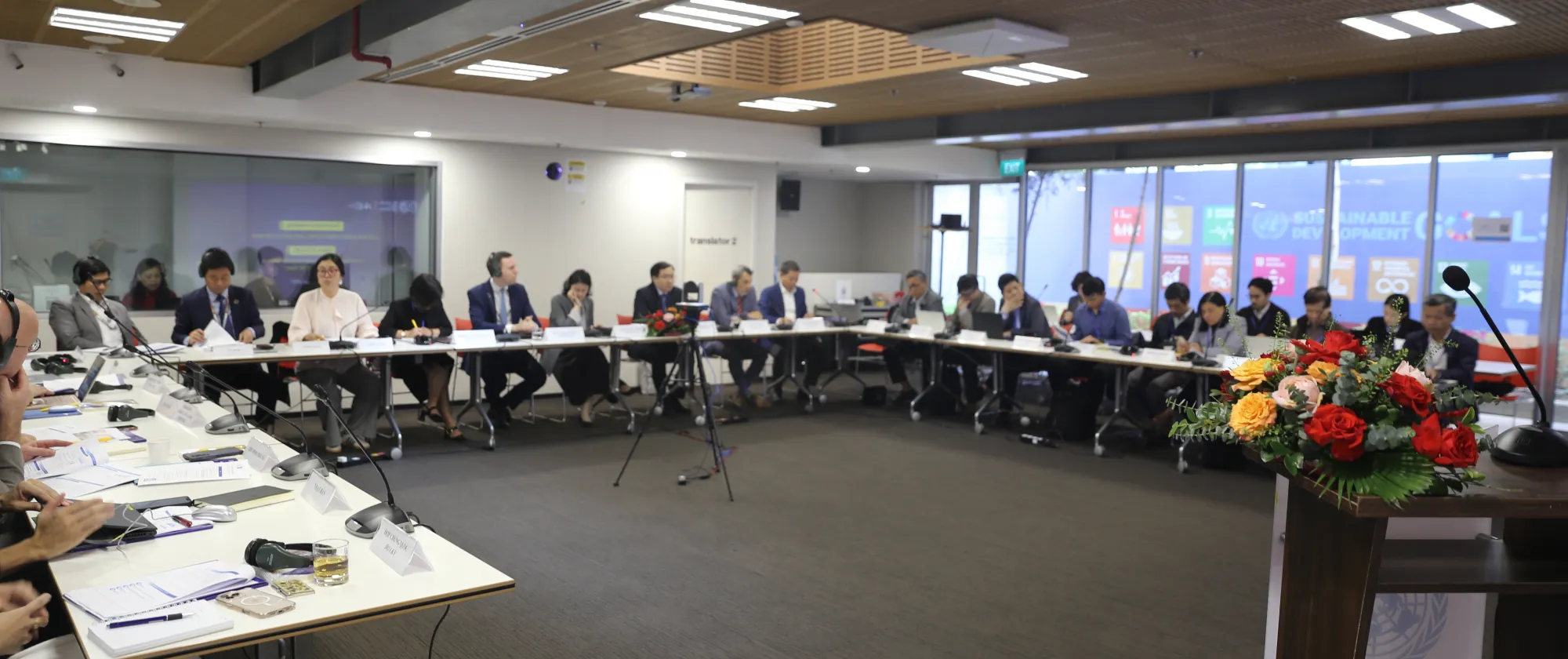
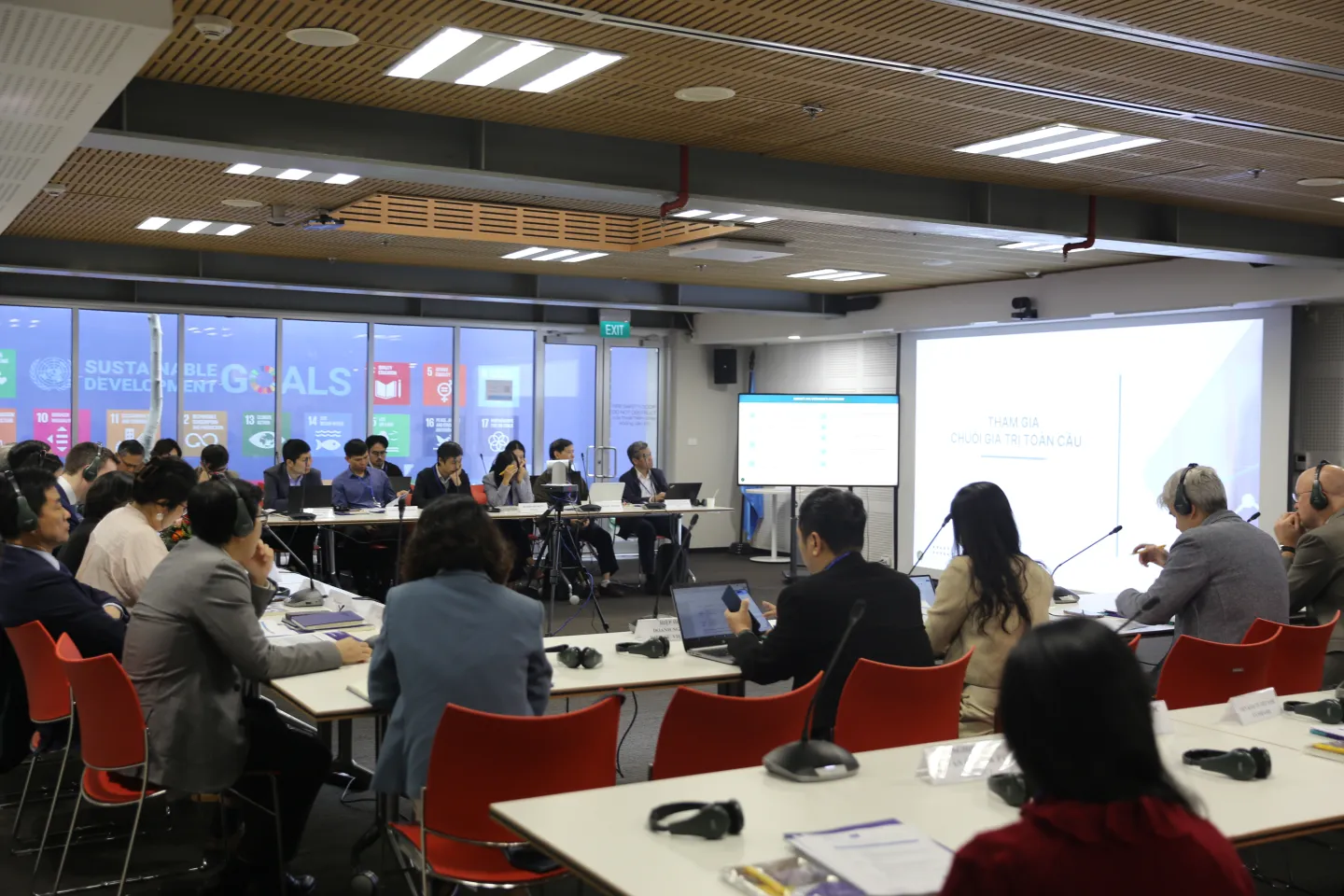
HA NOI (ILO News) – On 4 December in Hanoi, the International Labour Organization (ILO) convened government entities, employers’ and workers’ representatives, industry associations, academia, development partners and UN agencies for a technical meeting on trade, global supply chains (GSCs) and jobs.
The event also marked the launch of the new ILO Brief on Jobs in Trade and Global Supply Chains in Viet Nam, which provides updated evidence on GSC-related employment and highlights the coordinated efforts needed to promote decent work and just transitions.
Opening the technical meeting, Director of the ILO Country Office for Viet Nam, Sinwon Park emphasized that the evidence presented in the Brief is essential for shaping forward-looking strategies: “Strengthening the resilience and inclusiveness of supply chains will be key to ensuring that trade continues to generate decent work and supports just transitions for workers and enterprises.”
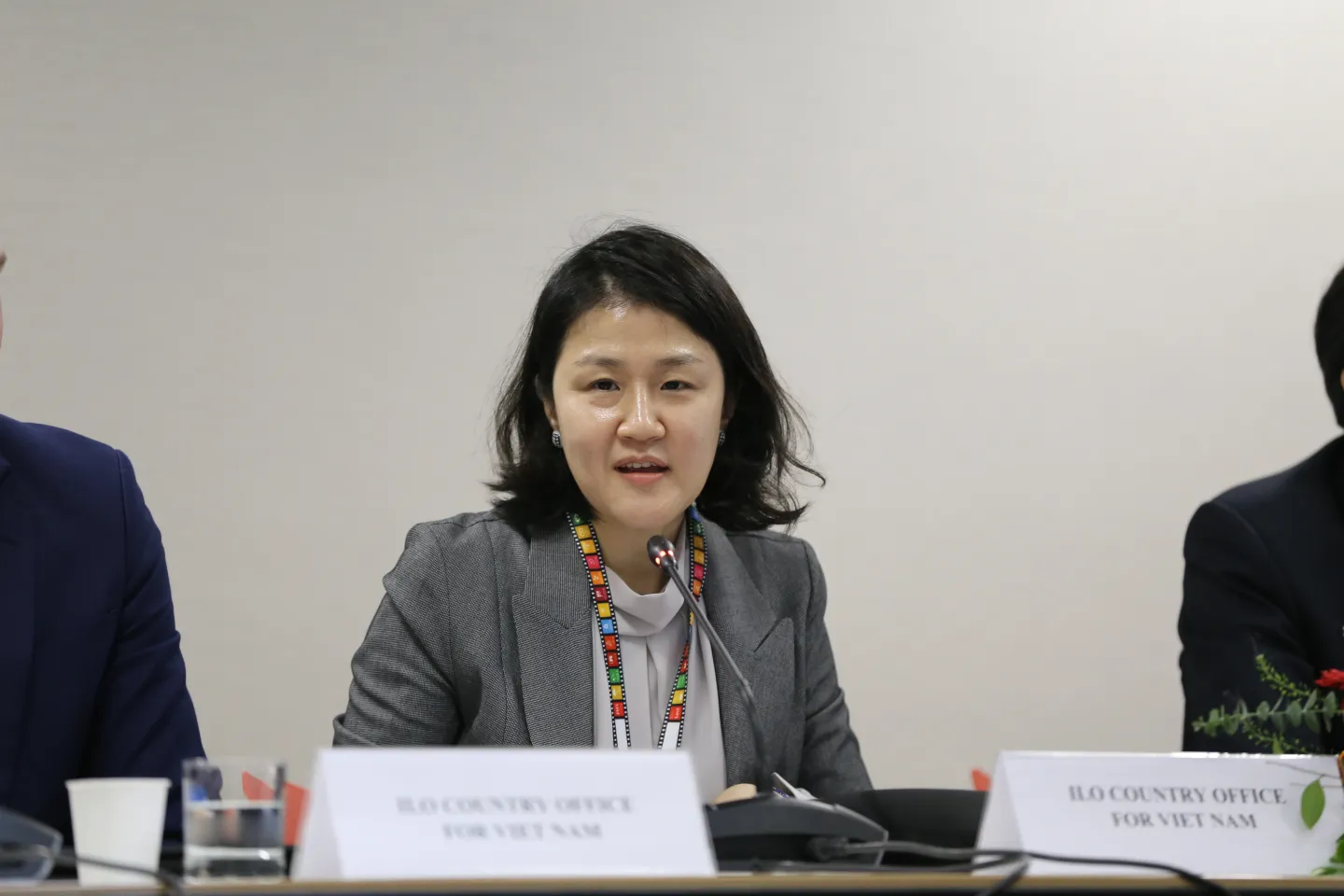
Strengthening the resilience and inclusiveness of supply chains will be key to ensuring that trade continues to generate decent work and supports just transitions for workers and enterprises.
Director of the ILO Country Office for Viet Nam, Sinwon Park
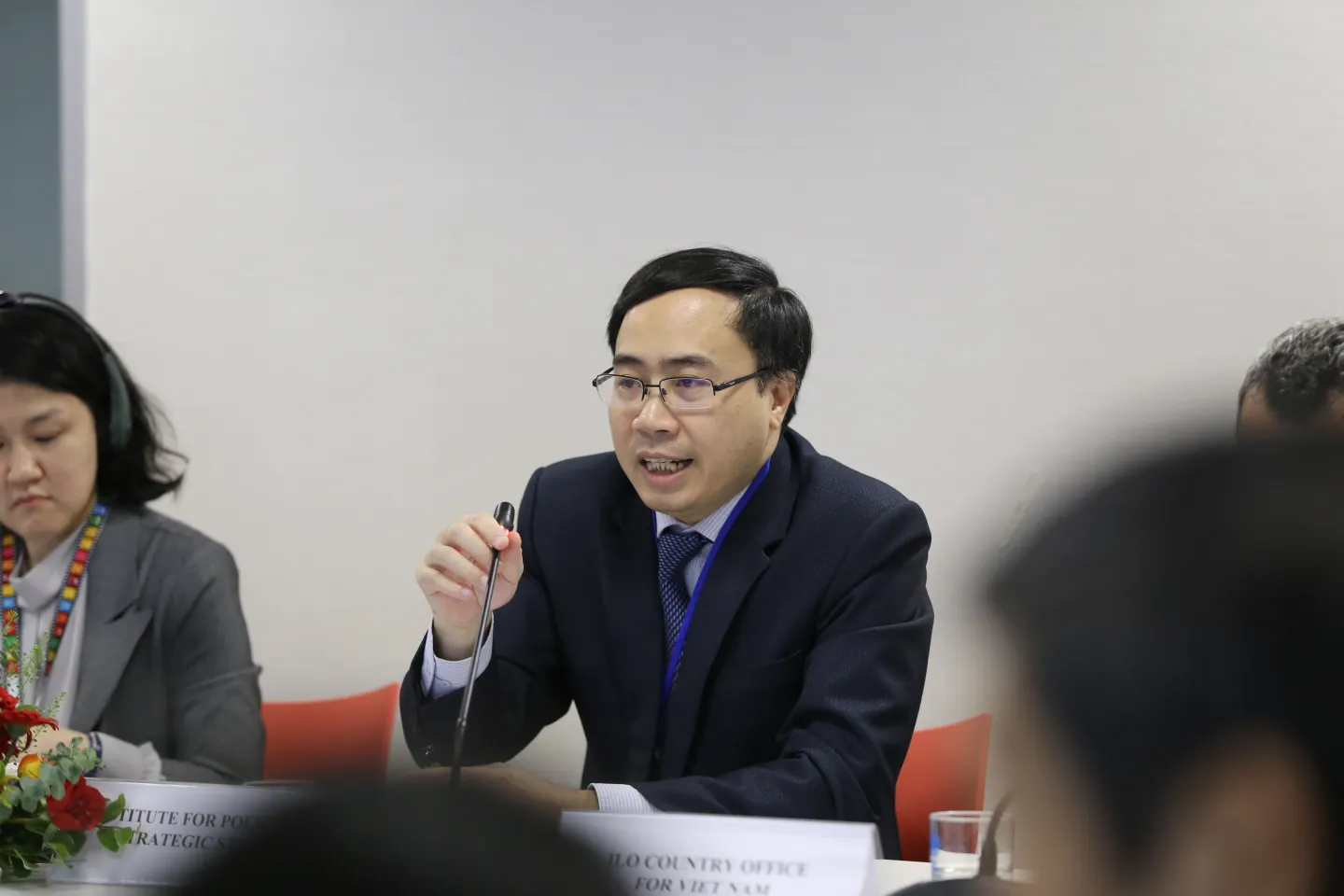
During the meeting, the Institute for Policy and Strategic Studies, Central Commission for Policy and Strategy provided an overview of Viet Nam’s trade landscape in the global supply chains and new economic models while the ILO experts presented analysis on GSC-related employment intensity, exposure to foreign demand and sectoral vulnerability. Representatives from key ministries, including Ministry of Home Affairs, Ministry of Finance, Ministry of Industry and Trade, and Ministry of Education and Training, Vietnam Chamber of Commerce and Industry, Vietnam General Confederation of Labour as well as industry associations and other key stakeholders discussed how these findings can inform ongoing trade, skills, labour market and social protection reforms.
Participants underscored that Viet Nam’s participation in GSCs must be complemented by proactive policies that address emerging challenges. The country faces growing risks from geopolitical tensions, technological shifts, environmental pressures and demographic change. Without targeted interventions, these forces may widen skill gaps, reduce job quality, and constrain SMEs’ ability to access higher-value segments of supply chains.
Discussions also pointed to a shared recognition that Viet Nam can leverage trade diversification, strengthen domestic industrial linkages, invest in inclusive and demand-driven skills systems, improve job quality and labour standards, and reinforce social dialogue and inter-institutional coordination to manage future labour market transitions effectively.
Strengthening GSC resilience while capturing opportunities in new growth areas presents a strategic opportunity for Viet Nam to advance structural transformation, move towards higher value-added activities, and expand decent work opportunities.
This technical meeting was organized under the Trade for Decent Work project, with support from the European Union.
Trade for Decent Work Project - Viet Nam
The project supports the effective implementation of the Trade and Sustainable Development Chapter of the EU- Viet Nam free trade agreement (EVFTA), contributing to sustainable global trade with social justice.
Related content

ILO Conventions application
Trade for Decent Work Project - Viet Nam
International labour standards
ILO welcomes European Parliament’s approval for free trade deal with Viet Nam
Factsheet
Labour commitments under EU-Viet Nam Free Trade Agreement
International Labour Standards
ILO welcomes milestone to end forced labour in Viet Nam
Labour Commitment in EVFTA and Amendments and Supplements of the Labour Code 2019
ILO, Viet Nam join force to promote international labour standards and decent work for all
Relevant projects
ILS Compliance and Reporting
Trade for Decent Work Project in Mongolia - Phase 1
Trade for Decent Work Project - Pakistan
Trade for Decent Work Project - Ghana
Application of International Labour Standards (ILS)
Trade for Decent Work Project - Philippines